Photo: Unsplash
Japan has one of the most reliable public transport systems in the world, consisting of trains, subways, the Shinkansen, buses, taxis, domestic flights, and ferries. Trains run on time. Buses follow their schedules. For travelers, it is one of the easiest ways to get around.
The basic rules are not so different from what you already know. But there are a few small things that are unique to Japan. Knowing them before you go makes your trip smoother — and more enjoyable. Nothing complicated. Just a few habits that will help you travel with confidence.
In this article you will learn:
- How to behave on trains and subways in Japan
- What makes the Shinkansen experience different — and how to enjoy it
- The right way to ride a bus and take a taxi in Japan
- What to expect on domestic flights and ferries
- Simple rules that will help you travel comfortably across Japan
Overview
Japan’s public transport is not just for tourists. Millions of people use it every day to commute to work and school. Most passengers around you are going about their daily lives. Keeping that in mind makes it easier to understand why the manners here matter.
In Japan, people rarely speak up when someone breaks the rules. No one is likely to say anything to you directly. But that does not mean no one notices. Small actions — loud voices, a bag taking up a seat, a phone call in a quiet carriage — can affect the people around you more than you might expect.
The rules apply to everyone equally. Tourists are no exception. But do not let that feel like pressure.
Most manners on Japanese public transport come from one simple idea: being mindful of the people sharing the space with you. Each small action adds up to make the whole system more comfortable for everyone. That is why trains run on time, stations stay clean, and the ride feels calm — even on the busiest days.
Staying connected while traveling makes everything easier. For reliable data throughout your journey, consider getting a Japanese eSIM before you arrive. Get your Japan eSIM here.
Trains and Subways Etiquette

Photo: Unsplash
Trains and subways are one of the most convenient ways to get around Japan. In urban areas especially, they are packed with commuters heading to work and school — and during rush hour, the crowds can be surprising. Knowing the rules before you ride makes the whole experience much smoother.
- On the platform
Always walk on the inner side of the platform, away from the tracks. Standing too close to the edge during arrivals and departures can disrupt the flow of the train and cause delays. And no matter how tempting it may be to get a closer look, do not approach the platform doors until the train has come to a complete stop.
- Boarding and exiting
When the train arrives, line up on the side of the doors — not directly in front of them. When the doors open, step to the side and let passengers off first. Even during busy hours, letting others off before you board is a rule worth keeping in mind.
- Keep noise to a minimum
Trains in Japan are quiet spaces. Phone calls are not welcome inside the car. If you are with friends, keep your voices low. Check that your headphones are not leaking sound. Always use earphones when watching videos or listening to music.
- Priority seats
Priority seats are for elderly passengers, pregnant women, people with disabilities, and those traveling with young children. You may sit there if the train is not crowded, but always be ready to give up the seat right away if someone who needs it boards the train.
Signs are posted inside the train and on the platform. Most are written in English as well, so they are easy to follow.
- Sitting considerately
When seats are limited, scoot over to make room. Do not spread your legs too wide or place your bag on the seat next to you.
- Traveling with children
Children should not stand on seats or play with hanging straps. In a crowded car, small actions can disturb other passengers. A gentle reminder beforehand helps everyone have a smoother ride.
- Luggage
Take your backpack off when you board and hold it in front of you, or place it on the overhead rack. Even when the train is not crowded, holding it in front of you shows consideration for those around you. In a busy carriage, a backpack worn on your back can easily bump into other passengers without you realizing it.
The same goes for large bags and suitcases — keep them out of the aisle. This is especially important on busy trains where space is limited.
- Food and drinks
It is best to avoid eating on local trains and subways. Most passengers prefer a clean, neutral-smelling environment. On long-distance trains, it is generally fine.
- Rush hour
Morning and evening rush hours can be intense, especially in big cities. Some trains get incredibly crowded.
If you are carrying a large suitcase, be especially careful. On a packed train, there may be no space for luggage, and you may not be able to board at all.
If your schedule is flexible, try to avoid these times — it might be the best option.
Shinkansen Etiquette

Photo: Unsplash
The Shinkansen is Japan’s iconic high-speed train. Many of the same rules from local trains apply here, but there are a few things that are unique to the Shinkansen experience.
- Finding the right seat
Before boarding, check your seat number. The Shinkansen has both reserved and unreserved carriages. If you have a reserved seat ticket, find the correct carriage and seat number shown on your ticket. Unreserved carriages are first-come, first-served.
- Reclining your seat
You are welcome to recline your seat — but a quick glance back and a small gesture to the person behind you goes a long way. It is a simple courtesy that most passengers appreciate.
- Phone calls
Do not make phone calls from your seat. Step into the deck area between carriages to take or make a call. Regular conversation at your seat is fine, but keep your voice down as you would on any train. Some passengers may be resting or working — keep that in mind.
- Food and drinks
Eating and drinking on the Shinkansen is completely acceptable. Many passengers pick up a bento box or a drink at the station before boarding — it is one of the small pleasures of Shinkansen travel. Just make sure to take your trash with you or dispose of it in the bins provided on board or platform.
- Smoking
Smoking is not allowed anywhere on the Shinkansen. All carriages have been fully non-smoking since March 2024. If you need to smoke, look for designated smoking areas in the station before boarding. Not all stations have them, so it is worth planning ahead.
- Large luggage
Store suitcases and large bags in the overhead rack or in the designated luggage space at the back of the carriage. Note that the oversized luggage area may require a reservation — it is worth checking before you board. Avoid leaving bags in the aisle or between seats, as this can block other passengers.
Bus Etiquette

Photo: Unsplash
Buses in Japan are just as convenient as trains. That said, the way you board can vary quite a bit depending on the region — and even some locals find it confusing when they visit a new area. Knowing the basics beforehand will help you feel more prepared.
- Front-entry buses
In urban areas like Tokyo, most buses use a front-entry system. Board through the front door and pay when you get on. Exit through the rear door. This system is straightforward and similar to buses in many other countries.
- Rear-entry buses
In rural areas and many tourist destinations, the rear-entry system is more common. Board through the back door and take a numbered ticket from the machine near the entrance. When you reach your stop, move to the front door to exit and pay. The fare depends on how far you have traveled — check the fare display at the front of the bus to find the amount that matches your ticket number.
If you are not sure which system the bus uses, watch where other passengers are boarding and follow their lead. You can also ask the driver — they are used to helping passengers who are unfamiliar with the route.
- Paying your fare
Most buses in Japan accept IC cards such as Suica or PASMO. Simply tap your card when you board and again when you exit.
If you are paying with cash, drop the exact amount into the fare box — most buses do not give change. If you need to break a bill, use the change machine at the front of the bus before paying. Most machines only accept 1,000-yen bills.
Either way, carrying an IC card makes boarding and exiting much smoother — it is especially useful when taking the bus.
- Pressing the stop button
When your stop is coming up, press the button to let the driver know. Buttons are usually found near the seats or along the windows. A light will turn on at the front of the bus to signal that someone is getting off at the next stop.
- Behavior on board
Just like on trains, buses tend to be quiet too. Avoid phone calls, keep conversations low, and give up priority seats when needed. Be mindful of large bags in the aisle — keeping the space clear makes it easier for everyone to move around.
- At the bus stop
Line up and wait your turn. When the bus arrives, board in order. Cutting in line is considered rude, so just follow the queue.
Taxi Etiquette

Photo: Pexels
Taxis in Japan can be on the pricier side, but they are a great option when trains and buses do not quite get you where you need to go — or when you are carrying a lot of luggage. Drivers are known for their exceptional skills and professionalism. There are just a few Japan-specific things worth knowing before you get in.
- The door opens automatically
Taxi doors in Japan open and close automatically, controlled by the driver — and they often catch first-time visitors by surprise. Do not touch the door handle. Just wait by the door, and it will open for you.
- Where to sit
The back seat is the standard place to sit. You can ride in the front, but most passengers choose the rear. Once seated, put on your seatbelt — it is required by law.
- Getting to your destination
English may not always be an option, so showing your destination on your phone — a map, an address, or the name of your hotel — is the easiest approach. Most drivers will recognize well-known hotels and landmarks by name. Having your destination written down in advance gives you one less thing to worry about.
Having mobile data is especially useful in taxis. A Japanese eSIM keeps you connected so you can navigate, translate, and show your destination with ease. Get your Japan eSIM here.
- Food and drinks
Eating and drinking inside the taxi is not allowed. Finish up before you get in.
- Tipping and payment
Japanese taxis offer exceptional service — but tipping is not part of the culture here. Simply pay the amount shown on the meter and you are done. A simple “arigatou gozaimasu” (thank you) goes a long way.
- Luggage
Large suitcases go in the trunk. The driver will usually help you load and unload — just be ready when you arrive.
- Taxi apps
Apps like “GO” and “Uber” are widely available in Japan. You can enter your destination in advance, which removes any language barrier entirely.
“GO” in particular is popular across many cities in Japan. You can download the app and find more information here
Domestic Flight Etiquette

Photo: Unsplash
Japan’s domestic flight network covers everything from major carriers to budget airlines, running at high frequency and serving as an essential link for long-distance travel and island destinations. The check-in process is generally smooth and straightforward. The basic etiquette is similar to international travel, but here are a few things worth keeping in mind.
- At the airport
Most airlines require check-in at least 30 minutes before departure, and passengers should clear security no later than 20 minutes before the flight. That said, requirements vary by airline, so check in advance.
During Japanese public holidays such as Golden Week (late April to early May), Obon (August 13 to 16), and the New Year holidays, airports get extremely busy. If you are traveling during these periods, arrive earlier than usual to avoid any last-minute stress.
- Boarding and In-flight Etiquette
Board in the order shown on your ticket — by group number or zone. Wait quietly at the gate until your group is called.
Once on board, keep the same quiet atmosphere you would on a train. Switch your devices to flight mode before takeoff. Store carry-on bags in the overhead bin or under the seat in front of you.
- After landing
Stay seated until the plane comes to a complete stop and the seatbelt sign turns off. Then take your time gathering your belongings. Rushing to stand up rarely saves any time — the doors will not open until everyone is ready anyway.
Ferry Etiquette

Photo: Unsplash
Ferries are an essential part of getting around Japan — especially for reaching islands and covering longer coastal distances. Options range from short crossings to overnight journeys.
- Before boarding
Ferries leave on time. Check-in usually closes 30 minutes to an hour before departure, so give yourself plenty of time to get to the port.
- On board
In shared spaces like dining areas, lounges, and open sleeping rooms, be mindful of those around you. During night crossings, keep noise to a minimum in sleeping areas. Dispose of trash in the bins provided and leave shared spaces as you found them.
- On the deck
Smoking is only permitted in designated areas on deck. Follow the signs and be considerate of non-smoking passengers nearby.
Etiquette for Special Situations

Photo: Unsplash
Some etiquette in Japan applies across all forms of public transport. Here are a few situations worth knowing about, wherever you are traveling.
- Escalators
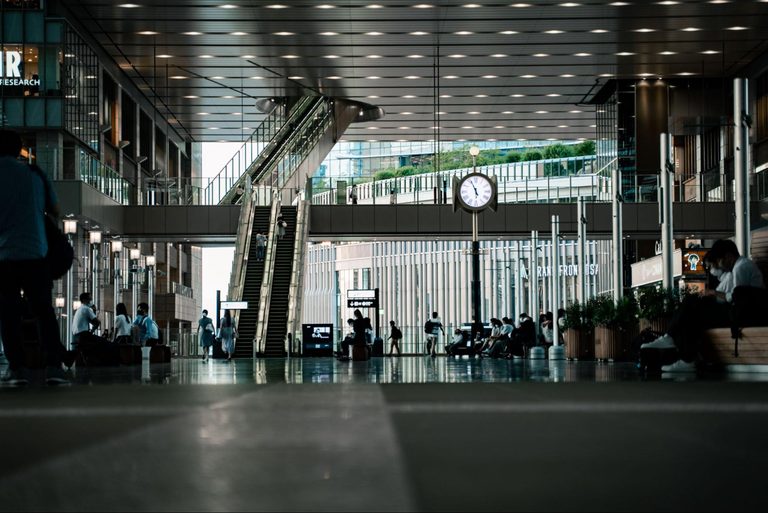
On escalators, it is common to stand on one side and leave the other side open for people who are walking. In the Kanto region, including Tokyo, people usually stand on the left. In Osaka and the Kansai region, the opposite is common, with people standing on the right. This can be a little confusing, especially for tourists, so it is best to observe the people around you and follow the local flow.
That said, many stations have recently started encouraging passengers to stand still on escalators for safety reasons. If there is a sign, follow the instructions provided.
- Rush hour
During morning and evening peak hours, trains and buses fill up fast. In major cities, the busiest times are between 7:00 am and 9:00 am in the morning, and between 5:00 pm and 8:00 pm in the evening on weekdays. Try to plan your travel outside of these hours when possible.
- Large luggage
Big suitcases and backpacks are especially difficult to manage during rush hour. Try to travel outside of peak times when possible.
Another option is to send your luggage ahead using a luggage delivery service. Known as “Takkyubin,” it allows you to send your bags directly to your next hotel or to the airport. Yamato Transport is the most well-known provider. It is an affordable and reliable service — and it makes getting around Japan much easier. Find out more here.
- Rainy days
Bringing an umbrella onto trains and buses is completely fine. That said, being a little mindful makes the ride more pleasant for everyone. Before boarding, shake off any excess water outside. Once inside, keep your umbrella closed and hold it vertically. Be mindful not to drip on other passengers or their seats.
Summary
The rules on Japanese public transport are not difficult to follow. Just knowing the basics is enough to make the experience comfortable for both you and the people around you. And that small effort can make your trip so much more enjoyable.
Trains, the Shinkansen, buses, taxis, domestic flights, and ferries each have their own flow — but the same idea runs through all of them. Always on time, clean, and calm. It is the result of many small acts of consideration, repeated every single day.
You do not need to memorize every rule perfectly. What matters most is simply being aware of the people around you. If you are ever unsure about something, do not hesitate to ask a station staff member — they are always happy to help.
Riding public transport in Japan is a chance to experience Japanese culture and the way people live their daily lives. As long as you keep a respectful attitude toward those around you, it will be a wonderful experience. Enjoy the ride in Japan.