Introduction
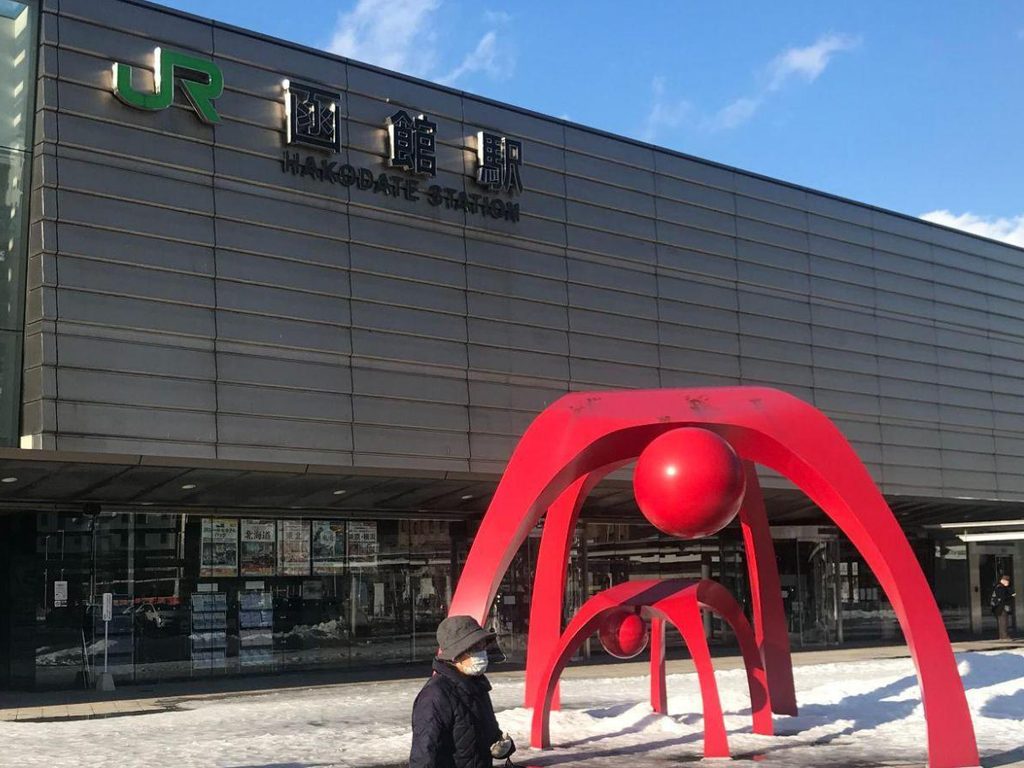
Hakodate, the historic port city at the southern tip of Hokkaido, was one of the first places in Japan to open to foreign trade in the 19th century. That history still shapes the city today, from its red brick harbor warehouses to the sweeping night view from Mount Hakodate, ranked among the finest in the world. Add in a local burger chain that has outlasted every major fast food brand in town, and Hakodate offers a distinctive mix of maritime history, scenery, and homegrown food culture.
In this article, you will learn:
- Why Mount Hakodate’s night view is considered one of Japan’s finest
- The history behind the Kanemori Red Brick Warehouse
- Why Lucky Pierrot has become Hakodate’s most beloved local burger chain
- The best spots to explore around the harbor and Motomachi district
- How to get to Hakodate from Sapporo and New Chitose Airport
Since Hakodate’s ropeway schedule, streetcar routes, and harbor-area shops can shift with the seasons, an eSIM is worth having ready to check current hours and directions while moving between sights.
Overview of Hakodate
Hakodate’s identity was shaped in 1859, when it became one of the first three Japanese ports opened to foreign trade under the treaties that ended Japan’s long period of isolation. Foreign consulates, trading houses, and churches soon followed, settling into the hillside district now known as Motomachi, where Russian Orthodox and Catholic churches still stand alongside former consulate buildings.
Down at the waterfront, the harbor itself became the city’s commercial engine. Warehouses built to store goods from the fishing and trading industries lined the water’s edge, and the brick warehouses that survive today, now known as the Kanemori Red Brick Warehouse, have become one of Hakodate’s most recognizable landmarks.
Key Features
- One of Japan’s most celebrated night views, seen from Mount Hakodate
- A harbor district built around 19th-century red brick warehouses
- A hillside Motomachi district with Western-style architecture and churches
- Lucky Pierrot, a fiercely local burger chain with no branches outside the region
- A historic role as one of Japan’s first ports opened to foreign trade
Mount Hakodate itself, rising directly behind the old harbor district, is the reason so many visitors build their Hakodate itinerary around a single evening. The mountain sits on a narrow strip of land connecting two bays, and from the summit, the city’s lights trace the shape of an hourglass between the water on either side, a view that has been ranked among the world’s top night views by international travel guides and that draws crowds to the ropeway every evening regardless of season.
Hakodate’s food culture reflects its history just as strongly as its architecture does. While the city is well known across Japan for fresh seafood and its morning market, its most talked-about food experience among locals is arguably Lucky Pierrot, a local burger chain that has become so dominant in Hakodate that national fast food chains struggle to compete with it here, despite operating nowhere outside the immediate region.
This mix of eras and influences, a 19th-century trading port, a hillside of Western-style architecture, a working harbor turned shopping district, and a fiercely local fast food chain, gives Hakodate a layered identity that rewards slower exploration. Many visitors base themselves near the harbor for a day or two, using the compact streetcar network to move between the waterfront, the hillside district, and the mountain without needing a car.
Best Things to Do in Hakodate
Hakodate rewards visitors who spend time both in its historic harbor district during the day and on its mountaintop after dark, pairing 19th-century architecture with one of the country’s most famous views.
Ride the Ropeway to Mount Hakodate’s Night View
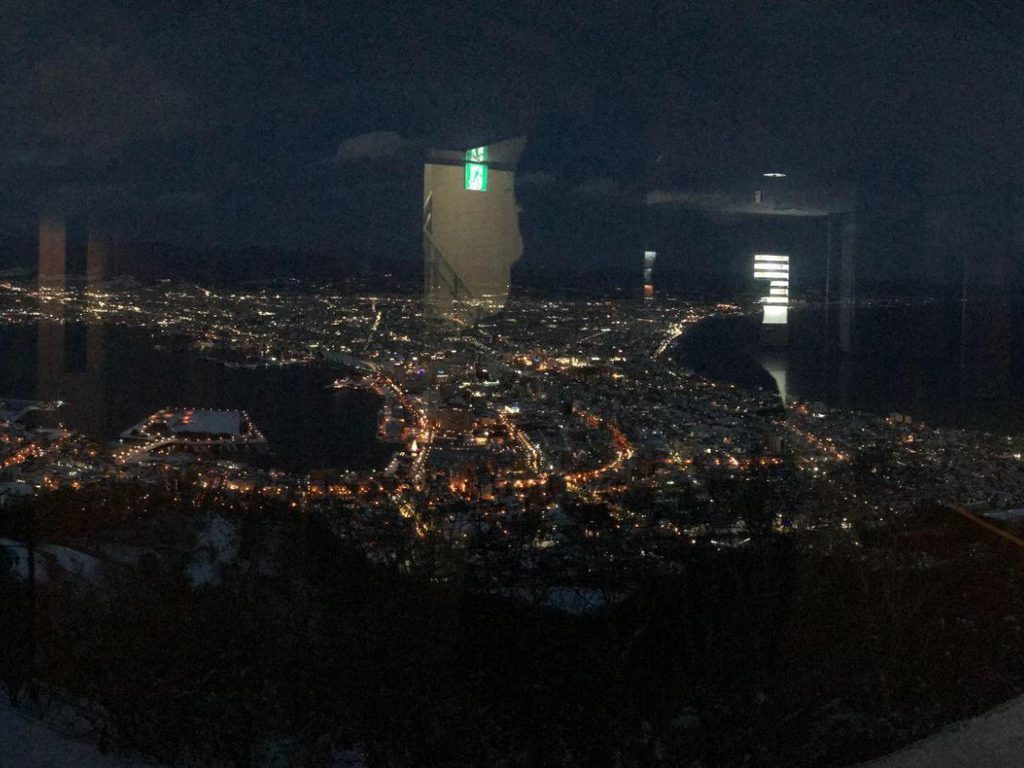
The single most iconic experience in Hakodate is riding the ropeway up Mount Hakodate for its night view. The 125-passenger cable car climbs from the mountain’s base station to the summit in about three minutes, and the observation deck at the top offers an unobstructed view over the city below.
What makes the view so distinctive is the shape of the land itself. Hakodate sits on a narrow strip connecting a peninsula to the mainland, with water on both sides, so the city’s lights form a glowing hourglass pattern between two dark stretches of sea, unlike any other night view in Japan. A local tradition, known as the “Hakodate Heart Legend,” holds that visitors who manage to spot a heart-shaped pattern hidden somewhere in the lights below will see their wish come true, giving many visitors an extra reason to linger at the railing.
The ropeway operates year-round, with hours shifting slightly between the warmer and colder halves of the year. Arriving shortly before sunset lets visitors watch the view transition from daylight to full darkness, generally considered the most dramatic way to experience it.
Highlights
- One of the world’s most celebrated urban night views
- The “Hakodate Heart Legend” hidden within the city lights
- A three-minute ride covering 835 meters of cable line
- A restaurant and gift shop at the summit station
Details
- Time required: 1–2 hours, including the ride and time at the observation deck
- Admission: adult round trip ¥1,800, one-way ¥1,200; child round trip ¥900, one-way ¥600
- Hours: 10:00 to 21:30 (last ascent) from April 20 to September 30; 10:00 to 20:30 (last ascent) from October 1 to April 19
- Access: about 10 minutes by car from JR Hakodate Station, or a 10-minute walk from the Juji-gai streetcar stop to the base station
Explore the Kanemori Red Brick Warehouse
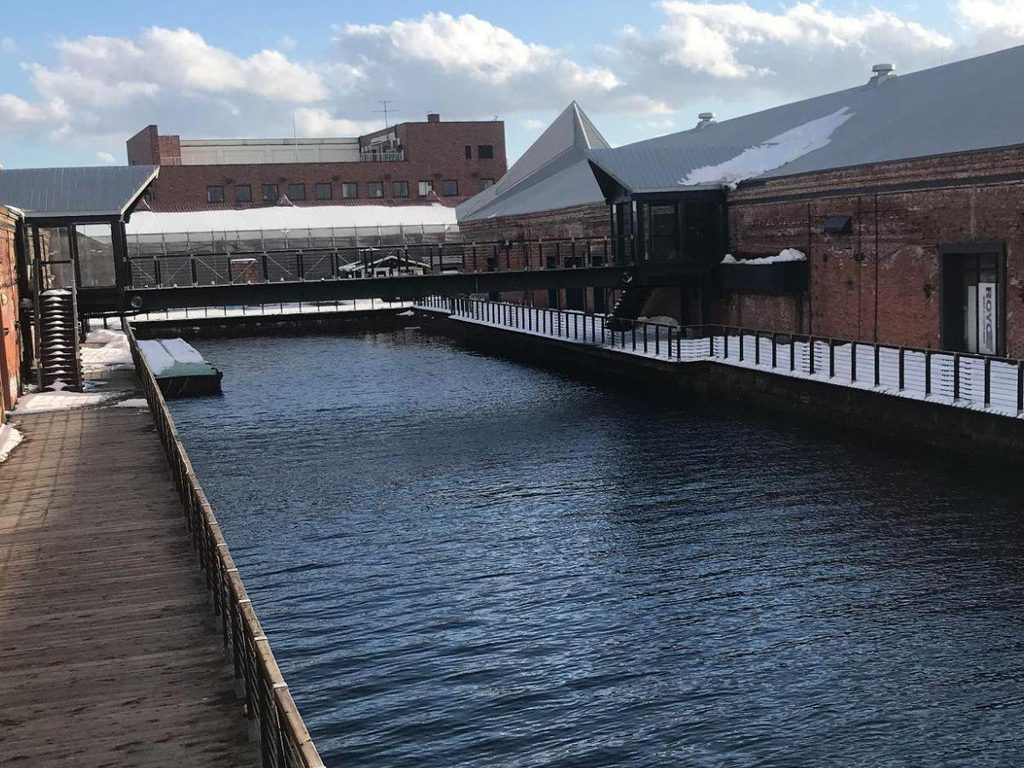
Down at the harbor, the Kanemori Red Brick Warehouse complex preserves a row of brick warehouses first built in 1887 and rebuilt in brick in 1909 after a fire, making it one of Hakodate’s oldest surviving commercial districts. The complex now houses shopping arcades, cafés, a history-focused exhibition space, and an event hall, all built into the original warehouse structures with their high ceilings and hinoki cypress columns left largely intact.
Walking along the canal-side boardwalk between the buildings gives a strong sense of the district’s original working-harbor character, even with modern shops now filling the interiors. In the evening, the warehouses are lit up, adding a softer, more atmospheric layer to a walk that feels quite different from the same route in daylight.
Highlights
- Historic brick warehouses dating to the Meiji era
- A canal-side boardwalk connecting the buildings
- Shops, cafés, and a history exhibition space
- Evening illumination that changes the district’s atmosphere after dark
Details
- Time required: 1–2 hours
- Admission: free to enter; individual shops and cafés charge separately
- Hours: shops generally open from 9:30 to 19:00, varying by store and season
- Access: about a 5-minute walk from the Juji-gai streetcar stop, or roughly 15 minutes on foot from JR Hakodate Station
Walk the Motomachi Slopes Toward the Harbor
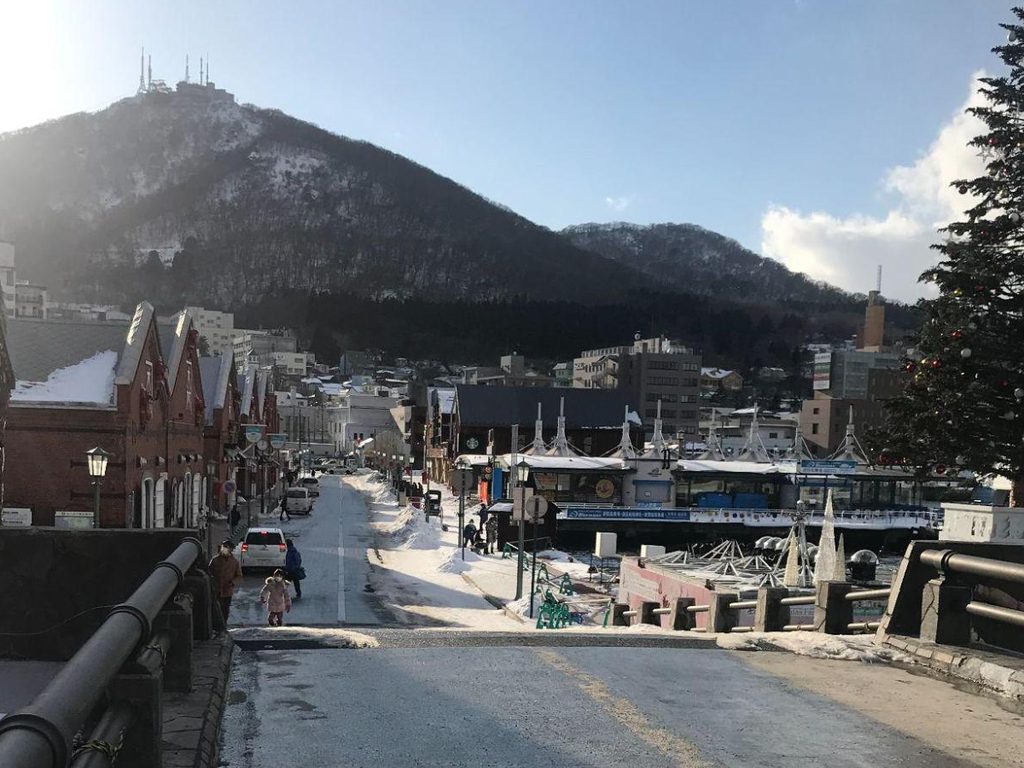
Just above the warehouse district, the Motomachi neighborhood climbs the hillside in a series of sloped streets lined with former consulate buildings, churches, and Western-style residences dating from Hakodate’s early years as an international port. Walking downhill from Motomachi toward the harbor offers a steady view of the water and Mount Hakodate framing the townscape ahead, especially striking with snow on the ground in winter.
The slopes themselves are treated as a destination in their own right, with several offering postcard views toward the bay that have made them recurring subjects in Hakodate’s tourism photography. Combined with a walk through the Kanemori warehouses below, this stretch of the city covers much of Hakodate’s architectural history in a single, walkable route.
The district’s mix of Orthodox and Catholic churches, former consulate buildings, and wooden Western-style houses reflects the range of foreign communities that settled here after the port opened in 1859. Many of these buildings remain in everyday use as cafés, shops, or small museums, so the neighborhood feels lived-in rather than preserved purely as a historical display.
Highlights
- Sloped streets with views toward the harbor and Mount Hakodate
- Historic churches and former consulate buildings
- A walkable route connecting directly down to the Kanemori warehouses
- Distinct seasonal character, especially with snow underfoot in winter
Details
- Time required: 1–1.5 hours for a relaxed walk
- Access: adjacent to the Kanemori Red Brick Warehouse, within walking distance of the Juji-gai streetcar stop
- Notes: streets are sloped and can be slippery in winter, so sturdy footwear is recommended
Taste Hakodate’s Own Burger Chain, Lucky Pierrot
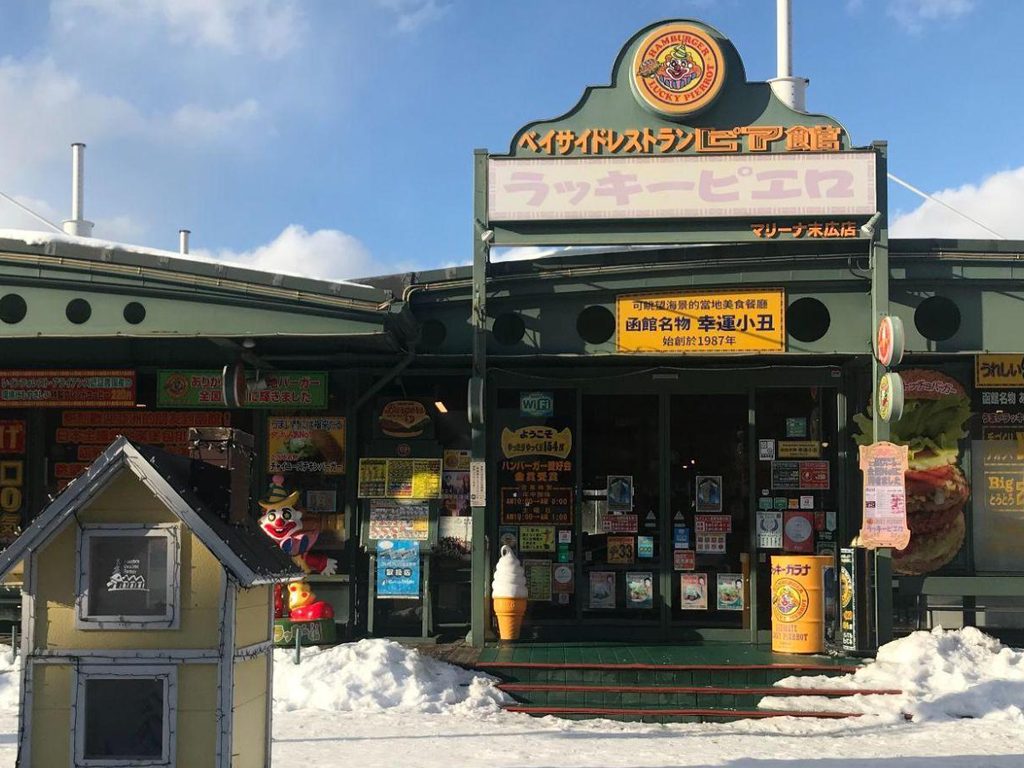
No visit to Hakodate feels complete without a stop at Lucky Pierrot, a local burger chain founded in 1987 that has become something close to a civic institution. With roughly seventeen locations concentrated in and around Hakodate and nowhere else in Japan, the chain has outgrown every national fast food competitor operating in the same city.
Lucky Pierrot’s signature item is the Chinese Chicken Burger, built around a sweet and savory fried chicken patty inspired by Chinese-style karaage, and each location is decorated around its own distinct theme, from circus-style clown murals to giraffe statues, giving every branch a slightly different personality. The chain also emphasizes local, never frozen ingredients and handmade patties, a level of commitment to fresh preparation that would be difficult for a larger chain to match.
Because each location has its own decor and, in some cases, its own signature side dishes, visiting more than one branch during a stay in Hakodate is a common and rewarding approach for travelers with the time to spare.
Highlights
- The signature Chinese Chicken Burger
- Distinct decor and themes at each individual location
- A focus on local, unfrozen, handmade ingredients
- Multiple convenient branches near the harbor and Motomachi areas
Details
- Time required: 30–45 minutes for a meal
- Access: several locations sit within or near the Bay Area and Motomachi district, including branches close to the Kanemori warehouses
- Notes: menus and side dishes can vary slightly between locations, so visiting more than one branch is worth considering
Recommended Spots in Hakodate
Beyond the harbor’s headline sights, a handful of specific spots reward a closer look, from the city’s transport hub to a market that has fed Hakodate since the postwar years.
1. JR Hakodate Station
For most visitors, Hakodate Station is the first and last stop of the trip, and it doubles as a small destination in its own right. The station plaza features local artwork and sits directly beside the streetcar network, making it a natural starting point for a walking route into the harbor district.
Highlights
- The main gateway for train travel into Hakodate
- Direct streetcar connections toward Juji-gai and the harbor district
- A public plaza with local artwork near the station entrance
- Nearby shops and restaurants for a first or last meal in the city
Details
- Time required: 15–20 minutes to pass through or begin a walking route
- Access: connected to Shin-Hakodate-Hokuto Station by local train, and to Sapporo by limited express and connecting Shinkansen service
- Notes: winter conditions can affect train schedules, so building in extra time is advisable
2. Hakodate Morning Market
A one-minute walk from the station entrance, the Hakodate Morning Market has operated on this site since the years right after the Second World War, when farmers from nearby villages began selling produce near the station forecourt. It has since grown into a market covering roughly 33,000 square meters, with around 250 stalls split across a few connected sections, including a food hall known for seafood bowls and a squid-fishing pool where visitors can catch their own squid and have it prepared on the spot.
Highlights
- Around 250 stalls selling crab, salmon, and other Hokkaido seafood
- A donburi food hall serving fresh seafood rice bowls
- A hands-on squid-fishing pool for a hands-on food experience
- A working market atmosphere that has operated since the late 1940s
Details
- Time required: 45 minutes to 1.5 hours
- Access: about a 1-minute walk from JR Hakodate Station
- Hours: roughly 5:00 or 6:00 to 14:00, with individual stalls varying by season and sometimes selling out earlier in the day*
- Notes: arriving early gives the best selection, since popular items can sell out by early afternoon
3. Former Public Hall of Hakodate Ward
Standing at the base of Motomachi’s Motoi-zaka slope, this blue-gray and yellow colonial-style building was completed in 1910 with funding from a local merchant and has since become one of the neighborhood’s clearest landmarks. Designated an Important Cultural Property, its interior preserves rooms once used by visiting members of the imperial family, along with a costume rental corner where visitors can try on Meiji-era dresses or formal wear for photos.
Highlights
- A designated Important Cultural Property from the Meiji era
- A symmetrical colonial-style exterior in blue-gray and yellow
- A balcony view over the harbor and Motomachi rooftops
- A costume rental corner for Meiji-style photos, plus a ground-floor café
Details
- Time required: 45 minutes to 1 hour
- Access: about a 7-minute walk from the Suehiro-cho streetcar stop
- Hours: 9:00 to 19:00 from April to October, 9:00 to 17:00 from November to March*
- Entry: around ¥300 for adults, with discounted combination tickets available for other nearby historic buildings*
4. Hakodate Orthodox Church
A short walk further up the Motomachi hillside, this white-walled, green-roofed church is the oldest Russian Orthodox church building in Japan, with the current structure rebuilt in 1916 after the original 19th-century building was lost to fire. Locals know it affectionately as “Gan-Gan Dera,” or the clanging temple, thanks to its bell, whose distinctive tone has been recognized as one of Japan’s 100 Soundscapes worth preserving.
Highlights
- The oldest Russian Orthodox church building in Japan
- A striking white and green Byzantine-influenced exterior
- A historic bell recognized among Japan’s 100 Soundscapes
- A short walk from the Former Public Hall of Hakodate Ward and other Motomachi churches
Details
- Time required: 20–30 minutes
- Access: about an 8-minute walk uphill from the Suehiro-cho streetcar stop
- Hours: generally 10:00 to 17:00 on weekdays, with shorter hours on weekends and limited access in winter*
- Entry: a suggested viewing donation of around ¥200 for adults
Travel Tips for Visiting Hakodate
Time Your Ropeway Visit Around Sunset
Arriving at Mount Hakodate shortly before sunset allows visitors to watch the view shift from daylight to the full night display, widely considered the most rewarding way to experience it.
Check Ropeway Hours in Advance
Operating hours shift between the warmer and colder halves of the year, and occasional maintenance closures occur in autumn, so confirming the current schedule before heading up helps avoid disappointment.
Dress for Sloped, Icy Streets in Winter
The Motomachi slopes and harbor-area streets can be genuinely slippery in snowy conditions, so footwear with good grip makes a noticeable difference.
Try More Than One Lucky Pierrot Location
Since each branch has its own theme and occasional menu differences, visiting two locations during a longer stay gives a fuller picture of what makes the chain so beloved locally.
Visit the Morning Market Early
Popular seafood items at the Hakodate Morning Market can sell out by early afternoon, so arriving soon after opening gives the widest selection and the calmest browsing.
Carry Some Cash for Smaller Shops
While most restaurants and larger stores accept cards and electronic payment, some smaller shops in the harbor district still prefer cash, particularly small souvenir stalls and older cafés tucked into the Motomachi side streets.
Allow Extra Time in Winter
Snow and cold can slow down walking routes and streetcar schedules alike, so building extra time into a winter itinerary helps keep the day on track.
How to Get to Hakodate
From Sapporo
- By train: JR limited express service to Hakodate Station, taking roughly 3.5 to 4 hours
- By car: approximately 4 hours via the Doou and Doto Expressways
From Shin-Hakodate-Hokuto Station
- By local train: about 20 minutes to JR Hakodate Station
- By car: roughly 20 minutes to central Hakodate
From New Chitose Airport
- By train: JR limited express toward Hakodate, connecting through Shin-Hakodate-Hokuto, taking around 4 hours in total
- By car: approximately 4 hours via the expressway network
Within Hakodate
- By streetcar: the main way to reach Juji-gai for both the Kanemori warehouses and the Mount Hakodate ropeway base station
- On foot: central Hakodate Station to the harbor district takes about 15 minutes
*Travel times, fares, and operating hours are subject to change. Please check official transport and attraction websites for up-to-date information.
Summary
Hakodate pairs a genuinely rare urban night view with a harbor district that still carries the visible marks of its 19th-century role as one of Japan’s first international ports. From the three-minute ropeway ride up Mount Hakodate to the brick warehouses and sloped streets of the Motomachi Bay Area, and from a plate of Lucky Pierrot’s signature Chinese Chicken Burger to an evening walk along the canal-side boardwalk, the city rewards visitors who spend time on foot in its harbor district before heading up the mountain after dark.
Its historic buildings add further depth to that walk: the colonial-style Former Public Hall of Hakodate Ward and the white-walled Orthodox Church sit only minutes apart on the Motomachi hillside, while the Hakodate Morning Market beside the station keeps the city’s seafood traditions running from early morning onward, much as it has since the years right after the war.
As with much of Hokkaido, having a reliable eSIM on hand makes it easier to track ropeway hours, streetcar routes, and shop schedules while moving between the harbor, Motomachi, and the mountain.
Whether visited as a day trip from Sapporo or as part of a longer Hokkaido itinerary, Hakodate offers a rare combination of history, scenery, and unmistakably local food culture found nowhere else in the country.