Photo: Pexels
Introduction
Planning a first trip to Japan often starts with hotels, train routes, and places to eat. Then you open your passport drawer and realise there is one more important task.
What do you actually need before you fly?
Japan travel requirements are usually straightforward once you check them in the right order. The confusing part is that the answer is not identical for every visitor. Your nationality, passport type, country of residence, reason for travel, and planned length of stay can all affect what you need to prepare.
Some travelers can visit Japan for a short holiday without applying for a visa. Others need to apply before departure. Some may be able to use the JAPAN eVISA system. Others may need to apply through a Japanese embassy, consulate, visa centre, or approved travel agency.
This guide explains the practical side of entry rules for a first-time visit.
It covers passports, visa checks, arrival information, customs declarations, medication, health rules, and the documents worth keeping close during your journey. It also explains what happens after you land, so the first hour in Japan feels more manageable.
In this article you will learn:
- Whether you need a visa, and how to check it using your own passport
- What to prepare before your flight, from documents to medication checks
- How arrival actually works, from immigration to customs
- The small planning habits that make your first day in Japan easier
The goal is not to turn your trip into a legal research project. You only need to prepare the right information before your flight. Once that is done, you can spend more time thinking about your first meal, your hotel check-in, and whether to take the airport train or a taxi.
Start With the Four Questions That Matter Most
Before checking any visa page, answer these four simple questions.
- What passport will you travel with?
- Where do you currently live?
- Why are you visiting Japan?
- How long do you plan to stay?
These details matter more than your departure airport or the airline you choose.
A traveler visiting Japan for ten days of sightseeing may have different requirements from someone staying for three months. A person traveling for tourism may have a different process from someone attending paid work, studying, joining family, or relocating.
For a normal holiday, the purpose is usually short-term tourism.
That can include sightseeing, visiting friends, enjoying food, attending a short event, or taking a private trip. It does not include working for pay in Japan.
Keep the purpose of your trip clear in your own planning. Your hotel booking, return or onward travel plan, and general itinerary should make sense together.
You do not need to create a minute-by-minute schedule. But you should know where you expect to stay, when you plan to leave Japan, and how you will support yourself during the trip.
A short visit becomes easier at the airport when you can answer simple questions without searching through several apps.
Save your hotel name and address in English.
Keep your return or onward flight details easy to find.
Write down a phone number for your hotel or host.
Take a screenshot of your first night’s booking.
These are small steps, but they can make a long arrival day feel much calmer.
Do You Need a Visa for Japan?
The first thing to check is whether the passport you will use is eligible for a visa exemption.
Japan has reciprocal visa exemption arrangements with many countries and regions for short-term stays. However, the list has conditions. Some arrangements apply only to holders of an electronic passport. Some allow a shorter stay. Some depend on the exact passport you hold.
Do not assume that a friend from your country had the same experience a few years ago.
Visa rules can change. Passport conditions can also change. A passport issued in one place may not be treated the same as another travel document from the same region.
Use the official Exemption of Visa for Short-Term Stay page from Japan’s Ministry of Foreign Affairs as your starting point.
Check the page using the passport you will actually carry.
Checking only your nationality is not enough if you hold more than one passport. Choose the passport you plan to present at check-in and immigration.
A visa exemption usually applies to a short visit. It does not give permission to work in Japan. It also does not automatically cover a stay beyond the allowed period.
If your trip involves employment, paid activity, long-term study, family relocation, or a stay longer than a normal holiday, you need a different process.
For most first-time tourists, the questions are simpler.
- Are you visiting for a short holiday?
- Is your passport on the visa exemption list?
- Does your passport meet any special conditions shown on the official page?
- Does your planned stay fit the permitted period?
If the answer is not completely clear, contact the Japanese embassy or consulate that covers your place of residence.
That is more reliable than using a travel forum, an old social media post, or a general visa website.
Visa-Free Does Not Mean “No Preparation”
A visa exemption can make the process easier. It does not mean you can arrive without basic travel information.
Immigration officers may check your passport, travel purpose, intended length of stay, and other details related to your visit. A visa or visa-free status is part of the process. It is not a guarantee that every traveler will be admitted without question.
This is not a reason to worry.
For a normal visitor with a valid passport, clear travel plans, accommodation details, and an onward journey, the arrival process is usually simple and uneventful.
A useful habit is to keep your information organised.
Do not put your passport in the bottom of a checked suitcase.
An email that only loads when you have airport Wi-Fi is not a reliable backup.
And after a long overnight flight, your memory of the hotel address will be less dependable than you expect.
Keep the details you may need in one place before boarding.
When You Need to Apply for a Visa
If your passport is not eligible for visa-free short-term travel, apply before your trip.
Japan generally does not offer visas on arrival for ordinary tourism. If you need a visa, complete the required process before departure.
The exact application route depends on where you live. You may apply through a Japanese embassy or consulate. In some places, applications are handled through a visa application centre, an accredited agency, or another approved channel.
Check the website of the Japanese embassy or consulate with jurisdiction over your place of residence.
That local page matters because document requirements can vary widely.
You may need to provide a valid passport, a visa application form, a photograph, a travel itinerary, accommodation details, financial documents, or other supporting papers. The exact list can depend on your nationality, travel purpose, and local procedures.
Do not use a checklist written for a different country.
A visa guide written for a traveler in the United States may not apply to someone living in India, the Philippines, the United Kingdom, Brazil, or another country. Even two travelers holding the same passport can have different application routes if they live in different places.
Apply early enough to leave room for questions or additional documents.
It is safer to hold off on non-refundable parts of an expensive trip until you understand your visa situation.
A well-planned Japan trip can involve flights, hotels, regional trains, event tickets, and luggage arrangements. It is easier to commit to those pieces once your entry plan is clear.
JAPAN eVISA: Check Whether It Applies to You
Japan offers an electronic visa system for eligible short-term tourism travelers.
The JAPAN eVISA system is available only to eligible foreign nationals and residents in specified countries and regions. It is designed for short-term tourism, not for every travel purpose.
Eligibility is narrower than many travelers expect.
The eVISA system is not a replacement for visa-free entry. It is also not designed for every type of visa or every type of trip.
For eligible applicants, the online system is generally used for a single-entry short-term tourism visa. Other purposes, including visiting relatives or friends, business, study, work, and transit, may require a different application process.
Before beginning an application, confirm:
- Your nationality is eligible
- Your country or region of residence is eligible
- Your visit is for short-term tourism
- Your planned stay fits the relevant conditions
- Your passport is valid for the full journey
- You can complete the process before departure
Pay attention to the difference between nationality and residence.
Some travelers can apply online because they live in an eligible country or region. Others may need to apply through an accredited agency. Some may be asked to provide additional documents.
Once your eVISA is approved, follow the current official instructions carefully.
A screenshot, printed copy, or saved PDF may not be accepted in the same way as the required online confirmation. Check the relevant instructions before you leave for the airport.
The safest approach is simple.
Use the official JAPAN eVISA System.
Follow the instructions from the Japanese embassy or consulate responsible for your area.
Keep your passport details consistent across your visa application, airline booking, and arrival information.
A small spelling difference in a name or passport number can create unnecessary stress at check-in.
Keep Your Itinerary Simple and Honest
A visa application itinerary does not need to look like a perfect travel blog schedule. It only needs to make sense.
For example, a first-time visitor might plan:
- Tokyo for four nights
- Kyoto for three nights
- Osaka for three nights
- A return flight from Kansai International Airport
That is easy to understand.
An itinerary with seven cities in eight days may still be possible. But it can look rushed and may be difficult to explain if your bookings do not match the route.
Use the plan you actually expect to follow.
You can leave space for weather, rest, shopping, and a slower morning. Japan is easier to enjoy when the first plan has some room in it.
Your Passport Is More Than a Travel ID
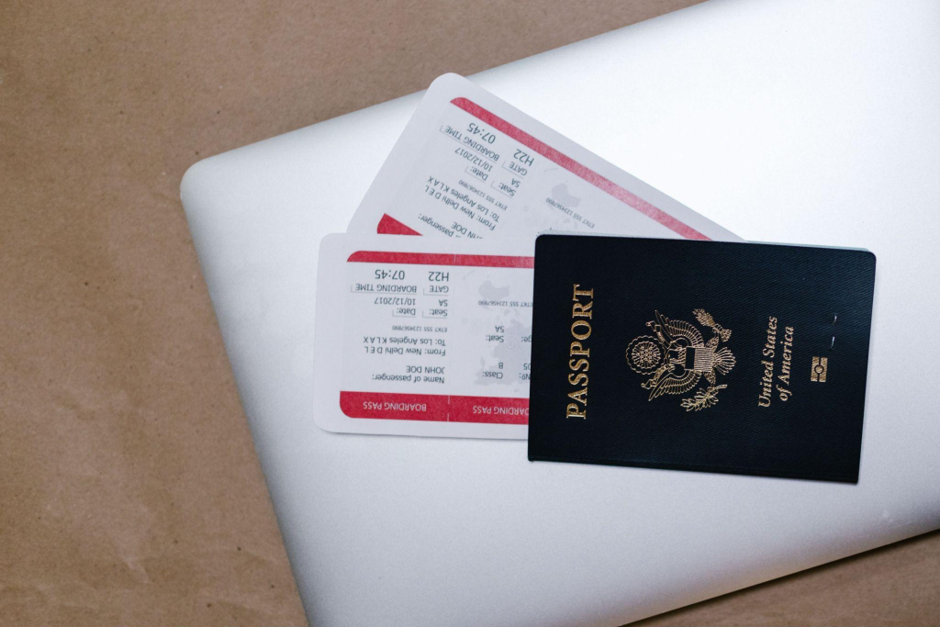
Photo: Pexels
Your passport is the most important document for your Japan trip.
Check it before you book flights.
Check it again before you apply for a visa.
Check it one more time before you leave for the airport.
Look at the expiration date, the spelling of your name, your passport number, and the condition of the passport itself.
Make sure the name on your airline ticket matches the passport you will use for travel.
General online rules about passport validity are not a safe reference here.
Different countries, airlines, and transit routes can have different expectations. A passport that is technically valid may still create problems if it is close to expiration or does not meet an airline’s boarding rules.
Check the official guidance for your passport and your airline before departure. This matters most when you have a connecting flight. Your final destination may be Japan, but you also need to meet travel document rules for any country where you transit. A short connection can still involve airline document checks.
Keep a photo or secure digital copy of your passport information page. Do not treat that copy as a replacement for the original passport. It is only a backup if you need to provide details to your hotel, airline, travel insurer, or embassy. Store the original passport in a secure place during your trip.
Many visitors carry it when they go out, especially if they plan to shop tax-free. Others prefer to leave it in a hotel safe. Choose the approach that works for your hotel and daily plans, but do not leave it loose in an open bag.
What to Prepare Before You Fly
Once your visa situation is clear, prepare the information that will help you at check-in and after arrival.
You do not need to print every document. However, it helps to have both an online version and an offline backup for the most important details.
Keep these items easy to access:
- Your passport
- Your visa or eVISA details, when required
- Your return or onward flight information
- Your first hotel booking or host address
- Your travel insurance details
- A basic list of your planned cities
- A contact number for your hotel, host, or travel companion
- Any medication documents you may need
Your first night is especially important.
After a long flight, you may be tired, hungry, and standing in a busy airport arrival hall. That is not the best moment to search through old emails for a hotel address in Japanese.
Save your hotel name in English and Japanese when possible, along with a map pin. A screenshot of the route from the airport to the hotel helps too.
If you are arriving late, check the last useful train or bus before your flight. A plan that looks easy at 4 p.m. may feel very different after 10 p.m. with a suitcase.

Photo: Unsplash
Avoid Tight Domestic Connections
Do not book a very tight domestic connection after arriving from an international flight.
International arrival procedures can include immigration, baggage collection, customs, terminal changes, transport ticket collection, and another security check.
It is not the same as walking between two domestic gates.
A connection may look comfortable on paper but become difficult when immigration takes longer than expected, baggage is delayed, or your next terminal is farther away than it looked on a map.
For a first trip, leave more time than you think you need. That extra time may become a quiet coffee, a relaxed lunch, or a comfortable wait near the next gate.
It is better than beginning your first day in Japan by rushing through an unfamiliar airport with a suitcase.
Keep Arrival Details Easy to Reach
The first hour after landing can involve several small decisions.
Which immigration queue should you join? Do you need to collect checked luggage before customs?
Then come the smaller questions: the right train line for your hotel, where to buy or collect a transport card, and where the nearest restroom is.
You may check your hotel address, train route, and arrival instructions several times during that first hour.
A fully charged phone battery is part of this preparation, bring a charging cable and a power bank in your carry-on bag.
Keep your important arrival details available offline as well. Airport Wi-Fi can be useful,but it is not something you should depend on for every step.
Visit Japan Web: Helpful for Arrival Procedures
Visit Japan Web is an official online service for preparing arrival procedures. It allows travelers to register information for immigration and customs procedures before arrival. Foreign visitors can also use it for certain tax-free shopping procedures during their stay.
It is not a visa, and it does not decide whether you need one. Your passport still does the real work at the border.
Think of it as a way to prepare some arrival steps before reaching Japan.
You can enter travel information, passport details, and customs declaration information online. The system creates a QR code that can be used during supported arrival procedures.
For many travelers, it is useful because it reduces the number of forms to complete after a long flight.
You can set it up before departure, then keep the required QR code available on your phone.
Do this while you have a stable connection and enough time to enter details carefully. Do not wait until you are walking toward immigration.
Your flight number, passport number, and planned address should match your actual trip. Check these entries before finalising them.
If you do not use Visit Japan Web, follow the arrival instructions provided at the airport. Paper procedures may still be available in some situations.
Speed alone won’t help you too much, but reducing decisions when you are tired will.A completed arrival process means one less thing to figure out while looking for your suitcase and checking the time of the last airport train.
Official reference: Visit Japan Web
Guide: How to Use Visit Japan Web
What Happens After You Land in Japan

Photo: Unsplash
The exact layout depends on the airport.
The general order is usually similar.
- You leave the aircraft.
- You follow signs for immigration.
- You present your passport and required arrival information.
- You collect checked luggage.
- You complete customs procedures.
- You enter the public arrival area.
At major airports, English signs are widely available.
The process can still take time when several flights arrive together. A tight restaurant reservation right after landing rarely works out. And the airport train will not always be waiting the moment you reach the platform.
Allow room for immigration, baggage collection, restroom breaks, mobile data setup, and finding the right transport line.
Immigration
At immigration, keep your passport ready before you reach the desk or terminal. Remove it from its case if needed.
Have your arrival information ready.
Answer questions simply and honestly.
For a normal holiday, that may mean saying you are visiting for tourism, explaining how long you expect to stay, and showing where you will stay if asked. You do not need to give a long explanation of every plan.
A clear answer is better.
“I am visiting Japan for ten days for tourism.”
“I will stay in Tokyo and Kyoto.”
“My first hotel is in Shinjuku.”
Those answers are easy to understand.
Baggage Collection
After immigration, follow signs for baggage reclaim.
Check the screen for your flight number and carousel number.
Large airports can have long walks between immigration and luggage collection. Use the restroom before leaving the secure area if you need to.
Once you collect your bag, move away from the carousel before opening it or reorganising your belongings. Other travelers may still be waiting for their luggage.
If your checked bag does not arrive, speak to your airline before passing through customs.
Keep your baggage tag receipt until you have confirmed that everything arrived.
Customs
All passengers entering Japan need to make a customs declaration about their belongings.
This applies even if you do not think you are carrying anything unusual.
Visit Japan Web can be used for an electronic customs declaration. Japan Customs also provides electronic declaration guidance for arriving passengers.
Be honest about what you are carrying.
Customs rules can apply to alcohol, tobacco, food, medicines, high-value goods, cash, and items sent separately from your luggage.
If you are unsure about an item, check before packing it.
Official reference: Japan Customs Passenger Information
Mobile Data Makes Small Decisions Easier
After landing, you may need to check train times, station exits, hotel details, and route changes.
Mobile data can make those small checks easier, especially when your flight is late, a platform changes, or rain affects your route.
Some travelers prepare mobile data options for Japan before arriving.
Check Medication and Restricted Items Before Packing

 Photo: Pexels
Some items need extra checking before you pack.
Most travelers will have no problem with ordinary personal belongings. Medication, CBD products, certain food items, and high-value goods are the areas most worth confirming in advance.
The important point is not to make your packing complicated.
It is to avoid assuming that rules from home will apply in Japan.
Drugs, Cannabis, and CBD Products
Japan has strict rules for illegal drugs and related products.
Do not bring recreational drugs, cannabis products, cannabis edibles, or CBD products unless you have checked the current rules for your exact product through an official Japanese source.
A small amount is not treated as an exception, and legal status in another country does not carry over. Even a label that says CBD proves nothing on its own, because the exact ingredients matter.
This is one part of travel preparation where checking early is much easier than trying to solve a problem at the airport.
Check Prescription Medication Early
Prescription medication can also require advance checking.
The issue is not only whether you have a prescription. The ingredients, quantity, and supporting documents can matter.
This may affect travelers carrying medication for pain, ADHD, anxiety, sleep, allergies, diabetes, or other ongoing conditions.
Some medicines can be brought into Japan for personal use without special procedures when they remain within the applicable limits. Other medicines require an Import Confirmation. Controlled substances may require separate permission before travel.
Do not wait until the week before your flight to check.
Bring medication in its original packaging whenever possible.
The label should clearly show the medicine name.
It is also helpful when the prescription name matches the name in your passport.
Carry a prescription or doctor’s letter when you can to help explain what the medicine is and why you need it.
Do not mail medication to your hotel as a shortcut. Import procedures can differ depending on the product and delivery method.
Official reference: Information for Travelers Bringing Medicines into Japan
Controlled substances reference: Narcotics Control Department Application Guidance
Food, Plants, and Gifts Can Also Be Restricted
Japan also has controls for meat products, fruit, vegetables, plants, animal products, counterfeit goods, and some items intended for sale.
A simple rule helps.
When something is not clearly ordinary personal travel luggage, check it before packing.
That includes food gifts, supplements, drones, professional camera equipment, medicine, large amounts of alcohol, expensive watches, and items you plan to leave in Japan.
A gift that seems harmless can still be restricted, so check before it goes in the bag.
A snack or souvenir can feel like a small item.
Border rules may treat it differently.
Health Requirements and Travel Insurance
Japan does not currently list routine COVID-19 vaccination certificates, pre-departure tests, or arrival tests among ordinary entry requirements.
Health-related entry information can change more quickly than hotel or train information.
Check the latest official border-health information shortly before your flight, especially when a major international health event affects travel.
Travel insurance is not usually the first thing people think about when planning a trip to Japan, but it becomes important when something goes wrong.A slip during winter, sudden fever, a delayed flight, a lost suitcase, or a missed connection can become expensive without the right coverage.
Japan has excellent medical care, but visitors should not assume every cost will be simple or low.
Choose travel insurance that covers medical treatment, emergency support, and the activities you plan to do.
Read the insurance policy before you leave.
Some policies treat skiing, snowboarding, hiking, cycling, diving, or rental cars differently from normal sightseeing.Keep the insurer’s emergency contact number saved on your phone, store policy details somewhere you can access without searching through your email.
Plan Your First Day Around Energy, Not Ambition
Entry requirements are only part of a smooth arrival.
The first few hours in Japan can shape how relaxed the rest of the trip feels.
Avoid planning a packed sightseeing schedule for arrival day. Immigration, baggage collection, airport transport, and hotel check-in on top of jet lag often take longer than expected.
A hotel in central Tokyo may look close to the airport on a map. The journey can still include finding the platform, carrying luggage, changing trains, choosing the correct station exit, and walking through an unfamiliar area.
Choose the Route With Fewer Stressful Steps
The fastest airport route is not always the best route.
A direct airport bus can be more comfortable than a train with two transfers.
A taxi may make sense when you arrive late, have heavy luggage, or are traveling as a group.
A train can be the better option when your hotel is near a major station and you arrive during normal daytime hours.
Look at the complete journey before you decide.
Check:
- How many times you need to change trains
- Which station exit is closest to your hotel
- Whether the route includes stairs or long underground passages
- Whether your hotel allows late check-in
- How much walking is required after leaving the station
A route that saves ten minutes but adds a difficult transfer may not be the better choice.
Bring More Than One Way to Pay
Japan does not require every tourist to show a fixed amount of money at immigration.
However, an immigration officer may want to understand how you plan to support yourself during your stay.
Keep your hotel bookings, return or onward ticket, and usual payment methods easy to explain if asked.
For daily travel, it is useful to carry more than one way to pay. A main card, a backup card, and some Japanese yen can make the first day easier.
Do not rely on one card only. A card can fail because of a spending limit, an overseas security block, a damaged chip, an ATM compatibility issue, or a temporary system problem.
Give Yourself One Easy First Stop
Your first stop does not need to be a famous attraction.
It can be your hotel, a nearby convenience store, a simple restaurant, or a short walk around the station area.
There is something comforting about reaching your hotel before trying to see the city.
Once your luggage is down and your room is confirmed, Tokyo, Osaka, Kyoto, or Fukuoka feels easier to explore.
You will have more energy for the places you actually came to see.
Common First-Time Mistakes
Assuming Everyone Gets 90 Days
Many travelers hear that Japan allows visa-free stays of up to 90 days.
That is true for many eligible visitors.
It is not universal.
Some visa-free arrangements have a different permitted period. Some apply only to specific passport types. Some have additional conditions. Check your own passport, not a general rule.
Booking Everything Before Checking Visa Rules
A low-cost flight can be tempting.
A non-refundable hotel can look like a good deal.
Entry planning should come first.
Check visa requirements before paying for every part of the trip. This matters most when an application needs supporting documents, extra processing time, or a specific application route.
Treating Visit Japan Web as a Visa
Visit Japan Web helps with arrival procedures.
It does not replace a visa application when a visa is required. Use it as part of your arrival planning, not as proof that your entry permission is complete.
Forgetting About Transit Rules
Your final destination is Japan.but your route may include another country.
Check transit requirements for every airport on your itinerary, particularly when you have a long connection, need to change terminals, collect baggage, or stay overnight.
Keeping Important Details Online Only
Your phone may run out of battery.
Airport Wi-Fi may be slow.
An app may log you out at the wrong time.
Keep a small offline backup of your hotel address, flight number, insurance details, and important contacts.
Arriving Without a First-Night Plan
You do not need to plan every restaurant or museum before you fly.
You should know where you are sleeping on the first night.
A clear first-night plan makes arrival easier. It also gives you a place to head toward if you are tired, delayed, or overwhelmed by a large airport.
A Simple Pre-Flight Timeline
Two to Three Months Before Departure
Check your passport expiration date.
Check whether you need a visa.
Read official visa information for your passport and place of residence.
Apply for a visa early if needed.
Purchase travel insurance after you understand the cover.
Book flights and a first hotel once your entry plan is clear.
Two to Three Weeks Before Departure
Review hotel addresses.
Confirm your return or onward flight.
Check your airline’s baggage and document rules.
Look at the airport-to-hotel route.
Check whether you will arrive after the last useful train.
Prepare medication documents when needed.
A Few Days Before Departure
Complete Visit Japan Web if you plan to use it.
Save passport information, hotel details, and flight itinerary offline.
Charge your power bank.
Download maps for your first city.
Check the latest official visa, customs, medication, and health information.
At the Airport
Keep your passport in an easy-to-reach pocket.
Keep visa information ready when required.
Have your first-night hotel details available.
Avoid packing medication, valuables, chargers, or essential documents in checked luggage.
After you check in, take one last look at your arrival plan.
Know which airport you are landing at.
Know where you are sleeping.
Know how you expect to get there.
That is enough for a smooth start.
Summary
Japan travel requirements are not difficult when you deal with them in the right order.
Start with your passport.
Check whether you need a visa.
Use official information based on your nationality, passport type, residence, travel purpose, and planned stay.
Prepare hotel details, onward travel information, insurance documents, medication checks, and arrival procedures before you leave home.
Visit Japan Web can make immigration and customs preparation easier. It is useful, but it is not a visa.
After you land, move one step at a time.
Immigration first.
Baggage next.
Customs after that.
Then you can focus on the enjoyable part of the trip: finding the airport train, reaching your hotel, and beginning your time in Japan.