 Photo: Unsplash
Introduction
Osaka is the kind of city that surprises you.
You expect food. You get food everywhere — at street corners, inside train and subway stations, in narrow alleys that smell like grilled meat and dashi broth. But what first-time visitors often do not expect is how easy the city is to move around.
The train network connects most major spots without much trouble. The areas most travelers want to see — Dotonbori, Shinsaibashi, Namba, Osaka Castle — are close enough to combine in one day without overloading your schedule. That said, close on a map and easy to walk are not always the same thing.
This guide covers the best places in Osaka for first-time visitors: where to go, when to go, how to get there, and what to watch out for on the ground.
Stay connected in Japan with an eSIM
From my experience as a tour conductor, the difference between a smooth day and a stressful one often comes down to timing and route order — not how many places you fit in. You do not need a perfect plan. You need a plan with enough space.
Overview of Osaka
Osaka is Japan’s third-largest city and sits in the Kansai region, about 2.5 hours from Tokyo by shinkansen. It is known for food culture, nightlife, and a relaxed energy that feels different from Tokyo. Compared to Tokyo, the city is compact. Most major spots are connected by simple train lines, and you rarely need more than one transfer to get between them.
Quick facts to help you plan:
- Main touristic areas: Namba, Dotonbori, Shinsaibashi, Osaka Castle, Shinsekai, Tennoji, Umeda
- Best base stations: Namba Station or Osaka/Umeda Station
- Recommended trip length: 1 full day minimum, 2 days to move at a relaxed pace
- Getting around: Osaka Metro subway system covers most areas well
- Best time to visit: Spring (March–April) and autumn (October–November); summer is hot and humid
- Easy to combine with: Kyoto (about 28 minutes by JR) or Kobe (about 20 minutes)
If you only have one day, grouping nearby areas keeps the route simple.
One approach that works well:
- Morning: Osaka Castle
- Afternoon: Tennoji and Shinsekai
- Evening: Namba and Dotonbori
Moving in one direction through the city — rather than doubling back — makes the day feel much easier. Do not try to visit everything. Choose what fits your pace.
Best Things to Do in Osaka
Walk Dotonbori in the Evening
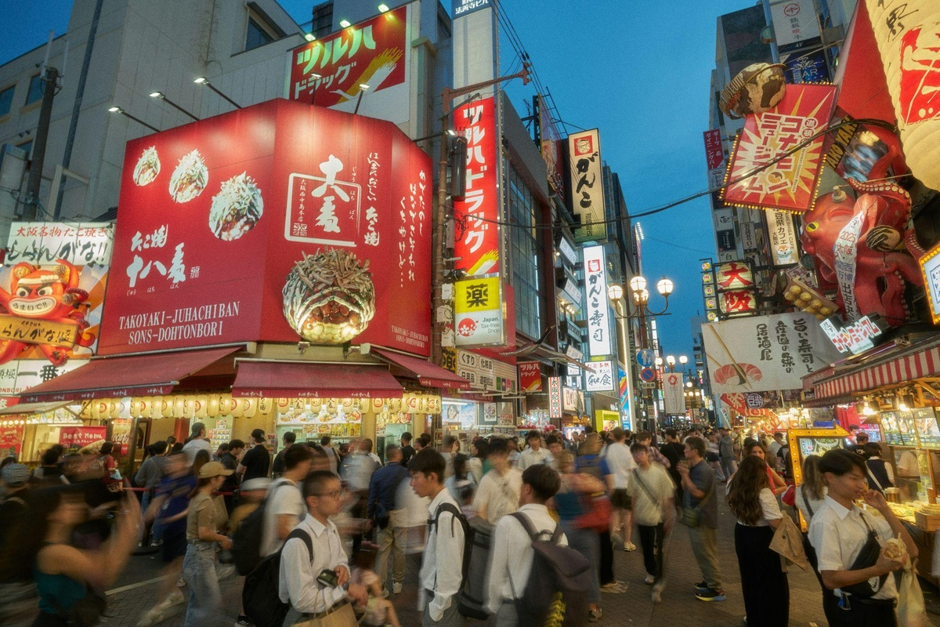
Dotonbori is the image most people carry before they arrive — the giant Glico running man sign, the neon lights reflected in the canal, takoyaki smoke rising from a dozen stalls along the strip.
Evenings are when it earns that image. The crowds thicken but the energy lifts too. Street food vendors, claw machine arcades, ramen counters, and the canal-side walkway all come alive in a way that a daytime visit does not quite match.
Walk the canal path (Tombori River Walk) from the bridge toward the west side. It is less crowded than the main street and gives you a better view of the signs. If you want photos without people filling every frame, come before 6pm or after 10pm.
Start near the Glico sign, then move into the side streets. The smaller streets feel more local and give you more space to stop and eat without being pushed along by the crowd.
- Best time: Evening, 6pm–9pm for atmosphere; before noon if you want to walk freely
- Time needed: 1–2 hours depending on food stops
- Nearest station: Namba Station (multiple lines)
Visit Osaka Castle in the Morning
Osaka Castle is one of the most recognizable landmarks in Japan. The white and green tower sitting above stone walls and a moat is worth seeing — but the experience depends heavily on when you go and what you expect.
The castle interior is a museum, not a preserved historical space. The tower was rebuilt in concrete in 1931. The exhibits cover the history of Hideyoshi Toyotomi and the castle’s role in Japanese history. If you go mainly for the building’s appearance and the park around it, the outside experience may be more satisfying than the interior.
The park is large and genuinely pleasant. In cherry blossom season, it is one of the best spots in Osaka. On a regular day, it works well as a place to walk and decompress after trotting along the busier streets.
One note on access: the walk from the nearest station to the castle tower is longer than most maps suggest — around 15–20 minutes on foot from Osakajokoen Station. With luggage, that stretch feels longer. Factor it into your timing.
- Best time: Before 10am for fewer crowds; spring for cherry blossoms
- Time needed: 1:30–2 hours including the park walk
- Nearest station: Osakajokoen Station (JR Loop Line) or Tanimachi 4-chome (Osaka Metro)
- Entry fee: Check the official website for current prices
Explore Shinsekai and Try Local Food
Shinsekai is an older neighborhood south of Namba, known for small kushikatsu shops and narrow streets around Tsutenkaku Tower.
The area grew around Tsutenkaku Tower, a retro-style landmark rebuilt twice since the early 1900s. The streets around it are lined with kushikatsu restaurants — skewered and deep-fried ingredients served with a communal dipping sauce. The rule is simple: dip once, not twice. It is the one rule everyone mentions and the one rule everyone eventually breaks by accident.
The neighborhood is not polished. It has a working-class atmosphere that contrasts sharply with Shinsaibashi. Order small portions at different places — it saves time and keeps the experience light.
- Best time: Late afternoon to evening
- Time needed: 1–1:30 hours
- Nearest station: Shin-Imamiya Station or Ebisucho Station
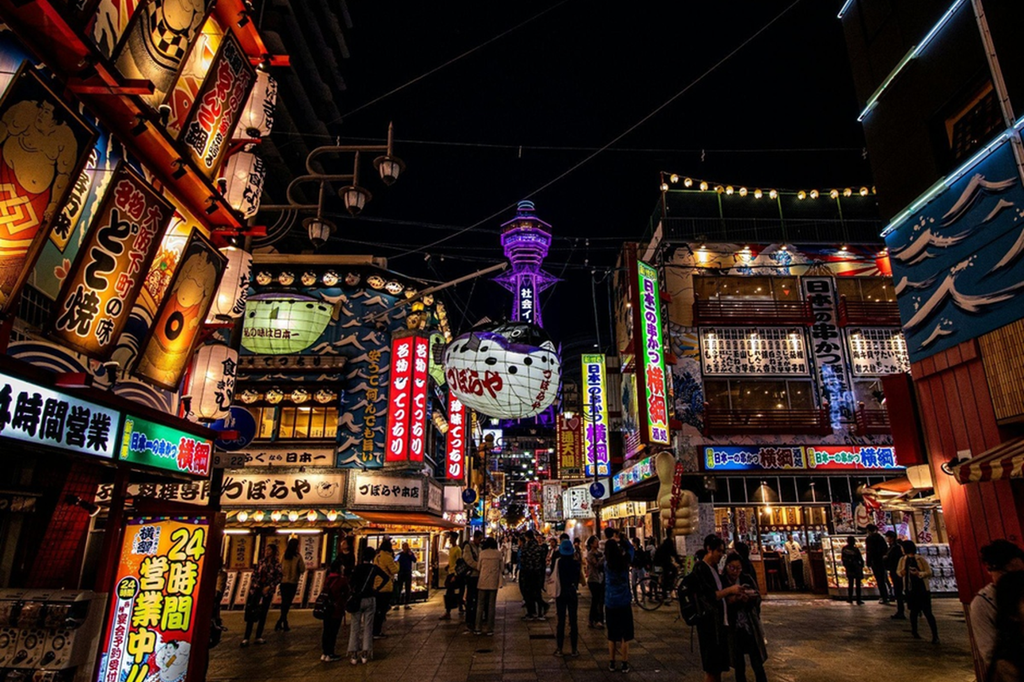
 Photo: Unsplash
Move Slowly Through Shinsaibashi
Shinsaibashi-suji is a covered shopping arcade that runs north from Dotonbori toward Shinsaibashi Station — around 600 meters of international brands, local fashion shops, drugstores, and food options under one roof.
The covered arcade makes it a practical choice for rainy days and the summer heat. You can move through without worrying about weather, which matters more than it sounds after a long day on foot. If it rains or gets hot, this area becomes easier than most outdoor spots.
West of the arcade, Amerika-mura offers a different crowd — younger, more street-culture focused. Worth a short detour if that appeals to you.
- Best time: Morning to early afternoon is less crowded; midday is busiest
- Time needed: 1–2 hours depending on pace
- Nearest station: Shinsaibashi Station (Midosuji Line) or Namba Station
Eat Your Way Through Kuromon Market
Kuromon Ichiba Market is a covered market near Namba that has operated for close to 200 years. It runs about 600 meters and holds over 150 stalls.
For travelers, the best use of Kuromon is a mid-morning food walk. The window between 9 and 11am is when the market feels most like itself — local buyers mixed with travelers, vendors with time to talk, food that has not been sitting out for hours. By noon, tour groups fill the narrow aisles and the mood shifts.
Ready-to-eat options include grilled scallops, fresh sashimi, tamagoyaki (rolled japanese omelette), and crab. Not cheap, but portions are sized for walking and the quality is generally high. Eat small portions at a few different stalls rather than committing to one full meal.
- Best time: 9am–11am, weekdays preferred
- Time needed: 45 minutes to 1.5 hours
- Nearest station: Nipponbashi Station, about 5-minute walk
Recommended Spots
1. Dotonbori
- Best for: First impressions, evening atmosphere, food exploration
- Time needed: 1–2 hours
- Best time: After sunset
- Access: Namba Station — check which exit faces the canal before you tap out
- Official website
- Google Maps
The Glico sign photo spot on Ebisu-bashi bridge is almost always crowded. Walk further along the canal for a cleaner angle and more room to stop.
2. Osaka Castle
- Best for: History interest, outdoor walks, cherry blossom season
- Time needed: 1:30–2 hours
- Best time: Morning
- Access: Osakajokoen Station (JR Loop Line) — the walk from the gate to the tower takes longer than it looks on the map. Check your exit before leaving the station.
- Entry fee: Check the official website before visiting
- Official website
- Google Maps
If you plan to visit the interior, add at least 30 minutes for elevator queues during peak season.
3. Shinsekai
Most first-time visitors spend more time around Dotonbori, but Shinsekai feels slower and easier to explore on foot.
Shinsekai is centered around Tsutenkaku Tower and the kushikatsu restaurants surrounding it. The neighborhood is not polished — working-class, a little worn, and more honest about what Osaka looked like before the tourist corridor took over. Some travelers find that refreshing. Others walk through in 20 minutes and feel done.
Worth going if: you want one meal rooted in a specific part of Osaka’s history, or if you have a half-day with no fixed plan. Easy to skip if: your time in Osaka is one day and you have not yet seen the main corridor.
- Time needed: 1–1:30 hours
- Best time: Late afternoon to evening
- Access: Shin-Imamiya Station or Ebisucho Station. Works well after a Tennoji visit — the two areas are close and the route flows naturally southward.
- Official website
- Google Maps
4. Kuromon Ichiba Market
The market opens early and moves fast. By 9am, vendors are already grilling scallops and laying out fresh tuna. By noon, tour groups fill the narrow aisles and the mood shifts.
Ready-to-eat options include grilled seafood, fresh sashimi, tamagoyaki, and crab. Not cheap, but the quality is generally high and portions are sized for walking.
- Time needed: 45 minutes to 1.5 hours
- Best time: 9am–11am
- Access: Nipponbashi Station, about 5-minute walk
- Official website
- Google Maps
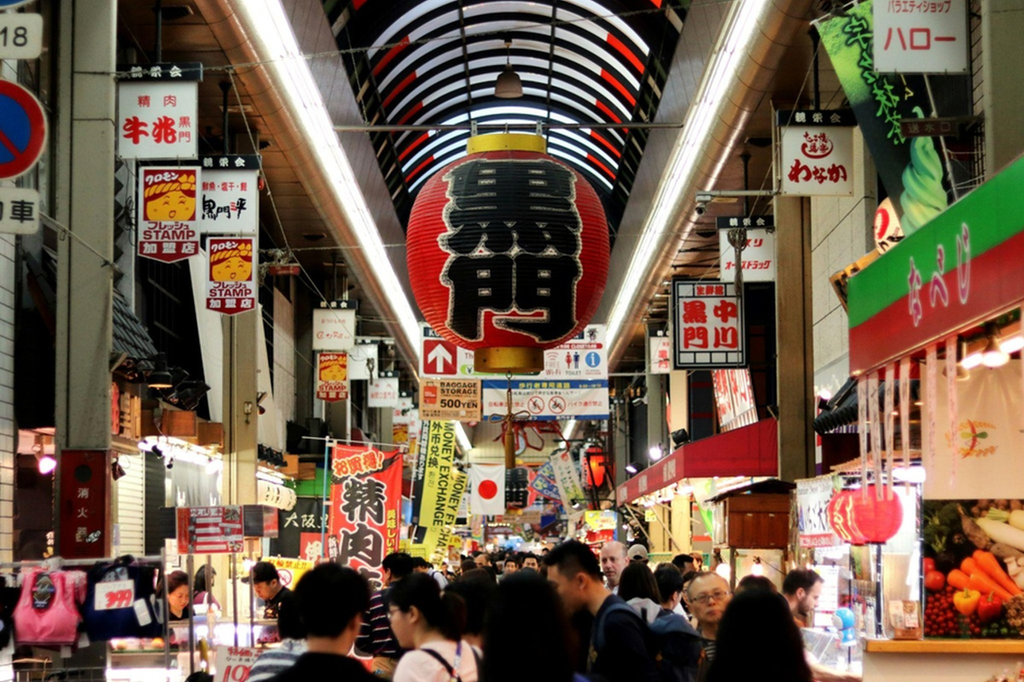
 Photo: Unsplash
5. Shinsaibashi Shopping Street
- Best for: Shopping, rainy day plans, drugstores, casual food stops
- Time needed: 1–2 hours
- Best time: Weekday mornings
- Access: Shinsaibashi Station (Midosuji Line), Exit 6
- Official website
- Google Maps
6. Umeda Sky Building and Osaka Station Area
- Best for: Second-day plans, city views, shoppers, travelers arriving from the north
- Time needed: Half a day if combining shopping and sightseeing
- Best time: Morning to afternoon; arrive at Umeda Sky Building before sunset for the best views
- Access: Osaka Station (JR) or Umeda Station (Osaka Metro Midosuji Line). The underground mall connecting these stations is large — if you have a specific store in mind, look it up before entering.
- Official website
- Google Maps
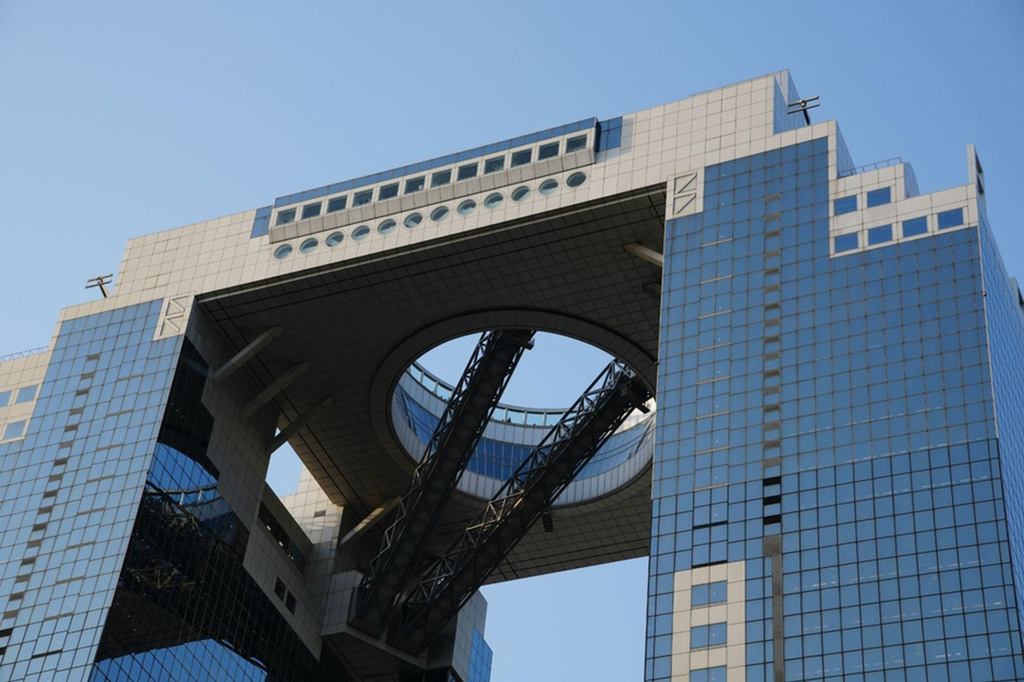
 Photo: Unsplash
7. Amerika-mura (Amemura)
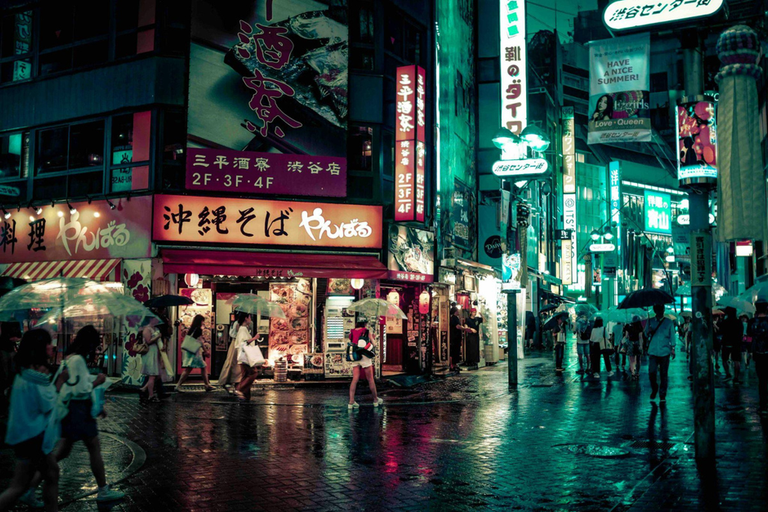
A short walk west of Shinsaibashi, Amemura is compact, a little loud, and aimed at a younger crowd. Vintage clothing, street fashion, small record shops, and Triangle Park at the center. If none of that is your scene, it is easy to walk past. If it is, an hour here fits naturally into a Shinsaibashi afternoon without rerouting your day.
- Time needed: 30 minutes to 1 hour
- Access: Shinsaibashi Station, west exit
- Google Maps
Travel Tips for Osaka
Getting Around
Osaka Metro covers the main tourist areas well. The Midosuji Line (red line) connects Umeda in the north to Namba in the south and is the line most visitors use most often.
An IC card — Suica, ICOCA, or similar — makes tapping through gates simple and works on Osaka Metro, JR lines, and most buses. Pick one up at the airport or any major station if you do not already have one.
Day passes for Osaka Metro exist and can be worthwhile if you plan to move between several areas. Check current options when you arrive, as pass types and pricing are subject to change.
Which Exit? It Actually Matters
Many first-time visitors exit from the wrong side of Namba Station and walk longer than expected. Namba alone is served by multiple lines — Osaka Metro, Nankai, Kintetsu — and the exits are spread over a wide area. The wrong exit can add 10 minutes to what looks like a 5-minute walk.
Before you leave a station, check the exit number on Google Maps. It is a small step that saves real time, especially in a station you have never used before.
Staying Connected
You will use your phone constantly — maps, train routes, translation, opening hours. Relying on public WiFi works in some areas but not all, and searching for a connection at the wrong moment adds friction to an already busy day.
Stay connected in Japan with an eSIM
Cash and Cards
Most convenience stores, large restaurants, and chain shops in Osaka accept IC cards or credit cards. Smaller local restaurants, market stalls, and some older shops are still cash only. Keeping around ¥3,000–5,000 in cash covers most situations. ATMs at 7-Eleven and Japan Post are generally reliable for foreign cards.
Heat, Rain, and the Covered Arcade Advantage
Osaka summers (July–September) are genuinely hot and humid. If you are planning to walk Osaka Castle Park or spend time outdoors, mornings are much more comfortable than middays. The covered arcades at Shinsaibashi and Kuromon help — you can often stay dry or cool between stops without major rerouting.
A compact umbrella is worth packing. Rain is possible year-round, and Osaka’s arcade network means shelter is usually nearby.
Food Timing
Busy lunch runs roughly 11:30am–1:30pm. Popular restaurants near Dotonbori and Kuromon can have queues during this window. Eating at 11am or after 2pm avoids most of the wait. For dinner, before 6pm or after 8pm is noticeably calmer than peak hours.
Access
From Tokyo (by Shinkansen)
The Tokaido Shinkansen connects Tokyo Station and Shin-Osaka Station. The Nozomi takes approximately 2 hours 15 minutes. From Shin-Osaka, transfer to Osaka Metro to reach Namba or other central areas. Travel times vary by service — check the latest route on the day of travel.
From Kansai International Airport (KIX)
Nankai Limited Express (Rapi:t): Direct to Namba Station, approximately 35–45 minutes. The easiest option if you are carrying luggage and heading to the Namba area.
JR Haruka: Runs to Tennoji and Osaka Station (Umeda side). More useful if your accommodation is in the north of the city.
Check current fares and schedules on the official railway websites before travel. If you have significant luggage, fewer transfers matter more than a slightly faster route.
From Kyoto
JR Special Rapid from Kyoto Station to Osaka Station takes approximately 28 minutes. From Osaka Station, Osaka Metro or JR can take you south to Namba. The route is straightforward and well-signed.
Nearest Stations by Area
- Dotonbori / Namba: Namba Station (multiple lines)
- Shinsaibashi: Shinsaibashi Station (Midosuji Line)
- Osaka Castle: Osakajokoen Station (JR) or Tanimachi 4-chome (Metro)
- Kuromon Market: Nipponbashi Station
- Shinsekai: Ebisucho or Shin-Imamiya Station
- Tennoji: Tennoji Station (JR / Osaka Metro)
- Umeda / Osaka Station: Osaka Station (JR) or Umeda Station (Metro)
The fastest route is not always the easiest one. If you have luggage or are visiting multiple areas in one day, fewer transfers often feels much smoother by the afternoon.
Google Map
Use this map to check the area before you go. It helps you understand station exits, walking routes, and distances between spots.
- Dotonbori
- Namba Station
- Shinsaibashi Station
- Osaka Castle
- Kuromon Market
- Shinsekai
- Tennoji Station
- Osaka Station / Umeda
Before you leave your hotel, check the specific exit for your first stop. This is especially worth doing at Namba Station, where exits are spread across a large area and the difference between them is not always obvious from street level.
Extra Images
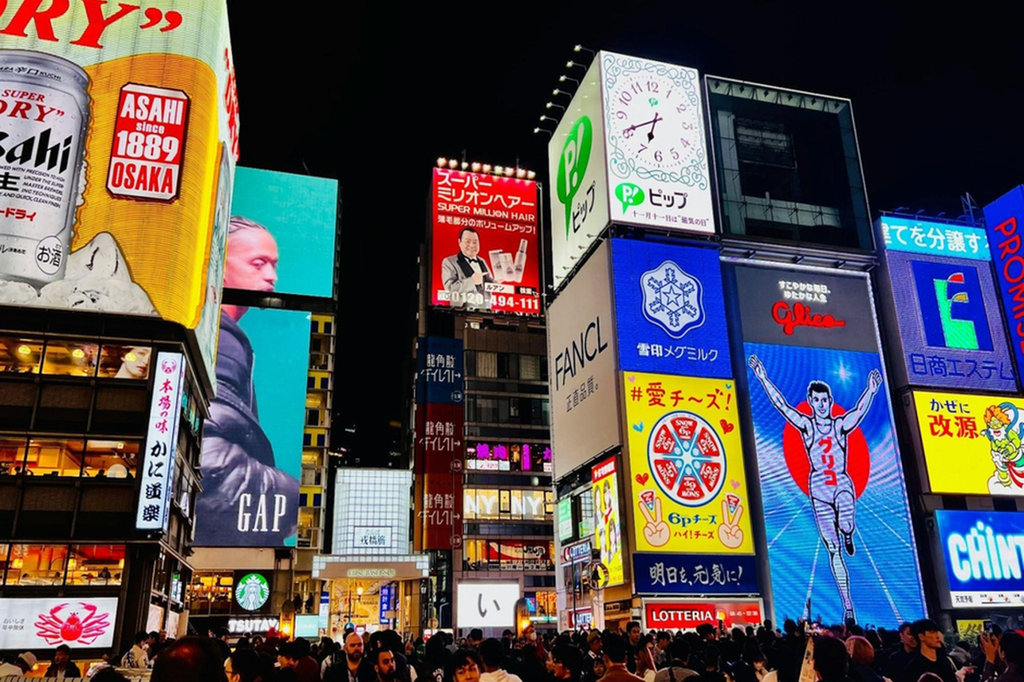
 Photo: Unsplash
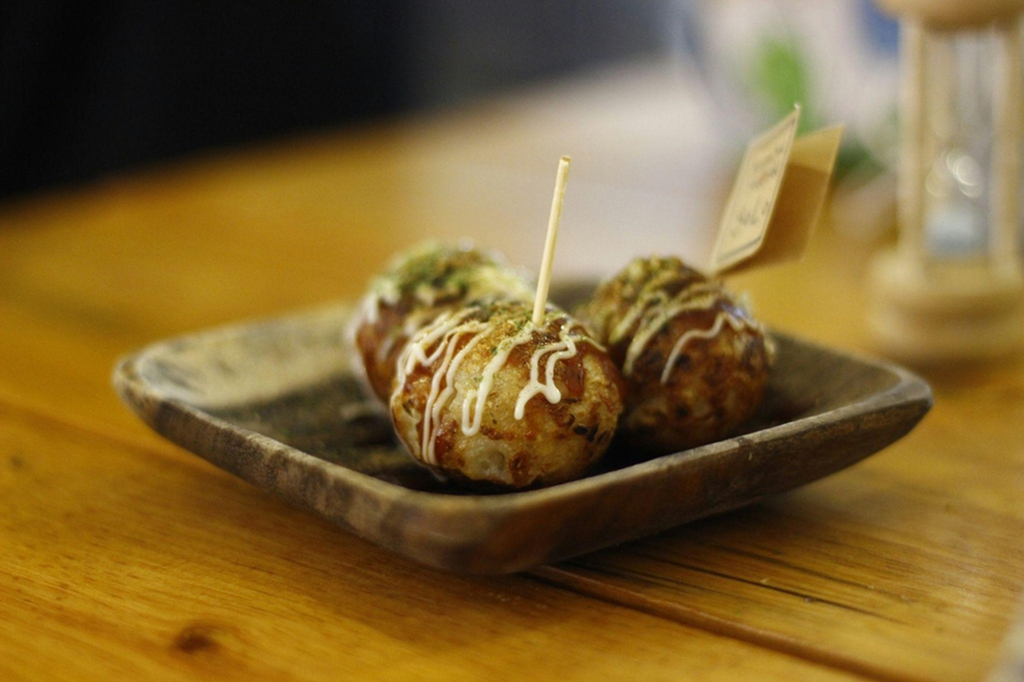
 Photo: Unsplash
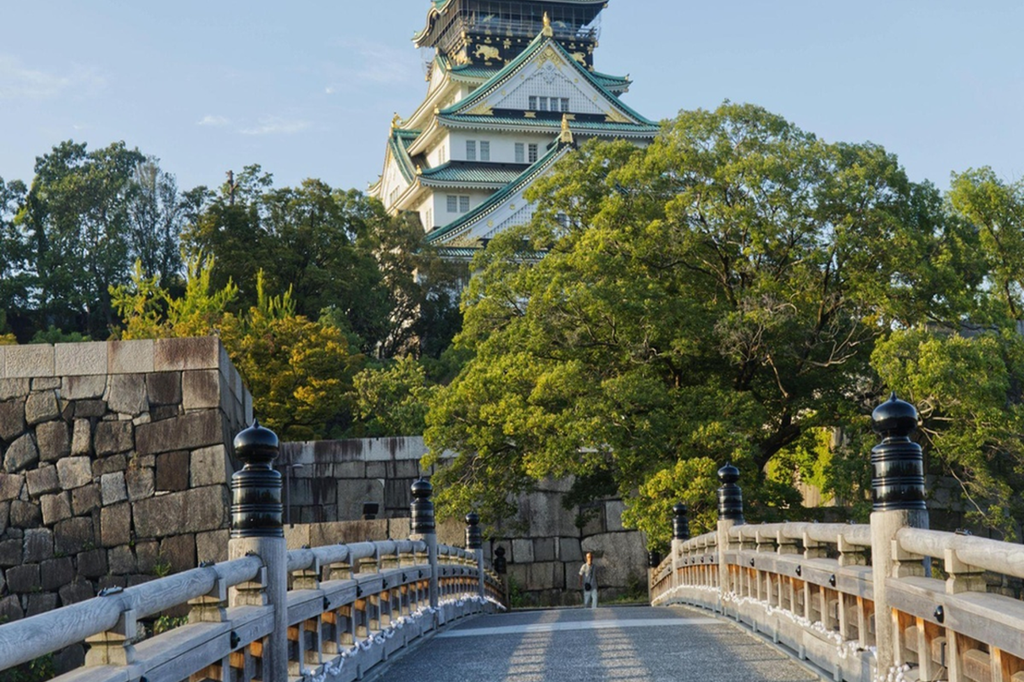
 Photo: Pexels
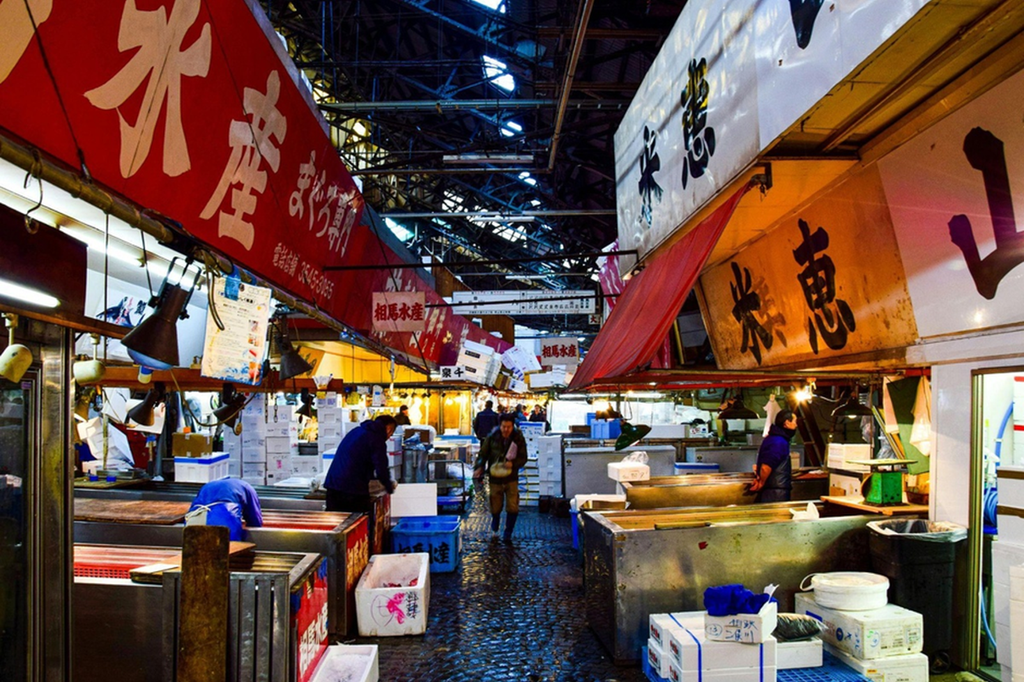
 Photo: Pexels
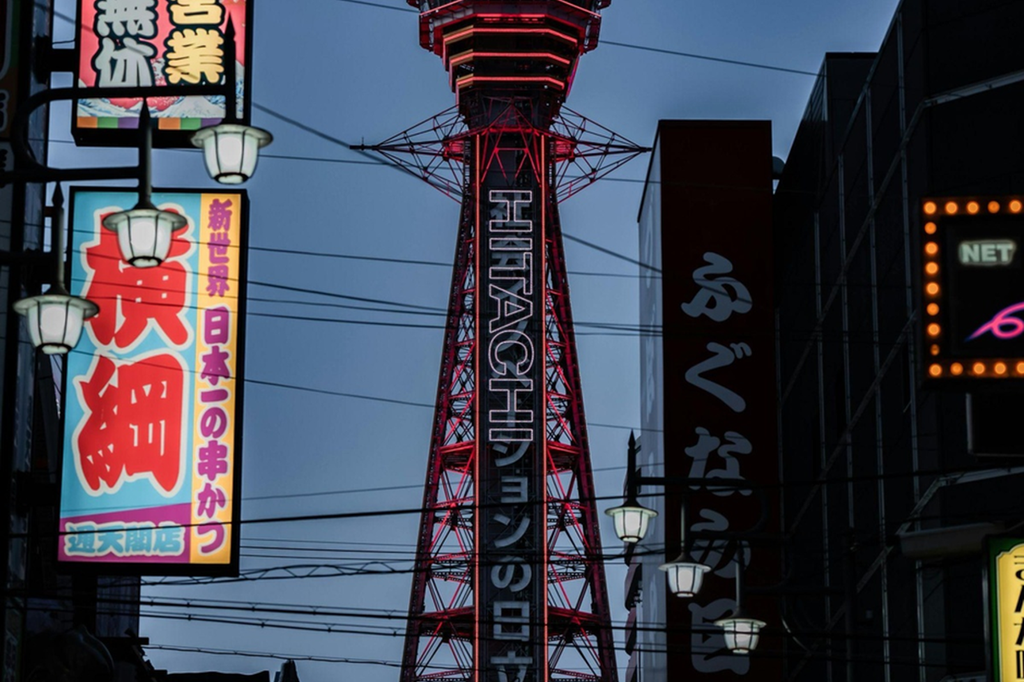
 Photo: Pexels
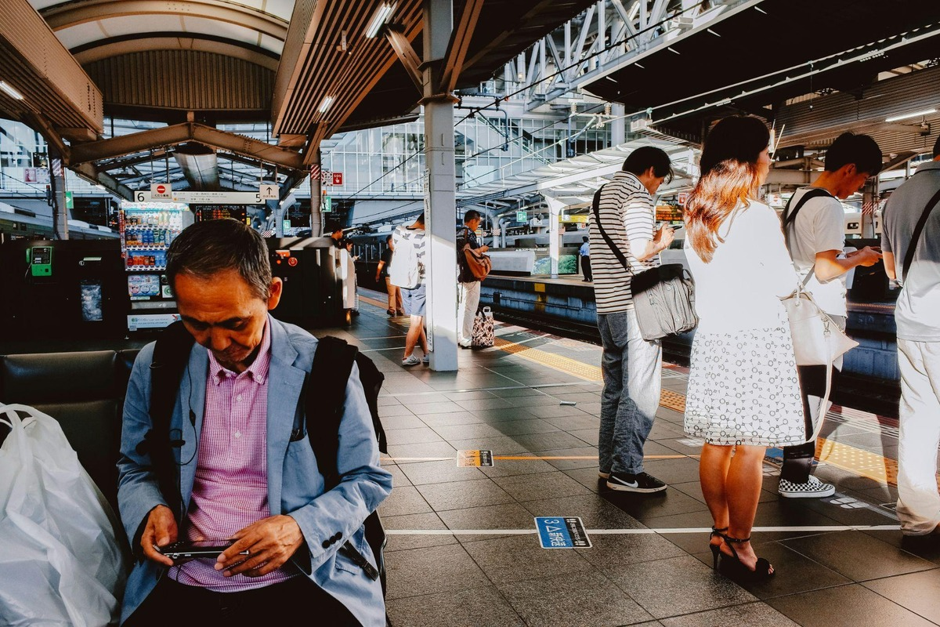
 Photo: Unsplash
Stay Connected in Osaka
You will check your map more times than you expect — station exits, walking routes, restaurant hours, train transfers. Having reliable mobile data makes those moments seamless.