Photo: Unsplash
Introduction
Japan’s train system is one of the best in the world and home to some of the busiest stations on the planet. “Will the train be too crowded?” “What if I do not know where to stand?” “I do not want to make a mistake and seem rude.” These worries are completely normal for travelers. Japanese trains also come with their own set of unspoken rules. The good news is that these rules are simple once you know them — and understanding them can make your experience much smoother and more enjoyable.
In this article you will learn:
- How to prepare before boarding and buy tickets
- How to behave on the train
- How to handle rush hour and crowded trains
- The rules for women-only carriages
- Station and Shinkansen etiquette
Before you go, having mobile data ready makes navigating train stations much easier. Check out our recommended eSIM options for Japan here: https://getjapanesim.com
Overview
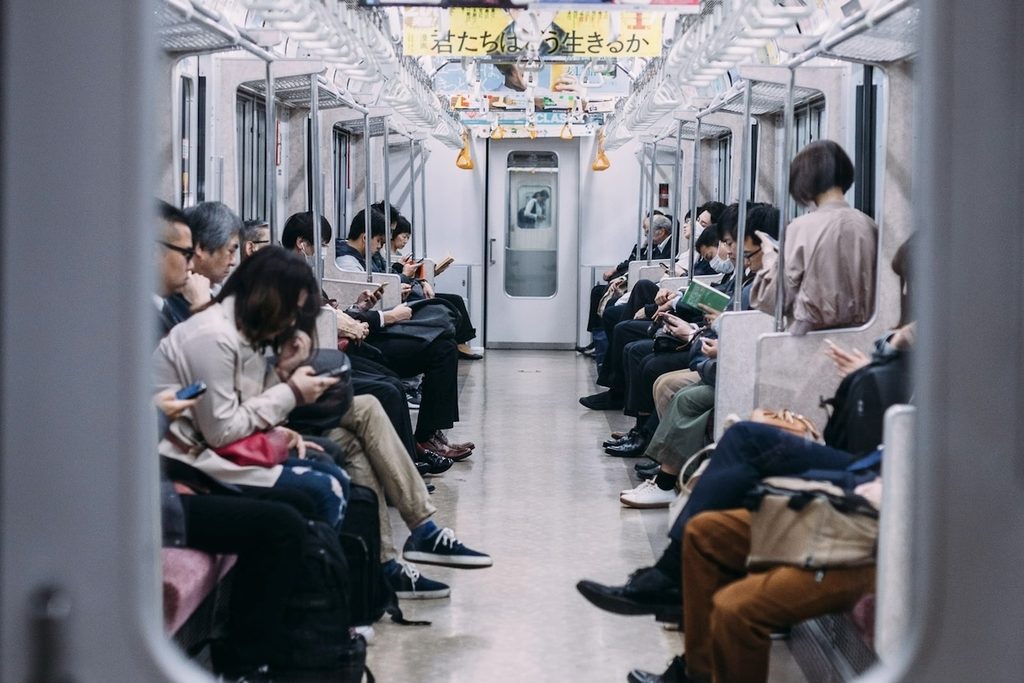
Japan’s trains are known around the world for being on time, clean, and quiet. For many visitors, the train system is one of the most impressive parts of traveling in Japan. This did not happen by chance. It is the result of many people following the same simple rules.
For example, trains can run exactly on schedule because everyone lines up properly before boarding. Stations and trains stay clean because everyone takes their trash with them. Trains can also feel calm and quiet, which means many people use this time to rest or read.
Most train manners in Japan come from one idea: being quiet means being considerate of the people around you. Each small action adds up to make the whole system more comfortable for everyone. As a visitor, you do not need to memorize every rule perfectly. But understanding why these manners exist makes them much easier to follow naturally.
Before You Board
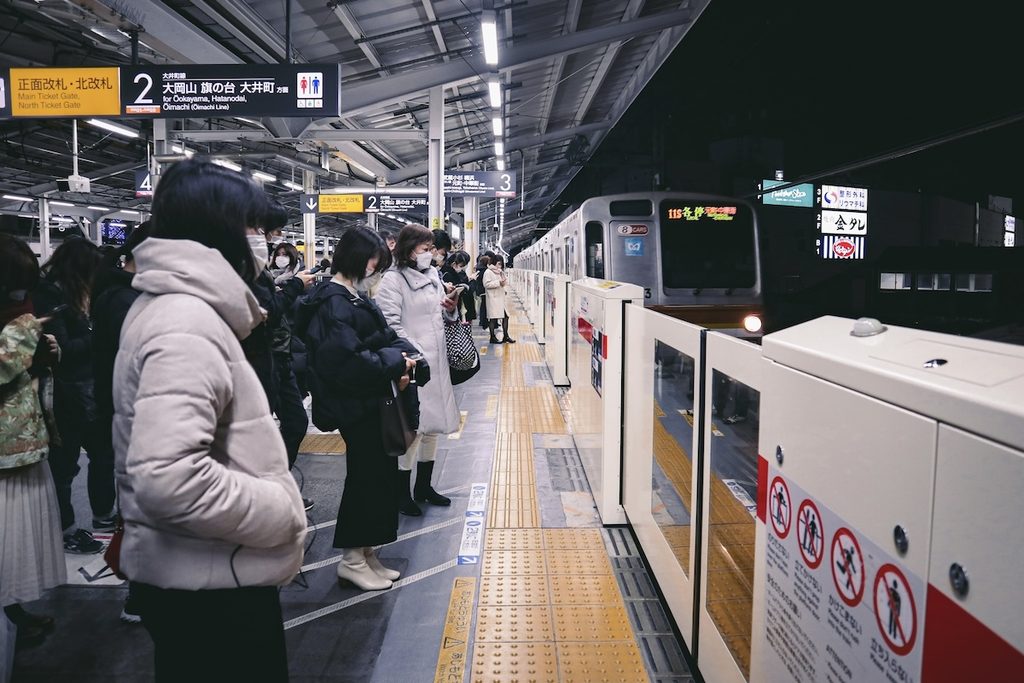
Photo: Unsplash
Line Up Before Boarding
Japanese train platforms have markings that show where to stand. When waiting for a train, line up at these spots.
The exact position can vary slightly from platform to platform. If you are at a station for the first time, it helps to check where other people are standing before joining the line. When the train arrives, let passengers exit first. Once everyone has gotten off, board in order. This is one of the most important rules on Japanese trains.
Platform Safety
When moving along the platform, always walk on the inner side, away from the tracks.
On the platform, do not stand or block on the yellow tactile blocks. These are designed to help visually impaired passengers navigate safely. Blocking them can cause serious difficulties for those who need them.
Many stations are equipped with platform doors — these open automatically when the train arrives and close again before departure. Do not lean objects against the doors, lean on them, hold onto them, or lean out beyond them. Wait quietly behind the doors until they open.
No matter how tempting it may be to get a closer look at the train, never approach a moving train or one that is about to depart. Approaching a moving train puts yourself at risk and can delay the entire platform schedule.
Tickets and IC Cards
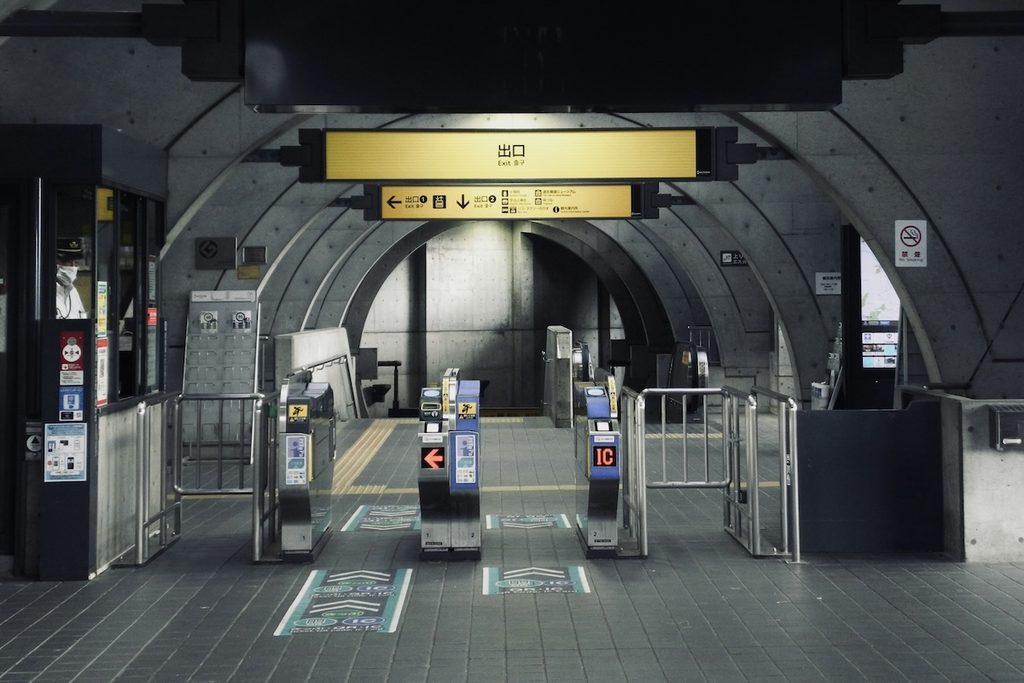
Photo: Unsplash
Touch In and Out with an IC Card
Having an IC card, such as Suica or PASMO, makes traveling on Japanese trains much easier.
You simply touch the card on the gate to pass through. When passing through the gate, try not to stop or slow down. If people are lined up behind you, taking too long can cause delays for others. If your balance is too low and the gate closes, do not worry. Just use the nearby ticket machine or top-up machine to add funds, then try the gate again.
IC cards work not only on trains, but also on buses, in convenience stores, and at vending machines. Carrying one card makes getting around Japan much more convenient.
Buying a Ticket
If you do not have an IC card, you can also purchase a ticket at the station vending machine.
Most machines have an English language option, so finding your way through the process is straightforward even without reading Japanese. Check the fare map above the machine to find your destination and the corresponding price. Select the correct amount and purchase your ticket. If you are not sure of the fare, buying the cheapest ticket and paying the difference at a fare adjustment machine near the exit is a common approach.
On the Train
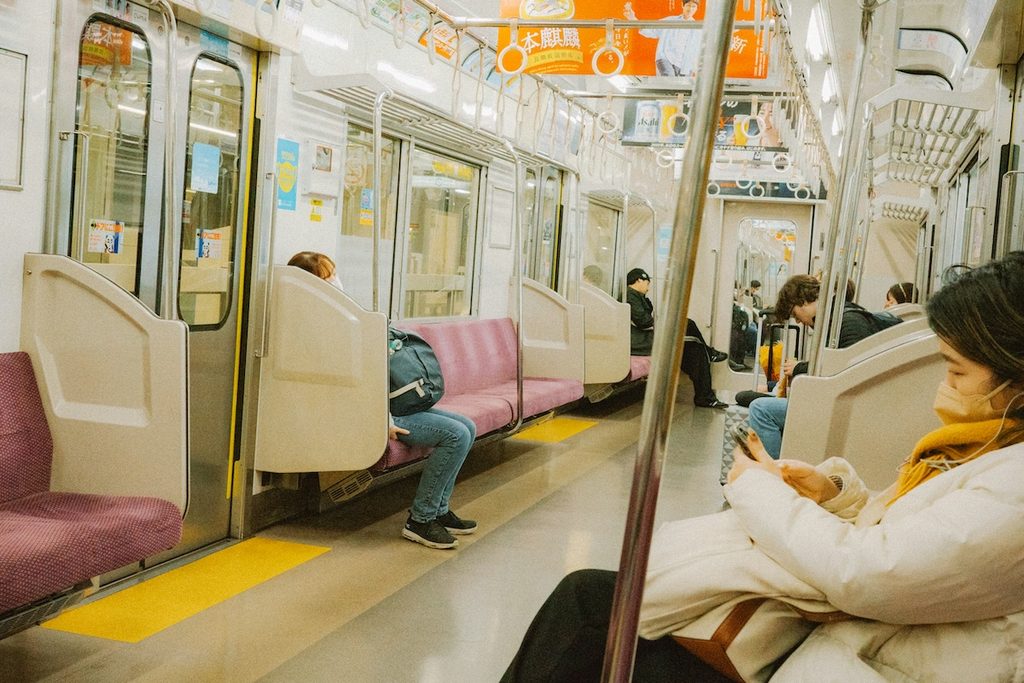
Photo: Unsplash
Priority Seating
Japanese trains have special seats called priority seats. They are usually located near the doors and are often a different color from the regular seats.
Priority seats are reserved for elderly passengers, pregnant women, people with disabilities, and those traveling with young children. If the train is not crowded, it is generally fine to sit there. However, always give up the seat right away if someone who needs it boards the train.
Rules and locations for priority seats can vary slightly depending on the train operator. Always look for signs inside the train or on the platform. Most signs are written in English as well, so you will be able to understand them easily.
Phone Calls and Conversations
Keeping quiet is one of the most basic rules on Japanese trains.
Phone calls are not acceptable on local trains and subways. If you receive a call, step off at the next station or reply by message instead. If you are traveling with others, keep your voice low. Loud conversations can disturb the passengers around you. Also, when listening to music or watching videos with earphones, be mindful of sound leakage. Even if it seems quiet to you, the person sitting next to you may still be able to hear it.
Shinkansen has slightly different rules. Talking is perfectly fine on board, but phone calls should be taken to the deck area between carriages. For more details, see the Shinkansen Etiquette section below.
Eating and Drinking
On local trains and subways, it is best to avoid eating.
Drinks in sealed bottles or cups with lids are basically fine. However, in a crowded carriage, be careful that condensation on the bottle does not drip onto other passengers.
On Shinkansen, eating and drinking are perfectly acceptable — many passengers enjoy a bento box or a drink purchased at the station. This is actually one of the simple pleasures of traveling by Shinkansen in Japan.
Either way, always take your trash with you.
Managing Your Bags and Luggage
Being mindful of your bags on Japanese trains is important.
If you are carrying a backpack, take it off when you board and hold it in front of you, or place it on the overhead rack. Even when the train is not crowded, holding it in front of you shows consideration for those around you. In a busy carriage, a backpack worn on your back can easily bump into other passengers without you realizing it.
The overhead rack is also useful for smaller bags and jackets. Just make sure you do not forget your belongings when you get off. In a crowded train, placing your bag on the seat next to you is considered bad manners. Keep bags on the rack or on the floor in front of you so other passengers can sit down.
Rush Hour and Crowded Trains
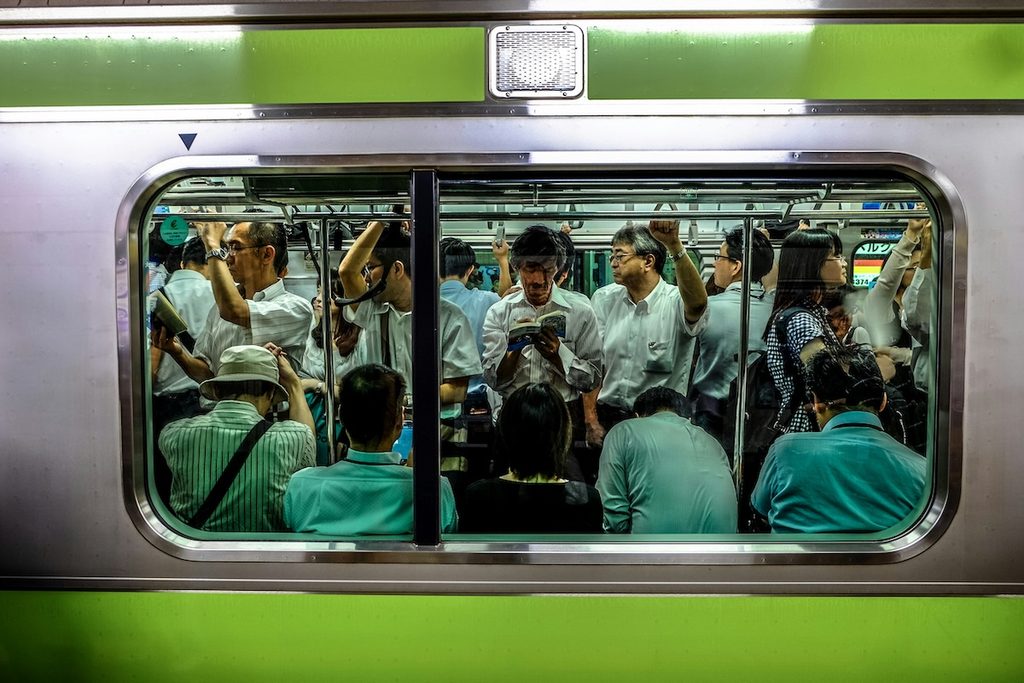
Photo: Unsplash
Trains in Japan can get extremely crowded during commuting hours. In major cities, the busiest times are between 7:00 am and 9:00 am in the morning, and between 5:00 pm and 8:00 pm in the evening on weekdays. Try to plan your travel outside of these hours when possible. If you do need to travel during busy times, try the first or last carriage. These tend to be less crowded than the ones in the middle.
Rush hour in the Greater Tokyo area can reach a level of crowding that is hard to imagine. Station staff are sometimes stationed on the platform to help push passengers into the carriages. For first-time visitors, this can be quite a surprising sight. At every stop, large numbers of passengers get on and off. The flow of people inside the carriage shifts each time the doors open significantly. Stay calm, keep an eye on your surroundings, and move with the crowd.
If you are carrying a large suitcase, be especially careful. On a packed train, there may be no space for luggage, and you may not be able to board at all. Plan any travel with large bags outside of rush hour; it might be the best option.
When the train stops at a station, check if anyone near you wants to get off. If so, step out onto the platform to let them exit, then board again. If you are deep inside the carriage and need to get off, just say “Sumimasen,” which means “excuse me,” and people around you will make way.
Getting Off the Train
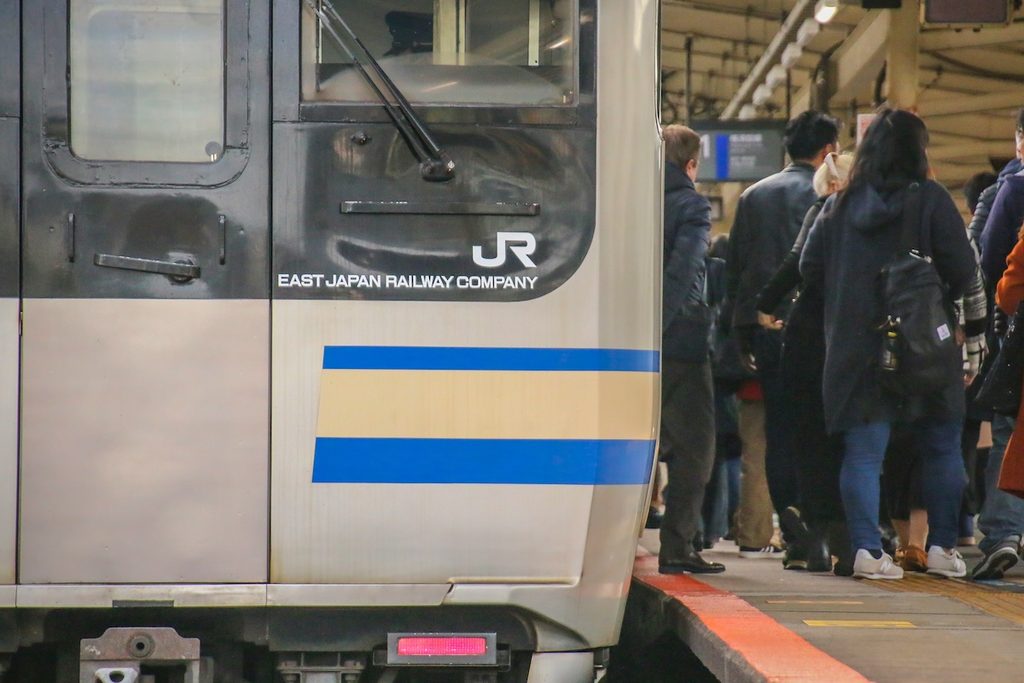
Photo: Unsplash
When your stop is approaching, start preparing early. In a crowded carriage, it can take time to make your way toward the doors. As mentioned above, if you are standing near the doors but not getting off, step out onto the platform to let others exit first. Then simply board again once they have passed. Always stay aware of the people around you near the doors, and make sure you are not blocking the path for others. When exiting, move at a steady pace and follow the flow of people around you. Avoid rushing through the doors.
Once you are off the train, make a quick check for any belongings left on the rack or around your seat. Trains in Japan are a common place for forgotten items. If you do leave something behind, speak to a station staff member, and they will be able to help.
Women-Only Carriages
Some train lines have carriages reserved for women only during certain hours. This rule usually applies during rush hour, and the time restrictions vary depending on the train line.
There are a few ways to identify a women-only carriage. Look for pink markings on the platform floor or pillars, and check for stickers on the train windows and doors. There are usually signs in English as well. The information display boards on the platform may also indicate which carriage is women-only. If one carriage looks noticeably less crowded than the others during rush hour, it is likely a women-only carriage.
Men are not permitted to board women-only carriages during the designated hours. If you accidentally board one, just exit at the next stop and move to a different carriage.
Women-only carriages exist to provide a safe and comfortable space for female passengers. The rules apply to all passengers, including tourists. So, always check the signs before boarding to avoid any misunderstanding.
Station Etiquette
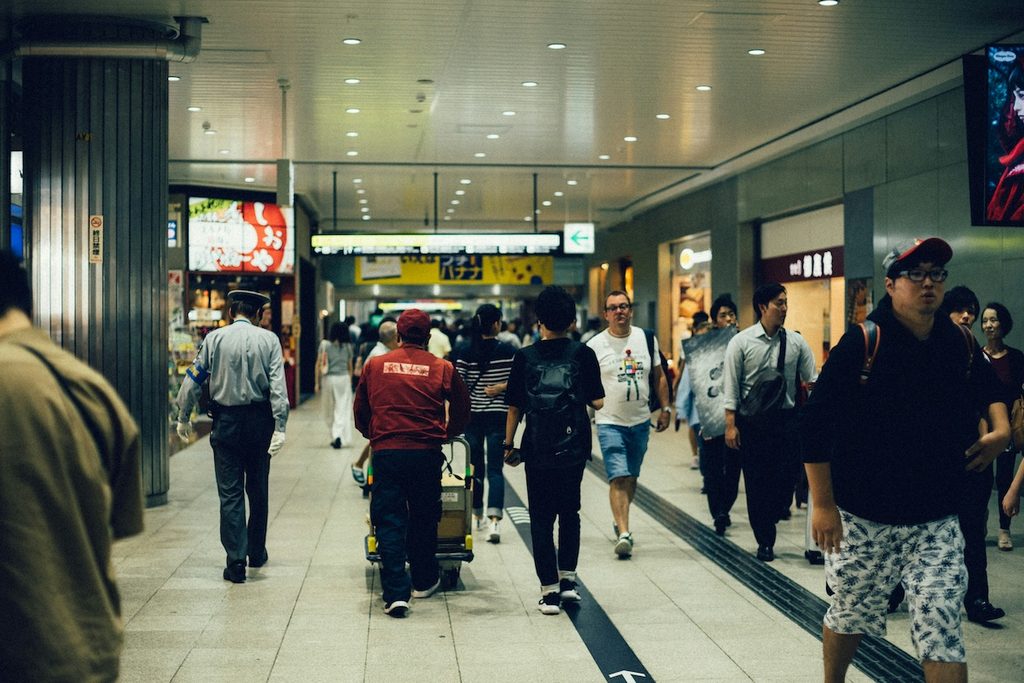
Photo: Unsplash
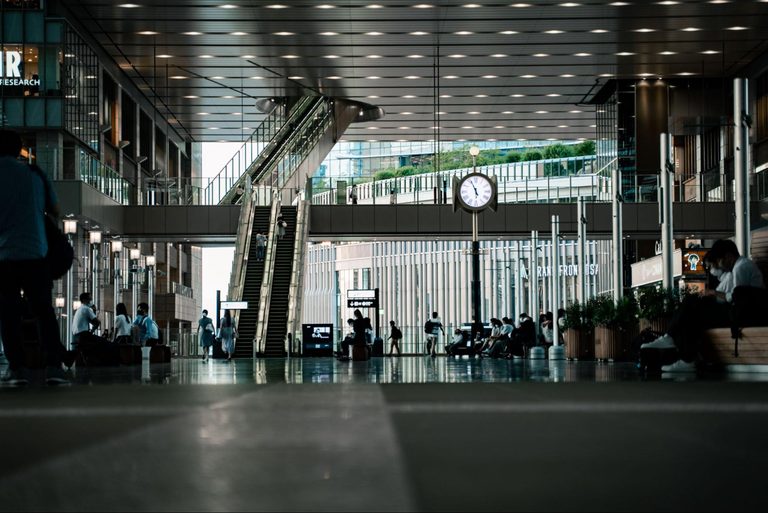
Inside the station, the same consideration for others applies as it does on the train.
On escalators, it is common to stand on one side and leave the other side open for people who are walking. In the Kanto region, including Tokyo, people usually stand on the left. In Osaka and the Kansai region, the opposite is common, with people standing on the right. This can be a little confusing, especially for tourists, so it is best to observe the people around you and follow the local flow.
That said, many stations have recently started encouraging passengers to stand still on escalators for safety reasons. If there is a sign, follow the instructions provided.
When transferring between lines, follow the flow of people in the corridors. The direction of foot traffic can differ from station to station, but larger stations usually have arrows on the floor or walls to guide you. If you are not sure which way to go, just follow the arrows.
Avoid using your phone while walking through the station. In busy areas, looking at your screen while walking can easily lead to collisions. If you need to check a map or transfer route, step to the side first.
Having mobile data makes navigation much easier and more convenient while traveling. Check out our recommended eSIM options for Japan here: https://getjapanesim.com
Shinkansen Etiquette
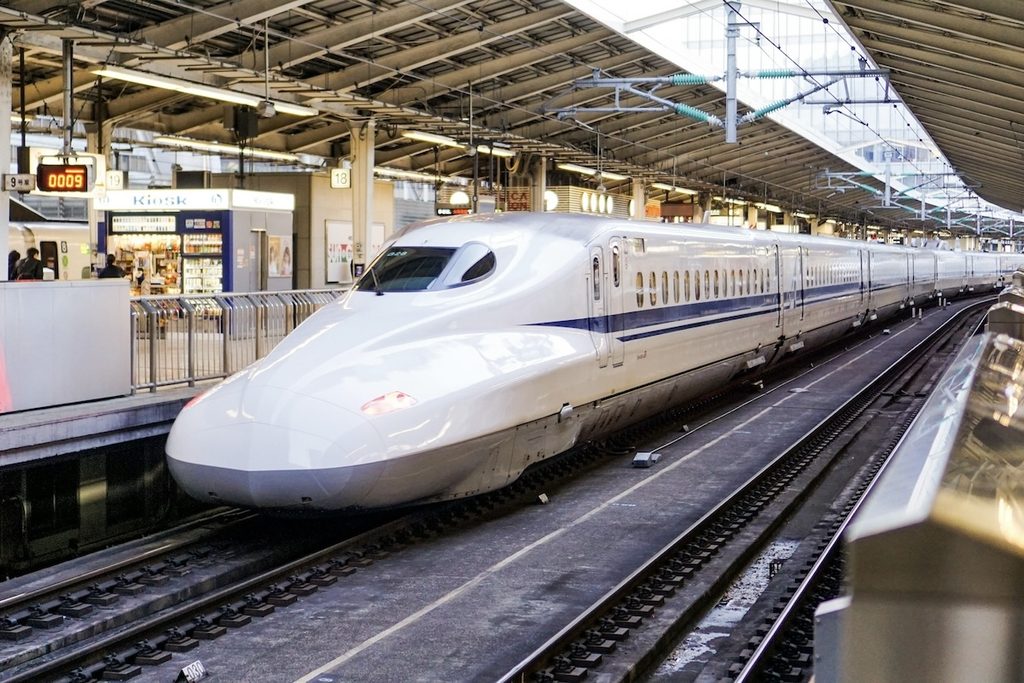
Photo: Unsplash
The Shinkansen has slightly different rules from local trains. Knowing a few key points will help you enjoy the journey comfortably.
The Shinkansen offers both reserved and non-reserved seating. Reserved seats are booked in advance and guarantee you a specific seat. Non-reserved seats do not require a booking, but during busy periods, you may not be able to find a seat. For most travelers, reserved seating is the easier and more reliable option.
Eating and drinking are perfectly acceptable on the Shinkansen. Many passengers enjoy a bento box or a drink purchased at the station before boarding. This is considered one of the simple pleasures of traveling by Shinkansen in Japan. Do not forget to always take your trash with you.
Phone calls should be taken to the deck area between carriages. Making calls from your seat can disturb the passengers around you.
If you want to recline your seat, be mindful of the person sitting behind you. A quick heads-up before reclining is always appreciated. And avoid reclining suddenly, especially when the person behind you is eating or working.
Large suitcases should be placed in the storage space at the back of the carriage or on the overhead rack. On some Shinkansen services, passengers with oversized luggage are required to make a reservation in advance. It is worth checking before you board.
Summary
The rules on Japanese trains are not difficult to follow. Just knowing the basics is enough to make the experience comfortable for both you and the people around you. And that small effort can make your trip so much more enjoyable.
Now you know why trains in Japan feel the way they do. Always on time, clean, and calm. It is the result of many small acts of consideration, repeated every single day.
You do not need to memorize every rule perfectly. What matters most is simply being aware of the people around you. If you are ever unsure about something, do not hesitate to ask a station staff member — they are always happy to help.
Riding the trains in Japan is a chance to experience Japanese culture and the way people live their daily lives. As long as you keep a respectful attitude toward those around you, it will be a wonderful experience. Enjoy the ride in Japan.