Photo: Unsplash
Introduction
Hiroshima Peace Park is one of the most important places to visit on a first trip to Japan.
This is not a park to rush through. It is a place to slow down, read, and reflect.
The park includes the Atomic Bomb Dome, Hiroshima Peace Memorial Museum, the Cenotaph for the A-bomb Victims, the Flame of Peace, the Children’s Peace Monument, and several other memorial sites.
For first-time visitors, the area is easy to reach, but it is better with a simple route. The park is large enough to feel confusing if you walk without a plan, and the museum takes both time and emotional energy, so it is not a place to rush.
This guide explains what to see, how to walk through the area, how long you need, how to get there from Hiroshima Station, and what to check before you go.
You will probably check maps, tram routes, station names, and opening hours more than once during the day. Many travelers find it helpful to have mobile data available, especially when visiting Hiroshima for the first time.
From my experience as a tour conductor, the small choices often matter most here. Start in the right place, keep the route simple, and leave enough time for the museum. That makes the visit easier to understand and easier to remember.
Overview
Hiroshima Peace Memorial Park sits in central Hiroshima, near the Motoyasu River and the Atomic Bomb Dome. The dome was registered as a UNESCO World Heritage Site in 1996 and is preserved as a symbol of Hiroshima’s wish for the abolition of nuclear weapons and lasting peace.
For most first-time visitors, the best starting point is Genbaku Dome-mae Station. From there, you can walk south through the park toward the Hiroshima Peace Memorial Museum.
A simple visit usually takes about two and a half to three and a half hours. Plan more time if you want to read many museum panels, use an audio guide, join a guided tour, or sit quietly after the museum.
This area is best for travelers who want to understand Hiroshima beyond food and city sightseeing. It also works well before or after Hiroshima Castle, Shukkeien Garden, or Miyajima, but keeps the day light.
The park is not difficult to walk, but the visit can feel heavy. Give yourself space after the museum.
How to Plan Your Route
For a first visit, a simple north to south route works well. Start at Genbaku Dome-mae, walk to the dome, then move south through the Children’s Peace Monument, the Cenotaph, and finally the museum.
This order matters more than it might seem. Seeing the outdoor monuments first gives you context before the museum, which is the most emotionally direct part of the visit. Doing the museum first can make the rest of the walk feel heavier than it needs to be.
The fastest route through the park takes under an hour, but most travelers find that two to three hours feels more natural, including the museum. If your schedule is tight, it is better to shorten the museum visit than to rush through the outdoor monuments, since the outdoor space is where most people find their own moment to reflect.
A little space in your schedule can make the day feel better here. This is not a park to fit between two other stops if you can help it.
Best Time to Visit
Morning and late afternoon each offer something different. Morning visits, especially before 10am, mean fewer crowds around the dome and the cenotaph, and softer light for photos.
Late afternoon works well for the cenotaph itself, since the arch lines up with the dome in a way that feels more and more striking as the light lowers. If your schedule allows only one visit, many travelers prefer late afternoon for this reason, though early morning remains the quieter option overall.
Midday can feel busier, particularly when tour groups arrive between 11am and 1pm. If your plan is flexible, building the visit around either end of the day tends to feel calmer.
Best Things to Do
Start at the Atomic Bomb Dome
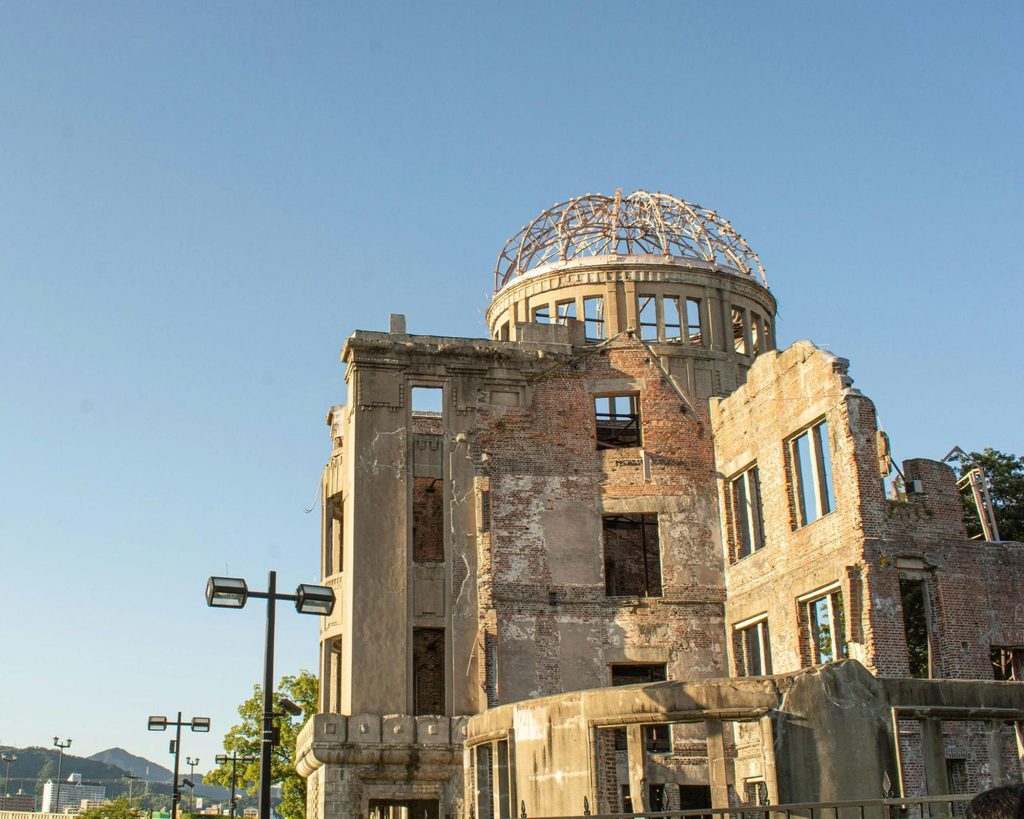
The Atomic Bomb Dome is usually the best place to begin. It stands close to Genbaku Dome-mae Station, so you do not need to search for it after getting off the streetcar. The building was originally the Hiroshima Prefectural Industrial Promotion Hall and stood near the hypocenter of the atomic bombing on August 6, 1945.
Take a few minutes here before walking into the park. Do not only take a photo and move on. Look at the building from the river side too. The view changes when you stand across the water, and it also helps you understand the park’s layout before you start walking south.
Time needed: 15 to 25 minutes
Best time: Morning or late afternoon
Nearest stop: Genbaku Dome-mae Station
Small tip: Check the tram stop name before you get off. It is easier than looking for the park after leaving a different stop.
Walk to the Children’s Peace Monument
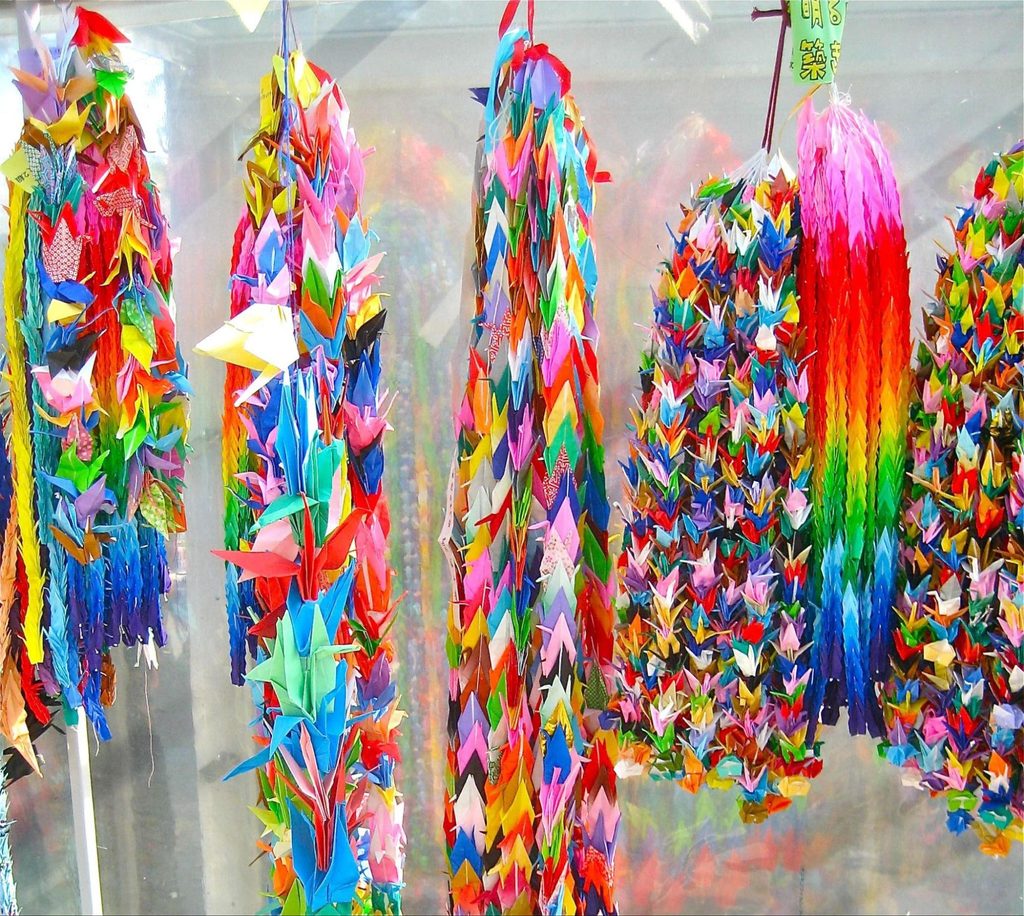
Photo: Pixabay
After the Atomic Bomb Dome, walk toward the Children’s Peace Monument. This monument is known for paper cranes, and many visitors connect it with the story of Sadako Sasaki and the children affected by the bombing. You may see many folded cranes sent from Japan and other countries.
This is one of the places where the mood of the visit changes. It is not only about history as a large event. It also brings the story closer to individual lives.
Time needed: 10 to 15 minutes
Best for: Understanding the human side of the park
Practical tip: Keep your voice low around memorial spaces. You do not need to be silent everywhere, but a calm tone fits the place.
Stand at the Cenotaph and Flame of Peace
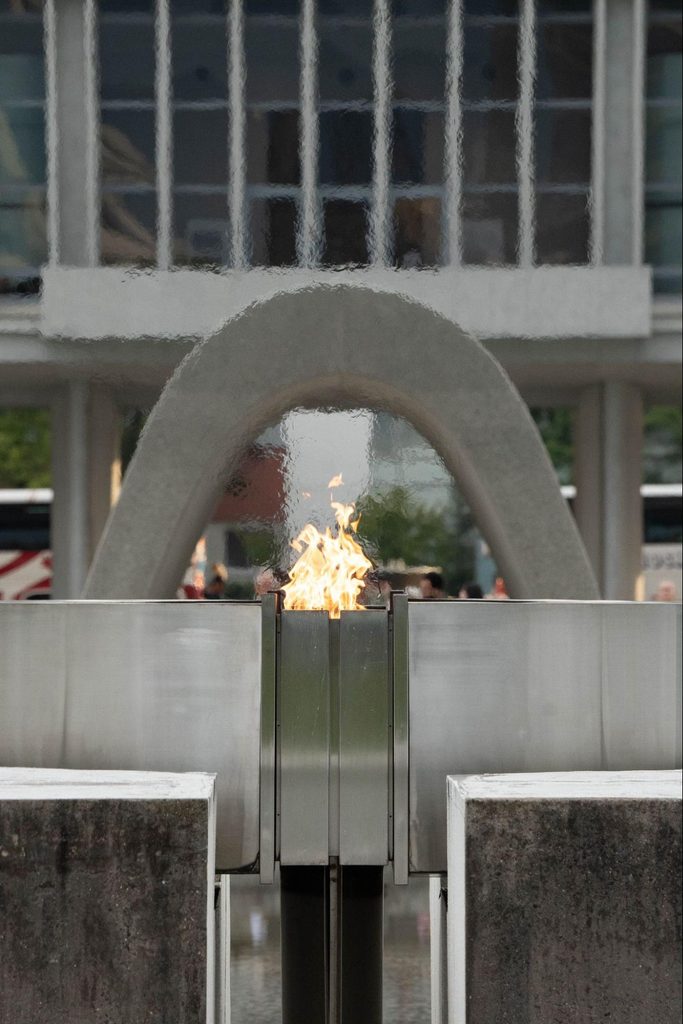
Photo: Pexels
The Cenotaph for the A-bomb Victims is one of the main points in the park. From the front, you can see a straight line toward the Flame of Peace and the Atomic Bomb Dome. This view matters because it connects the memorial space with the preserved building in the distance.
The Flame of Peace has burned since 1964 and is intended to continue until nuclear weapons are abolished. This is a short stop, but it is one of the most meaningful points in the park.
Time needed: 10 to 20 minutes
Best time: Before the museum, not after
Small tip: Stand still for a moment before taking photos. This is a memorial area first.
Visit Hiroshima Peace Memorial Museum
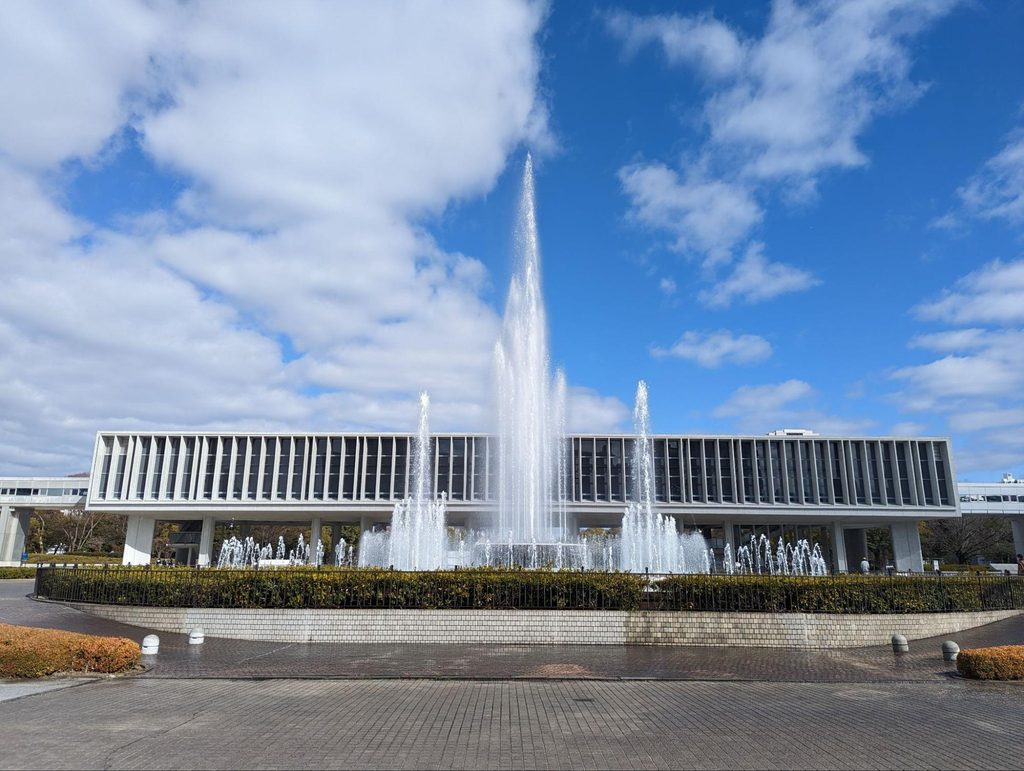
Photo: Pexels
The museum is the part of the visit that needs the most time. It presents materials, personal belongings, photos, and stories related to the atomic bombing. The museum can be difficult emotionally, but it is also the place where many first-time visitors understand why Hiroshima Peace Park matters.
Do not rush this part. If you only have one hour, choose the main exhibition carefully. If you have more time, allow one and a half to two hours. The museum offers audio guides in multiple languages, with rentals listed at 400 yen.
The museum admission fee, opening hours, and ticket rules can change, especially during busy periods. Check the official website before your visit.
Time needed: 1 to 2 hours
Best for: First-time visitors who want context
When to go: Morning or later afternoon if you want a calmer visit
Small tip: Do not plan a busy food or shopping stop immediately after the museum. A short break helps.
Stop at the Rest House
The Rest House is useful for more than a quick break. It sits near Motoyasu Bridge, between the Atomic Bomb Dome and Peace Memorial Park. The building was renovated and reopened in 2020 as a tourist information center and rest area, offering English support, maps, tourist pamphlets, Hiroshima Free Wi-Fi, and wheelchair rental around the park area.
This is a good place to stop if you need help, want a map, or need to slow the pace of the day.
Time needed: 10 to 20 minutes
Best for: Maps, rest, tourist information
Practical tip: Use this stop before the museum if you want to confirm your route.
Recommended Spots
Atomic Bomb Dome
The most recognizable site in the area. It is not a building you enter; you view it from outside. This makes it easy to visit even on a short schedule, but the meaning of the site is deeper when you read the nearby information panels.
Best for: First-time visitors, history, World Heritage context
Time needed: 15 to 25 minutes
Best time: Morning or late afternoon
Access: Short walk from Genbaku Dome-mae Station
Location: Google Maps
Practical tip: Start here if you want the simplest walking route through the park.
Hiroshima Peace Memorial Museum
The main learning stop. The museum gives the visit structure. Without it, the park may feel like a group of monuments. With the museum, the locations become easier to understand.
Best for: History, context, deeper learning
Time needed: 1 to 2 hours
Best time: Early in the day if you want more focus
Access: Walk south through Peace Memorial Park
Location: Google Maps
Practical tip: Use the audio guide if you want more background in English.
Cenotaph for the A-bomb Victims
A central memorial and one of the best places to understand the design of the park. From here, the Flame of Peace and Atomic Bomb Dome line up in the distance.
Best for: Reflection, park layout, memorial visit
Time needed: 10 to 15 minutes
Best time: Before entering the museum
Access: Between the park center and the museum
Location: Google Maps
Practical tip: This area can feel busier when tour groups arrive. Wait a few minutes if you want a quieter view.
Children’s Peace Monument
Often one of the most memorable stops. The folded cranes make the place visual and easy to understand, even for visitors who do not know the story before arriving.
Best for: Families, school-age travelers, first-time visitors
Time needed: 10 to 15 minutes
Best time: On the walk from the dome toward the museum
Access: Inside Peace Memorial Park
Location: Google Maps
Practical tip: Do not treat this as only a photo stop. Read the explanation panel nearby.
Flame of Peace
A short but important stop. It works best when viewed together with the Cenotaph and Atomic Bomb Dome. The meaning is easy to overlook if you walk through too quickly.
Best for: Reflection, photography with context
Time needed: 5 to 10 minutes
Best time: Before or after the Cenotaph
Access: Near the central axis of the park
Location: Google Maps
Practical tip: Look back toward the dome after you pass it.
Hiroshima National Peace Memorial Hall for the Atomic Bomb Victims
A quieter place than the museum, suitable if you want a slower moment of remembrance. Many visitors find it easier to process the visit here because the space is calm.
Best for: Quiet reflection
Time needed: 20 to 40 minutes
Best time: After the museum, if you still have energy
Access: Near Peace Memorial Museum
Location: Google Maps
Practical tip: Skip it if your schedule is tight or if the museum already feels emotionally enough.
Rest House
Practical above all. It gives you a place to stop, ask questions, check maps, and reset the route. Useful on hot days, rainy days, or when traveling with older family members.
Best for: Tourist information, rest, maps
Time needed: 10 to 20 minutes
Best time: Before walking deeper into the park
Access: Near Motoyasu Bridge
Location: Google Maps
Practical tip: Use it as your pause point rather than pushing through the whole park at once.
Travel Tips
Go earlier if you want a calmer visit. The park itself is open and easy to walk, but the museum can become busy. Morning usually gives you more space to move slowly. Late afternoon can also work if you are not trying to visit many other places after it.
Keep your route simple. A good first visit does not need many side stops. Start at Genbaku Dome-mae Station, walk through the park, visit the museum, then take a break. This route avoids backtracking.
Avoid bringing large luggage if you can. The park is walkable, but the visit is easier without suitcases. If you arrive from another city, use station lockers or hotel luggage storage first. The map may make the distance look short, but walking with luggage changes the feeling of the day.
Be respectful by staying quiet, this is a memorial space afterall. You can talk, take photos in suitable areas, and move freely, but keep a calm tone. Some museum areas may have photography rules, so check signs before taking pictures.
Plan food after the visit, not tightly around it. Many travelers go to Okonomimura, Hondori, or Hiroshima Station later for food. A short walk or coffee break first can help after the museum.
If you are traveling with children or older family members, pacing matters more than the number of stops. A shorter visit with real breaks tends to leave a better impression than a longer one spent moving quickly between every monument.
In Japan, the small checks often matter. You may look up the right tram stop, compare walking routes, check museum hours, or change your plan because of rain. Having mobile data can make these small adjustments much easier. Some travelers also set up mobile data options for Japan before arrival, especially if they do not want to rely on public Wi-Fi. The Japan eSIM Guide walks through the setup if you want more detail before your trip
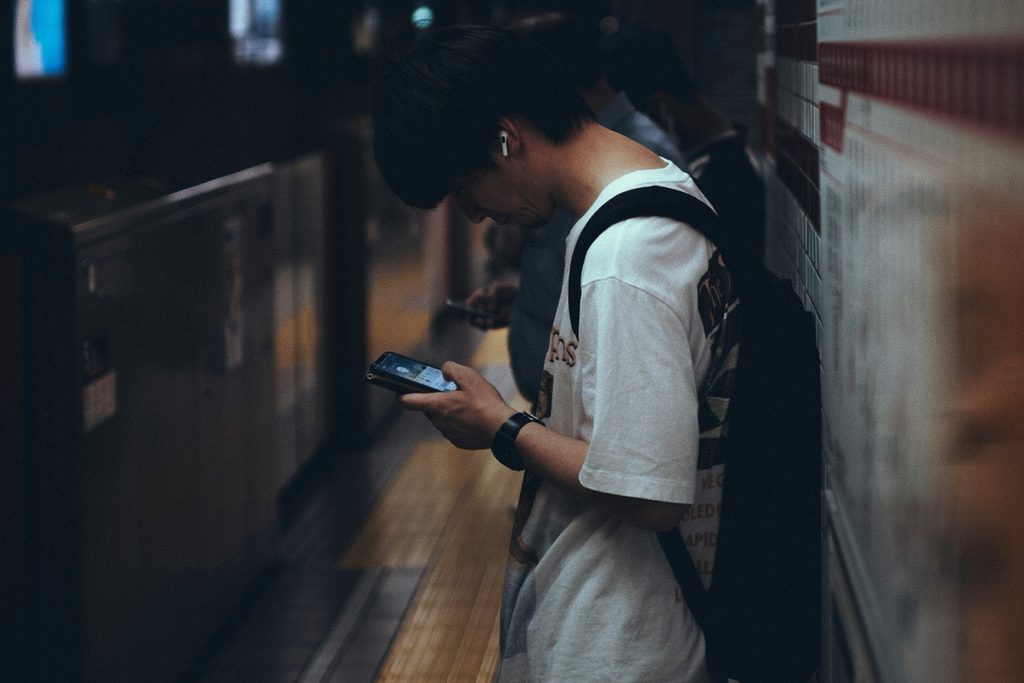
Photo: Unsplash
Access
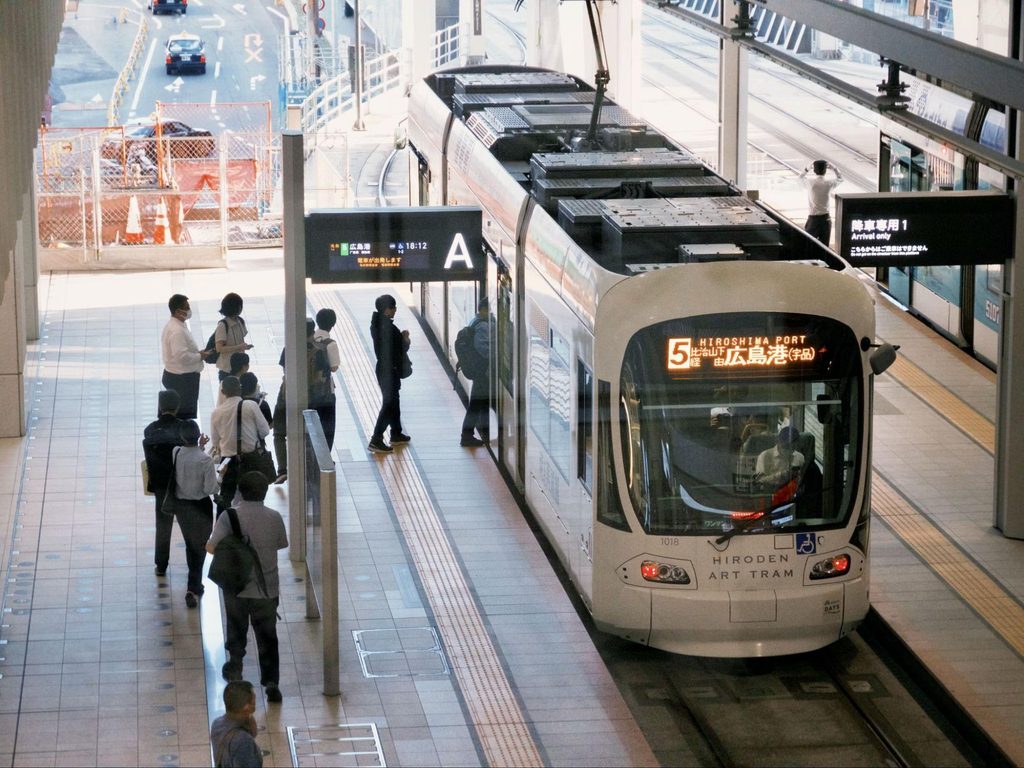
 Photo: Pexels
Getting to the park is straightforward once you know the streetcar system.
From Hiroshima Station
The easiest route for most first-time visitors is the Hiroshima Electric Railway streetcar. Take Route 2 for Hiroden-miyajima-guchi or Route 6 for Eba, and get off at Genbaku Dome-mae. The city flat fare runs 240 yen for adults and 120 yen for children, and IC cards work directly on the streetcar.
Travel time is usually around 20 minutes, but it can change by time of day. The streetcar is easier than changing trains, since it brings you close to the Atomic Bomb Dome.
If you are carrying luggage, it is worth checking signage for the streetcar platform before you leave the ticket gate at Hiroshima Station. The map may say a short walk, but it can feel longer with a suitcase.
From Miyajima or Miyajimaguchi
If you are coming from Miyajima, you can return toward Hiroshima city and get off near Genbaku Dome-mae. This works well if you visit Miyajima in the morning and Peace Park in the afternoon, but it can be a heavy day. Both places deserve time, so keep the schedule light. The [Miyajima Travel Guide] has more detail on timing that day.
From Hondori
Hondori is close to the park, and you can walk there if the weather is good. This is useful if you want food, shopping, or a café after the museum. If it is raining or very hot, use the streetcar or keep the walking route short.
From Hiroshima Airport
From Hiroshima Airport, first go to central Hiroshima by airport bus or other available transport, then use the streetcar, bus, or taxi to reach the Peace Park area. Travel times may change depending on traffic and transfer time, so check the latest route on the day of travel.
Taxi or Streetcar?
A taxi from Hiroshima Station can be easier if you have heavy luggage, travel with older family members, or arrive late. For most visitors without luggage, the streetcar is the better first choice. It is simple, local, and drops you near the dome.
The fastest route is not always the easiest route. Choose the one that keeps the day calm.
Google Map
Use this map to check the area before you go. It is useful for checking station exits, walking routes, the Atomic Bomb Dome, the museum entrance, and nearby places to eat.
Google Map: Hiroshima Peace Memorial Park
Before leaving your hotel, check the tram stop and walking route. This is especially useful if you are visiting during summer heat, rain, or a busy travel season.