Photo: Unsplash
Japan is home to thousands of beautiful temples. Some are famous landmarks, while others are quiet places hidden in the countryside. Whether you visit Tokyo, Kyoto, Nara, or a small local town, a temple is one of the best places to experience Japanese history, culture, and daily life.
Unlike museums or historical buildings, temples are important places of worship for Japanese people. Many people visit temples to pray, remember their ancestors, celebrate the New Year, or find peace during difficult moments.
Because of this, visitors should be respectful while exploring these special places. You do not need to be Buddhist to visit a Japanese temple. Everyone is welcome as long as they follow a few simple rules and respect local customs.
In this guide, you will learn the basic etiquette for visiting Japanese temples, how to pray, unique Buddhist experiences, and the cultural traditions to know that make your visit special.
What Is a Japanese Temple?
A temple is a place where people practice Buddhism, one of Japan’s main religions. Buddhism came to Japan from China and Korea more than 1,400 years ago and has become an important part of Japanese culture.
Many travelers also visit shrines, but temples and shrines are different.
- Temples are Buddhist places of worship.
- Shrines are places where people practice Shinto, Japan’s native religion.
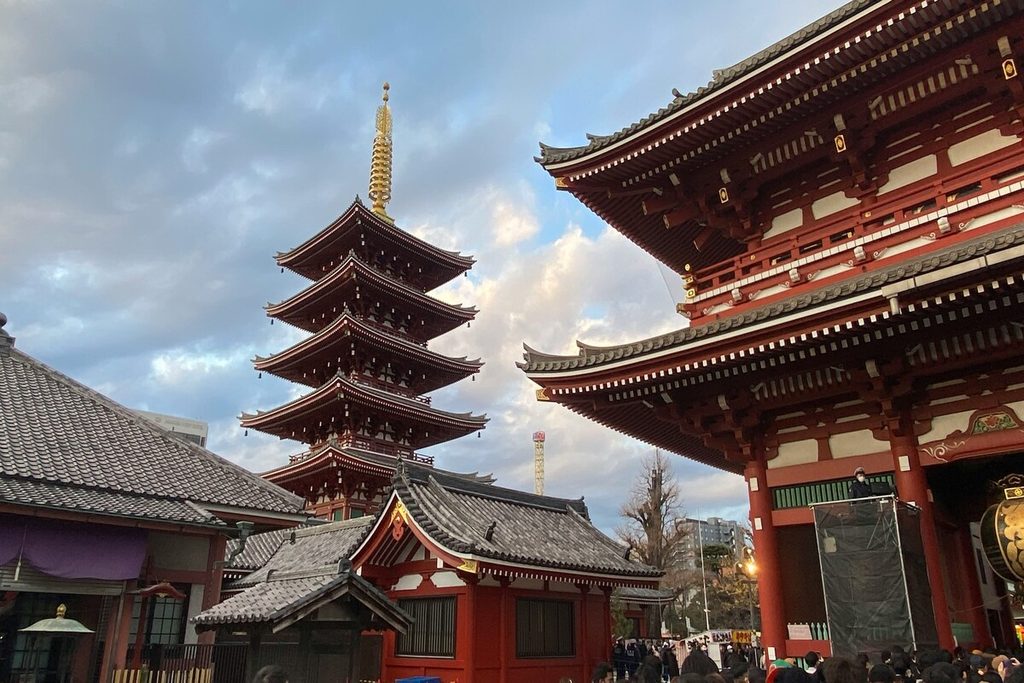
You can often recognize a temple by its large wooden buildings, Buddha statues, incense burners, and pagodas. Many temples also have beautiful gardens, ponds, and peaceful walking paths. Some temples also have cemeteries where Japanese families visit and honor their ancestors, as well as graves or monuments dedicated to historical figures and famous people. Some larger temples may also have impressive structures such as five-story pagodas within their grounds.
Today, temples are still important in everyday life. Many Japanese people visit temples for family memorial services, New Year’s prayers, seasonal festivals, and visits to family graves. Even if you are only sightseeing, you are entering a place that has deep meaning for many people.
Before You Enter a Temple
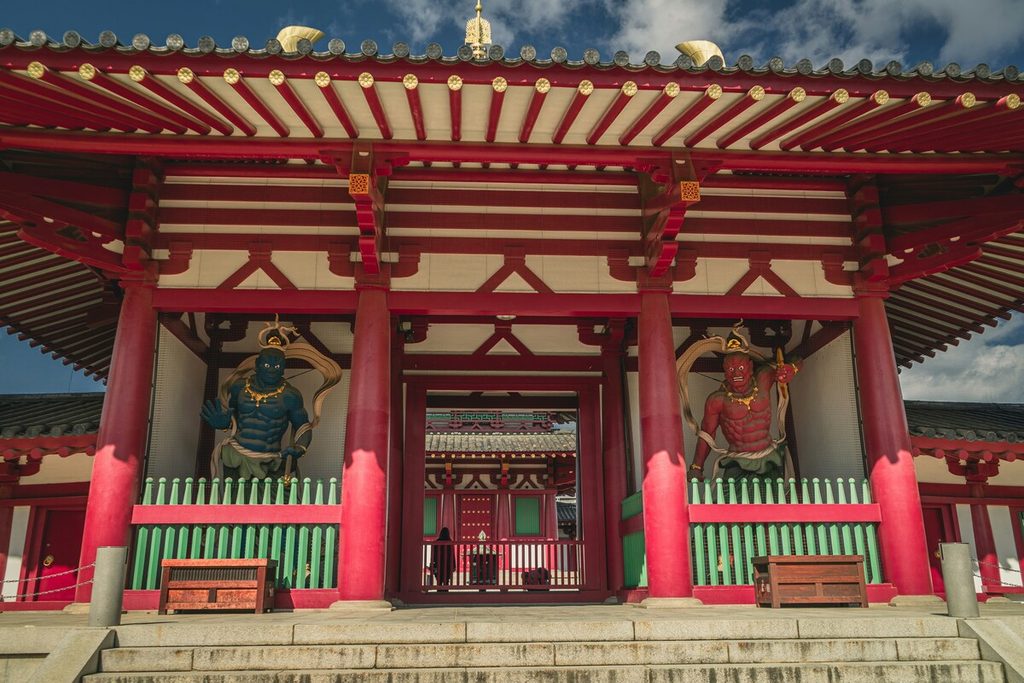
Photo: Unsplash
Visiting a temple is easy, but showing respect is important.
When you arrive, you will usually pass through a large entrance gate called the Sanmon. Some large temples have impressive guardian statues called Nio on both sides of the gate. These powerful statues are believed to protect the temple from evil and welcome visitors. Many visitors give a small bow before entering to show respect.
While walking around the temple grounds:
- Speak quietly.
- Walk slowly and enjoy the peaceful atmosphere.
- Stay on marked paths.
- Do not enter areas marked “Staff Only” or “No Entry.”
- Keep your phone on silent whenever possible.
Remember that some people are praying, so avoid making loud noises or blocking walkways.
Purify Yourself
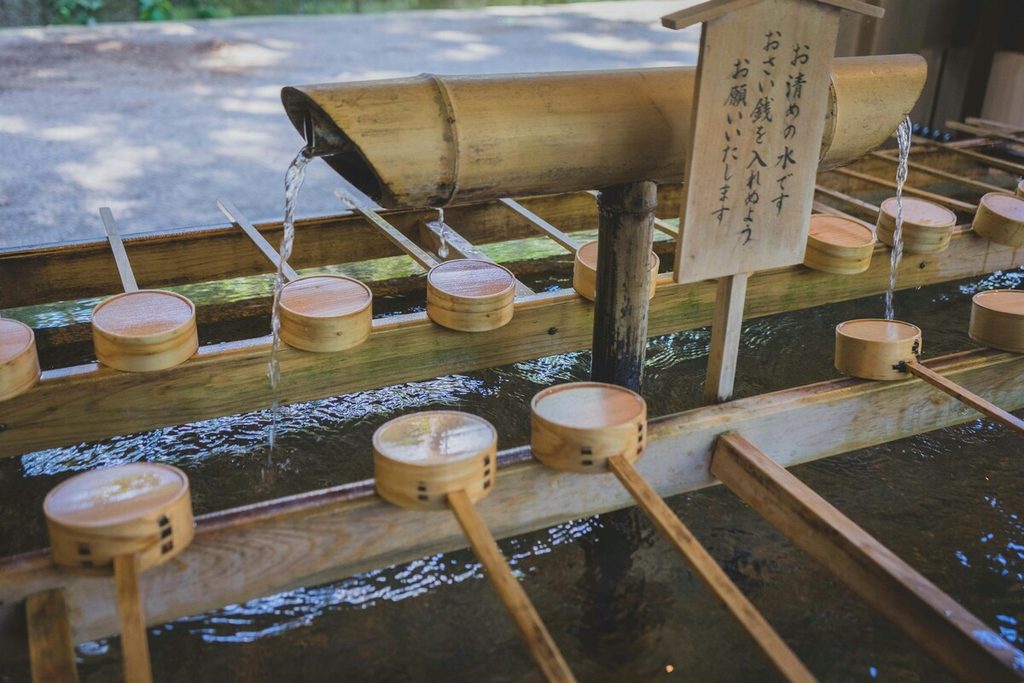
Photo: Unsplash
Some temples have a “temizuya”, or water pavilion, near the entrance. Here, visitors can clean their hands and mouth before praying. This is a symbolic way to purify yourself, not a religious requirement.
Not every temple has a water pavilion, so do not worry if you do not see one.
If there is a temizuya, follow these simple steps:
- Hold the ladle with your right hand and wash your left hand.
- Switch hands and wash your right hand.
- Pour a little water into your left hand and use it to rinse your mouth. Do not drink directly from the ladle.
- Wash your left hand again.
- Hold the ladle upright so the remaining water cleans the handle before putting it back.
This simple ritual helps visitors prepare their minds before entering the temple.
How to Pray at a Temple
Unlike shrines, the way people pray at temples is usually quiet and simple.
Although customs may be slightly different from one temple to another, these are the basic steps.
1. Offer Incense (If Available)
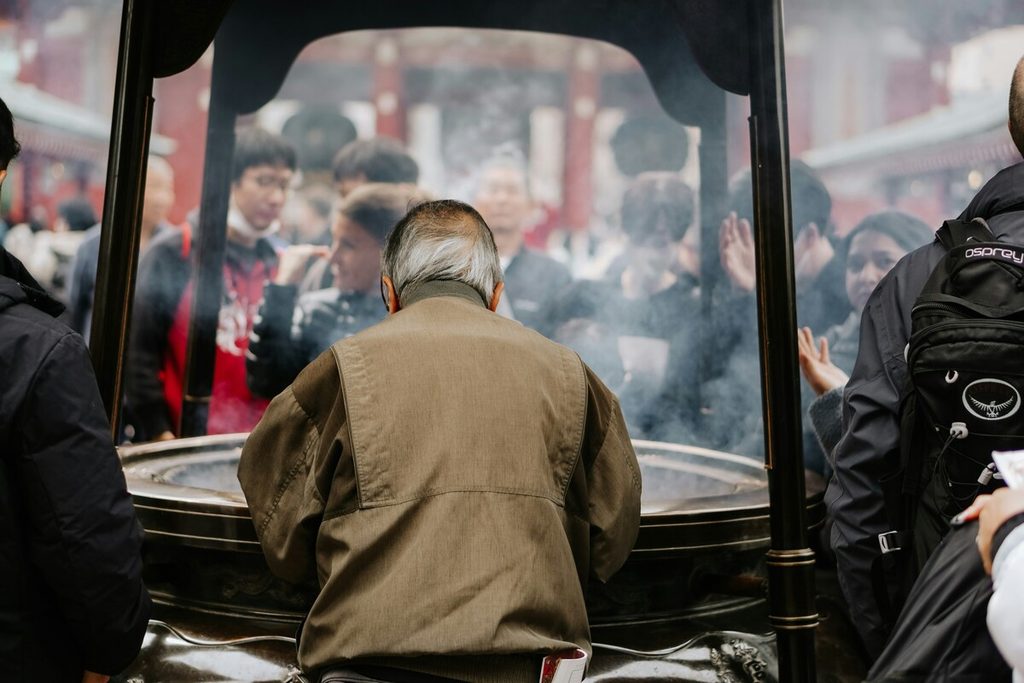
Photo: Unsplash
Many temples have large incense burners in front of the main hall.
Light an incense stick, gently blow out the flame, and place it in the burner.
Do not wave the incense to put out the flame, as this is considered bad manners.
2. Offer a Coin
Place a small coin into the offering box. There is no fixed amount. Even a small donation is appreciated.
3. Ring the Bell (If There Is One)
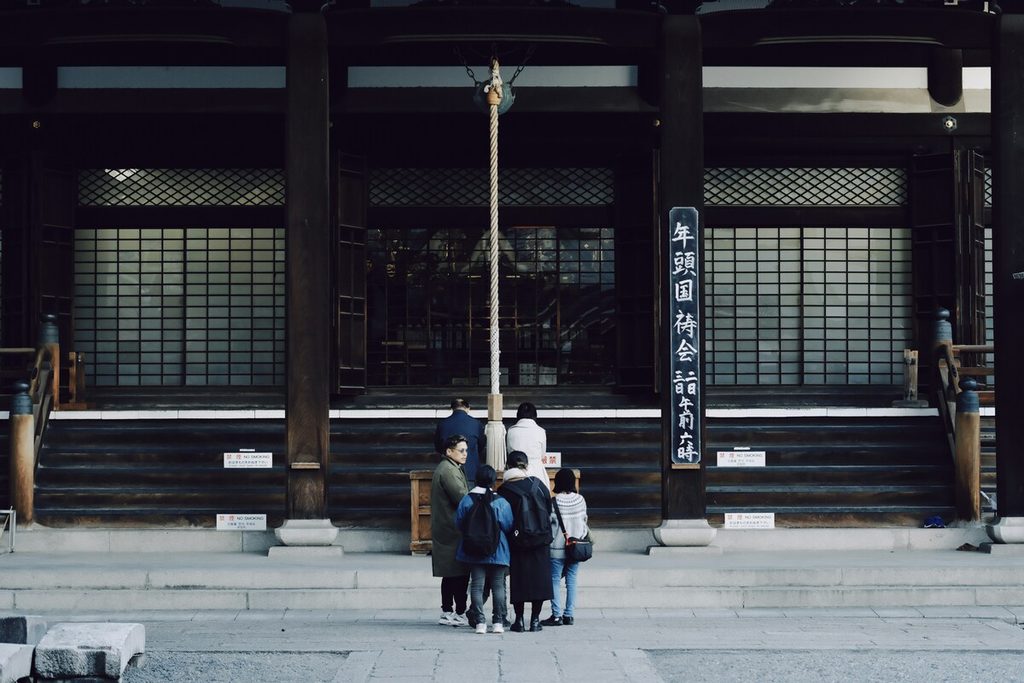
Photo: Unsplash
Some temples have a bell near the main hall. Ring it gently before praying if visitors are allowed to use it.
The sound is believed to help clear the mind before prayer.
4. Put Your Hands Together
Stand quietly with your hands together in front of your chest.
Close your eyes if you wish and make a silent prayer.
Unlike at many shrines, visitors do not clap their hands when praying at a temple.
5. Bow Before Leaving
After your prayer, give a small bow before stepping away from the main hall.
Why Do People Burn Incense?
The pleasant smell of incense is one of the most memorable parts of visiting a Japanese temple.
In Buddhism, incense is believed to purify both the body and the mind. It also shows respect to the Buddha and creates a peaceful atmosphere for prayer.
At some temples, people gently guide the incense smoke toward their bodies.
Many believe that:
- Smoke toward the head may bring wisdom.
- Smoke toward a painful shoulder or knee can help improve health.
- The smoke helps purify the body before prayer.
These are traditional beliefs, and customs may be different depending on the temple.
Omikuji, Omamori, and Goshuin: Popular Temple Traditions
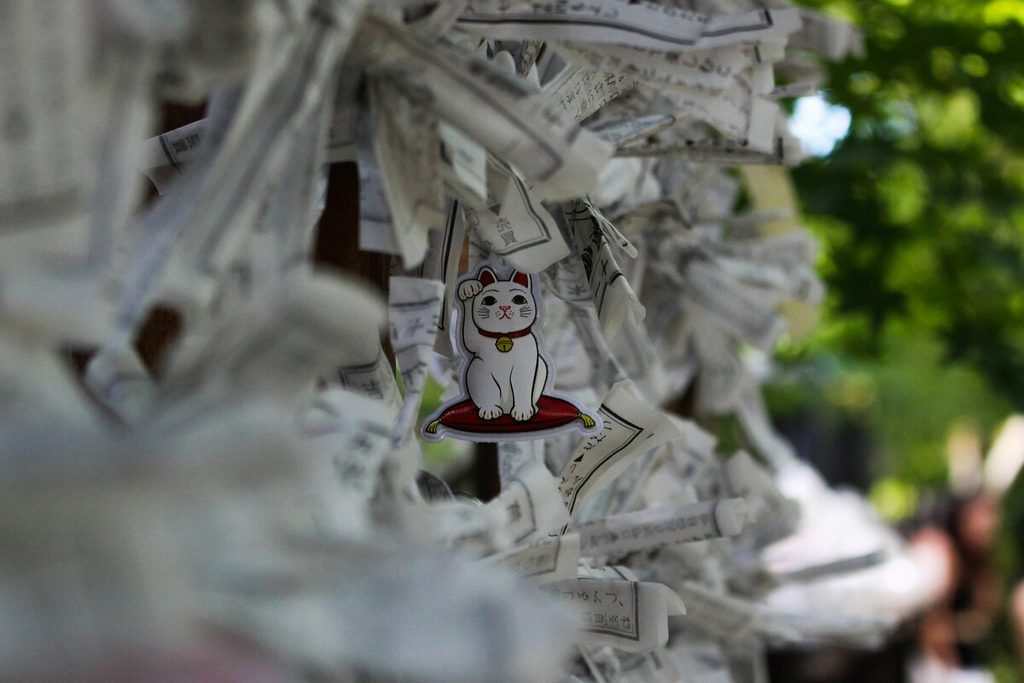
Photo: Unsplash
Besides praying, many visitors enjoy taking part in smaller temple traditions. These are also wonderful ways to make your trip to Japan more memorable.
Omikuji: Fortune Slips
Omikuji are small paper fortunes found at many temples and shrines.
Visitors usually pay a small fee, often around 100 to 200 yen. At some temples, you draw a paper fortune directly, while at others, you pick a numbered stick and receive the fortune that matches the number.
The paper may tell you about:
- Good luck
- Health
- Love
- Travel
- Work
The fortunes range from very good luck to bad luck.
The most common levels are:
- 大吉 (Daikichi) – Great luck
- 吉 (Kichi) – Good luck
- 中吉 (Chukichi) – Medium luck
- 小吉 (Shokichi) – Slightly good luck
- 末吉 (Suekichi) – Future luck
- 凶 (Kyo) – Bad luck
The order and number of fortune levels may be different depending on the temple or shrine.
If you receive a bad fortune, do not worry. Many people fold the paper and tie it to a special place at the temple. This is believed to leave the bad luck behind.
If you receive a good fortune, you can keep it as a lucky reminder.
Omikuji Tips
- Great luck: Keep it as a lucky charm.
- Bad luck: Tie it at the temple to leave the bad luck behind.
- Some temples offer English translations or translation support.
Omamori: Japanese Lucky Charms
Omamori are small protective charms sold at temples.
Different charms have different purposes, such as:
- Safe travel
- Good health
- Success in studies
- Safe childbirth
- Good relationships
For travelers, a travel safety charm is a popular souvenir because it represents a wish for a safe journey.
Many Japanese people carry omamori in their bags or keep them at home.
They are also meaningful small gifts for parents, family members, and close friends, as they represent wishes for health, happiness, and protection.
Goshuin: Temple Stamps
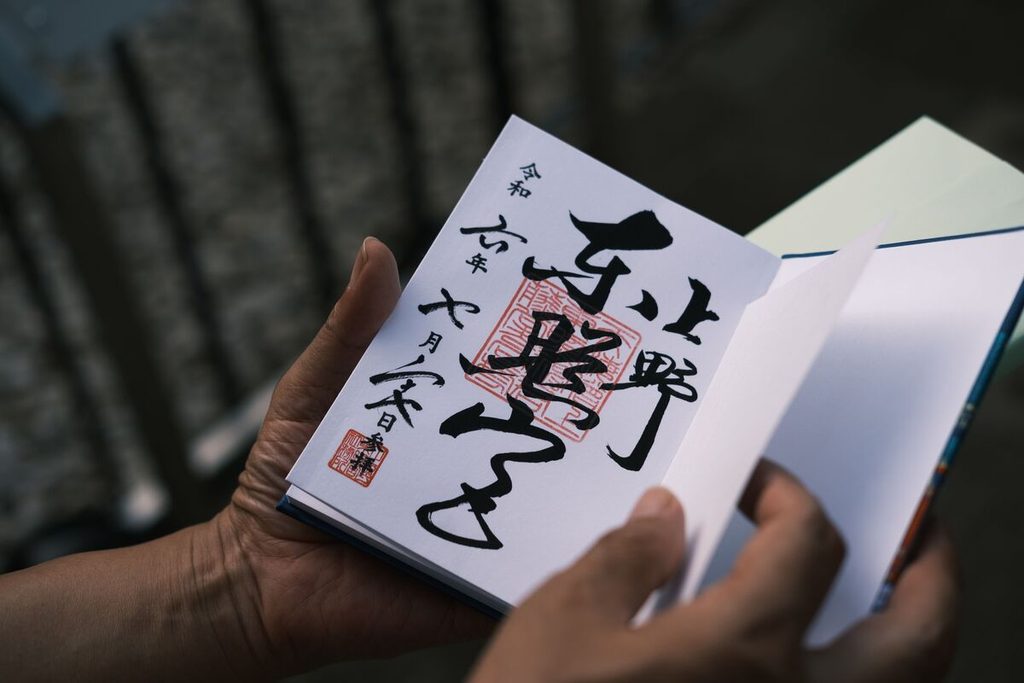
Photo: Pexels
A goshuin is a special stamp and handwritten calligraphy received at temples and shrines.
Visitors usually collect goshuin in a special notebook called a goshuincho.
Each goshuin is unique because it is written by hand and often includes the temple name, date, and a Buddhist symbol.
You can usually receive a goshuin at the temple office, often called the goshuin counter or reception desk. The fee is usually around 300 to 500 yen. Some famous temples may charge more for special designs.
If you do not have a goshuincho, you can often buy one at the temple office or souvenir shop. Many temples offer beautiful designs with traditional patterns, seasonal illustrations, or local artwork.
Collecting goshuin has become popular among both Japanese people and international visitors. It is not only a souvenir but also a way to remember a meaningful visit.
Unique Temple Experiences You Should Try
A visit to a Japanese temple is more than simply looking at old buildings. Many temples offer cultural experiences that help visitors better understand Buddhism and Japanese traditions.
Experience Zazen (Zen Meditation)
Zazen is a form of Zen meditation that focuses on breathing and sitting quietly.
Many temples welcome beginners and even offer English-language sessions.
During a zazen session, visitors sit on a cushion, keep their backs straight, and quietly focus on their breathing. There is no need to have meditation experience. The goal is simply to calm the mind and enjoy a peaceful moment away from busy daily life.
Beginners may find it difficult to stay focused during zazen. In some Zen temples, a monk may gently tap your shoulder with a kyosaku to help you refresh your mind. This traditional practice is not a punishment but part of Zen training.
For many travelers, zazen becomes one of the most memorable experiences of their trip to Japan.
Try Shakyo (Sutra Copying)
Another popular cultural activity is shakyo, or copying Buddhist scriptures by hand.
Using a brush or pen, visitors carefully copy the characters of a Buddhist sutra.
You do not need to understand Japanese or Chinese characters. The purpose is not perfect writing but careful attention and a calm mind. Many people say shakyo helps them relax and focus.
Some temples allow visitors to take their finished work home, while others offer it to the temple as a prayer.
Listen to Buddhist Chanting
If you visit early in the morning or during a ceremony, you may hear monks chanting Buddhist scriptures, known as okyo.
The deep voices and slow rhythm create a peaceful atmosphere inside the temple.
Even if you do not understand the words, many visitors enjoy listening to the chanting. It is a chance to experience a tradition that has continued in Japan for centuries.
Some temples also offer morning prayer sessions where visitors can quietly observe the chanting ceremony.
Ring a Temple Bell
Some temples allow visitors to ring a large temple bell.
The deep sound of the bell is believed to calm the mind and remind people to appreciate the present moment.
Temple bells are especially important on New Year’s Eve, when many temples ring the bell 108 times. According to Buddhist tradition, the 108 rings represent the 108 worldly desires that cause human suffering.
By ringing the bell, people symbolically leave these desires behind and welcome the new year with a peaceful mind.
Seasonal Temple Experiences in Japan
Japanese temples change with the seasons, and each season offers a different atmosphere.
Spring: Cherry Blossoms
In spring, many temples become beautiful spots for viewing cherry blossoms. Visitors can enjoy the combination of traditional buildings, gardens, and pink flowers.
Famous temples in Kyoto and Nara are especially popular during this season.
Summer: Festivals and Evening Events
Summer brings temple festivals, special events, and evening light-ups. Some temples hold events where visitors can enjoy traditional performances, lanterns, and peaceful night views. During these festivals, food stalls called yatai often appear, offering a variety of local foods and traditional festival snacks.
Autumn: Colorful Leaves
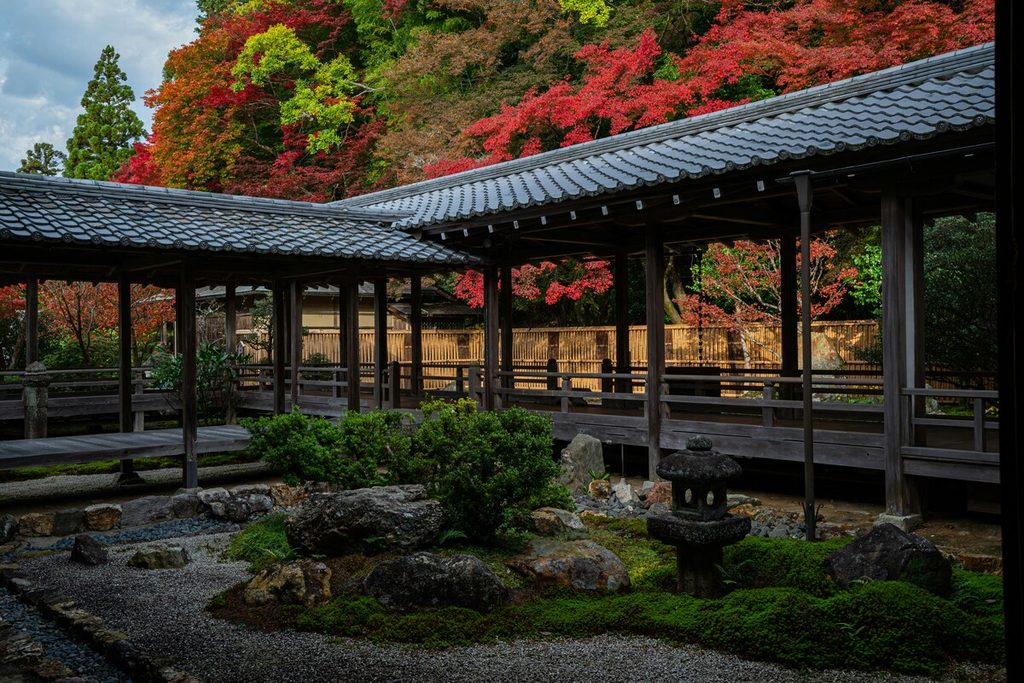
Photo: Unsplash
Autumn is one of the best times to visit Japanese temples.
The bright red and yellow leaves create beautiful scenery around historic temple buildings.
Kyoto is especially famous for its autumn temples.
Winter: New Year Traditions
Winter is a special season for temples.
On New Year’s Eve, many temples hold Joya no Kane, the tradition of ringing temple bells 108 times.
Many people also visit temples during the New Year period to pray for happiness and good fortune.
Best Temples for First-Time Visitors
Japan has thousands of temples, from famous historic sites to small neighborhood temples.
Here are some popular choices for first-time visitors.
- Senso-ji Temple (Tokyo):
Located in Asakusa, Senso-ji is Tokyo’s oldest temple and one of the city’s most famous attractions. Before reaching the main hall, visitors can walk along Nakamise-dori, a historic shopping street lined with small shops selling traditional snacks, souvenirs, and Japanese crafts. The lively atmosphere makes it a great place to experience traditional Tokyo.
- Kiyomizu-dera Temple (Kyoto):
Kiyomizu-dera is one of Kyoto’s most famous temples.
The wooden stage offers beautiful views of the city, especially during cherry blossom and autumn leaf seasons.
The historic streets around the temple are also perfect for walking and enjoying traditional Kyoto scenery.
- Todai-ji Temple (Nara):
Todai-ji is famous for its huge bronze Buddha statue, known as the Great Buddha.
The temple is located in Nara Park, where visitors can also see friendly deer walking freely around the area.
It is a wonderful place to experience Japan’s history and Buddhist culture.
- Koyasan (Wakayama):
For travelers looking for a deeper temple experience, Koyasan is a special destination. Located in the mountains of Wakayama, Koyasan is a center of Japanese Buddhism. Visitors can stay overnight at a temple lodging called shukubo, enjoy vegetarian Buddhist meals, and join morning prayers.
Frequently Asked Questions About Japanese Temple Visits
Can foreigners visit Japanese temples?
Yes. Everyone is welcome at Japanese temples.
You do not need to be Buddhist. Simply visit respectfully and follow basic etiquette.
Can I take photos inside temples?
Photography rules are different at each temple.
Many outdoor areas allow photos, but some buildings or Buddha statues do not allow photography.
Always check signs before taking pictures.
Avoid using flash during ceremonies or when other visitors are praying.
Do I need to pay to enter a temple?
Some temples are free to enter, while others charge an admission fee for special areas such as gardens or famous buildings.
The fee is usually used for temple maintenance.
How much money should I offer?
There is no fixed amount. A small coin is common, but the most important thing is showing respect.
Many Japanese people use a 5-yen coin because “go-en” sounds like “good connection” in Japanese. Some people believe that 25 yen also brings good luck. However, any amount is acceptable.
Can children visit temples?
Yes. Temples are family-friendly places.
However, children should be encouraged to walk quietly and respect people who are praying.
Can I join zazen or shakyo without experience?
Yes.
Many temples welcome beginners. Some offer English guidance, but availability depends on the temple.
It is recommended to check the official website or make a reservation before visiting.
Summary
Japanese temples are more than beautiful historical buildings. They are places where visitors can experience Japanese culture, traditions, and ways of thinking.
By learning a few simple manners, anyone can enjoy a temple visit respectfully.
Beyond sightseeing, you can discover many unique experiences, such as sitting quietly during zazen, copying Buddhist scriptures, listening to monks chant, collecting goshuin, or enjoying seasonal temple events.
Whether you visit a famous temple in Kyoto, a lively temple in Tokyo, or a quiet temple in the countryside, take your time to look around and enjoy the peaceful atmosphere.
A visit to a Japanese temple is a chance to slow down, connect with history, and discover a deeper side of Japan.