Photo: Pexels
Introduction
Tokyo is one of the best cities in the world for vintage shopping. However, there are so many areas in Tokyo, and it can be hard to choose where to start.
This guide covers four neighborhoods that have their own personality. Whether you are looking for deep and curated vintage, affordable second-hand, or just want to feel the atmosphere of Tokyo’s creative street culture, these areas are for you.
In this article you will learn:
- The 4 best neighborhoods for vintage shopping in Tokyo
- The atmosphere, price range, and best approach for each area
- Practical tips for first-time vintage shoppers in Tokyo
- How to get to each neighborhood by train
Why do people love vintage in Tokyo? One reason is the Japanese approach to caring for things. There is a concept in Japanese culture called “Wabi-sabi.” It is finding beauty in old, imperfect, and worn things. This word is symbolic of Tokyo’s vintage scene. Even second-hand items tend to be well-kept and carefully stored. That is something you will see the moment you start browsing those areas.
overview
Photo: Unsplash
One of the best things about Tokyo’s vintage scene is that every neighborhood does it differently. The four areas all share some things in common, and each one has its own character and culture.
Firstly, here is a quick overview to help you pick where to go:
- Shimokitazawa: Affordable, relaxed, and great for first-timers
- Koenji: Deep, curated vintage for serious collectors
- Kichijoji: Vintage clothing, antique furniture, and lifestyle goods
- Harajuku / Cat Street / Ura-Harajuku: Trend-conscious vintage and street fashion
Pick the one that sounds more like you. Or visit all four famous areas for vintage in Tokyo if you have time.
If you have spent time in East London in the UK or Brooklyn in New York, you might recognize the same feeling in those four neighbourhoods. The common point is not about places themselves; it is about the people who walk through them.
Those are neighbourhoods where people dress for themselves, not for anyone else. They are chasing the things they love, wearing the things they love, and building their own sense of style. Those people don’t care about what is trending or who is looking at them. That energy is something Tokyo’s vintage scene shares with those areas.
Just walking in those streets, even if you have not popped into any shop, gives you a real sense of those cultures and energy. The people around you are part of the experience.
Best things to do
Photo: Pexels
1. Hop Between Vintage Shops
One of the best things about Tokyo’s vintage scene is that the shops are close together. People who are vintage lovers will never get bored, even spending whole days moving from one store to the next and next. Each shop has its own personality. So even if you visit more than ten shops in a row, every one feels different.
2. Hunt for One-of-a-Kind Finds
Tokyo’s vintage shops are full of pieces gathered from around the world. Penny-items or premium collector items, there is always something in your price range. Whether you are on a budget or looking for something special, the fun is in the search.
3. Take Breaks at Local Cafes
Those four areas have their own cafe culture. You can find a comfortable cafe easily in those neighborhoods. Use the cafes as rest stops between shops, and you will get a much better feel for each area. Most of the cafes in those areas are small, independent, and usually interesting in their own right.
4. Soak Up the Local Culture
Those four areas attract artists, musicians, and creatives of all kinds. Just walking around in those areas, you can get a sense for the subcultures that make each neighbourhood unique. It is not just about doing vintage shopping; it is stepping into a scene.
Recommended spots
Photo: Pexels
1. Shimokitazawa
Shimokitazawa is one of the best places in Tokyo for vintage shopping. Around the station, narrow streets are packed with vintage shops of all sizes.
The crowd here is mostly young people, but not the kind chasing trends. These are people who have their own style and stick to it. However, first-time vintage shoppers will also feel comfortable here. The atmosphere is relaxed and easy to browse.
The price range is very wide. You can find items for as little as 500 yen, or spend more on higher-quality vintage pieces in good condition. It is possible to find a quality hoodie or jacket for around 1,800 yen.
Most shops are open from around 12:00 to 20:00. Visiting on a weekday around lunchtime is a good way to avoid the weekend crowds and browse at your own pace.
Best for first-time vintage shoppers who want a relaxed and easy introduction to Tokyo’s secondhand scene.
Location: Google maps
2. Koenji
Koenji is considered a holy ground among Tokyo’s vintage lovers. From the Pal shopping street to the Look shopping street, both starting from the south exit of Koenji station. Both streets have over 100 independent vintage shops packed into a small area.
Compared to Shimokitazawa or Harajuku, the shops tend to be more specialized and serious about what they sell. Including Americana, military wear, and carefully sourced pieces from the 1960s to the 1980s. The crowd is a little older than Shimokitazawa — shoppers in their 30s and 40s are common — and the atmosphere is calm and unhurried.
The value here is hard to beat. Quality vintage pieces are priced fairly. And if you take your time here, you can find things that would cost more elsewhere.
Most shops open around 14:00 and close around 20:00, slightly later than other vintage neighborhoods in Tokyo. Plan to arrive in the early afternoon and give yourself a few hours to explore.
Best for serious vintage lovers who are into Americana, military wear, or carefully sourced pieces from the 1960s to 1980s.
Location: Google Maps
3. Kichijoji
Kichijoji is consistently ranked as one of the most desirable places to live in Tokyo. And for vintage shoppers, it has its own unique appeal. It is also different from other areas.
There are so many vintage clothing shops in the Kichijoji area, same as other areas. What makes Kichijoji different is the variety. Antique furniture, vintage tableware, Asian goods, and Scandinavian lifestyle items all sit alongside the vintage clothing shops. The overall atmosphere is slightly more feminine compared to Shimokitazawa or Koenji. It is a great destination for anyone who loves interiors and lifestyle goods as much as fashion.
Most shops are concentrated in the main shopping street area. There are also interesting stores, along the road from Kichijoji Station toward Inokashira Park, which run alongside the Marui department store.
Opening hours tend to run from around 12:00 to 18:00, earlier than Shimokitazawa or Koenji. A good approach is to arrive in the morning, explore the shops, and finish the day with a walk through Inokashira Park. Best for anyone who wants more than just clothing — antique furniture, vintage tableware, and lifestyle goods are all part of the experience here.
Location: Google Maps
4. Harajuku / Cat street / Ura-Harajuku
Harajuku is definitely the fashion capital of Tokyo. It may have a reputation as a young person’s destination, but the reality is that it attracts everyone. From first-time vintage shoppers to serious collectors, it is one of the most popular areas among international visitors. So many shop staff are used to helping customers from overseas. You don’t have to worry about the language barrier as much compared to other areas.
Cat Street is lined with high-brand and youth fashion stores, including vintage band tees, art tees, and sports items. It is a fun street to walk, even if you are just browsing.
Ura-Harajuku (which means “back side of Harajuku”) is where iconic 1990s Japanese street brands like A Bathing Ape and Undercover were born. The shops here tend to be larger than in Shimokitazawa or Koenji, and hidden along narrow side streets, you will find carefully curated select shops with their own distinct character.
Prices vary. There are affordable options, but this area is less about bargain hunting and more about finding one special piece for you. Harajuku has the best quality vintage and high-end select items.
Most shops are open from around 12:00 to 19:00. The Harajuku area is one of the most crowded areas in Tokyo. Visiting on a weekday around lunchtime is a good way to avoid the weekend. Best for trend-conscious shoppers and international visitors who want a vintage experience without worrying about the language barrier.
Location: Google Maps
Travel tips
1. Card payments are widely accepted, but carry some cash too.
Most vintage shops in Tokyo accept credit cards nowadays. So even if you find a pricey one-of-a-kind piece, you can buy it without worry. However, it is always a good idea to have some cash on hand when spending time in Japan. A few thousand yen covers most situations.
2. Trying on clothes is fine, but check the rules first.
Most vintage shops allow the use of the fitting rooms. However, each shop has its own rules, usually. Some shops will ask you to use a face cover to protect the clothes from makeup. And others do not allow photos inside the fitting rooms. If you want to try on clothes, ask the staff first, and they will explain those rules for you.
3. Do not negotiate the price
Haggling is not part of Japanese shopping culture in most scenes. Most shop staff are employees hired by the owner. They are not in a position to change prices, and being asked to do so puts them in an uncomfortable situation. The price on the tag is final. It is important to respect that.
4. Leave big bags at a coin locker
Most stations have coin lockers available. Vintage shops tend to be small and narrow, and moving around with a large bag or suitcase is difficult. Store your luggage before you start shopping and you will have a much better experience.
5. Use a translation app while you shop
Most price tags, product descriptions, and brand labels in vintage shops are written in Japanese only. A translation app like Google Translate lets you point your camera at any text and get an instant translation. It is very useful when you want to check the details of a vintage item, fabric, brand history, or condition notes, before you buy. You can also use it to communicate with shop staff if you are not sure how to ask.
6. Get an eSIM before you arrive
Navigating the backstreets of these neighborhoods without internet access is genuinely frustrating. An eSIM gives you access to Google Maps and translation apps from the moment you land, no Wi-Fi needed, no SIM swapping at the airport. Check out our recommended eSIM options for Japan here: https://getjapanesim.com
Access
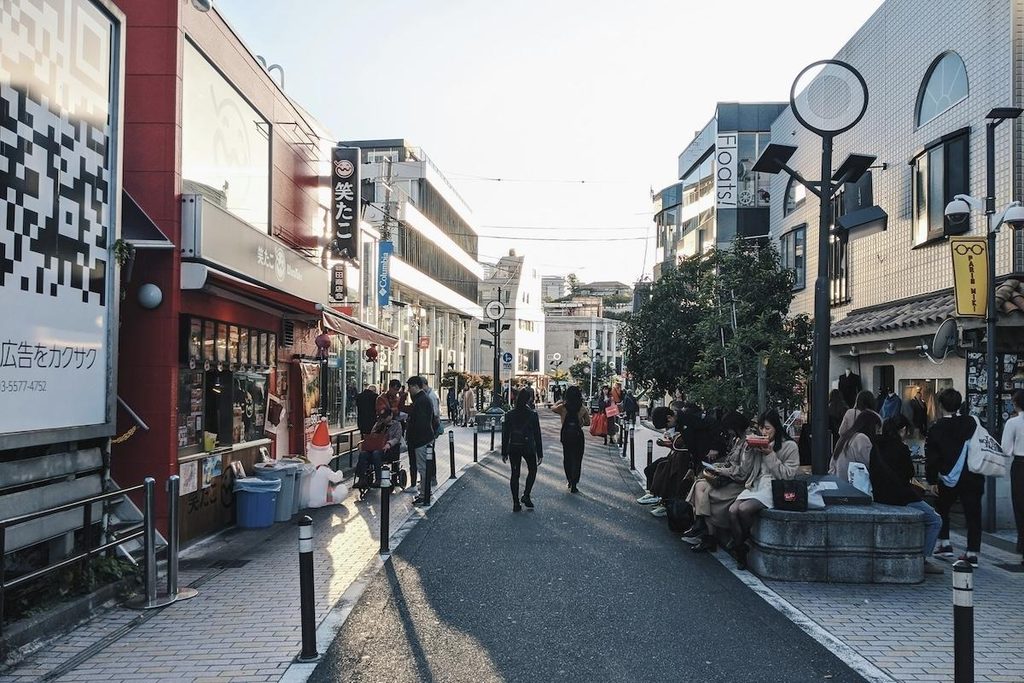
Photo: Unsplash
All four neighborhoods are easy to reach by train from major stations in Tokyo. None requires more than one or two transfers.
Shimokitazawa
Shimokitazawa Station is served by the Odakyu Line and Keio Inokashira Line. It is about 5 minutes from Shibuya and 10 minutes from Shinjuku.
- From Shibuya: Keio Inokashira Line, about 5 minutes
- From Shinjuku: Odakyu Line, about 10 minutes
- From Tokyo Station: Transfer at Shibuya, about 25 minutes total
Koenji
Koenji Station is on the JR Chuo Line. It is about 5 minutes from Shinjuku and 20 minutes from Tokyo Station.
- From Shinjuku: JR Chuo Line (local), about 5 minutes
- From Shibuya: Transfer at Shinjuku, about 20 minutes total
- From Tokyo Station: JR Chuo Line, about 20 minutes total
Kichijoji
Kichijoji Station is served by the JR Chuo Line and Keio Inokashira Line. It is about 15 minutes from Shinjuku and 25 minutes from Tokyo Station.
- From Shinjuku: JR Chuo Line (rapid), about 15 minutes
- From Shibuya: Keio Inokashira Line (express), about 30 minutes
- From Tokyo Station: JR Chuo Line (rapid), about 25 minutes
Harajuku / Cat Street / Ura-Harajuku
Harajuku Station is on the JR Yamanote Line. It is about 2 minutes from Shibuya and 5 minutes from Shinjuku.
- From Shibuya: JR Yamanote Line, about 2 minutes
- From Shinjuku: JR Yamanote Line, about 5 minutes
- From Tokyo Station: JR Yamanote Line, about 25 minutes
A great way to make the most of your day is to combine two or three neighborhoods in one trip. Harajuku and Shimokitazawa work well together, and Koenji and Kichijoji are both on the Chuo Line, making it easy to visit back to back.
Train schedules can vary, and Google Maps is usually the quickest way to check connections on the day. For a reliable internet connection, it’s recommended to use an eSIM here.
Summary
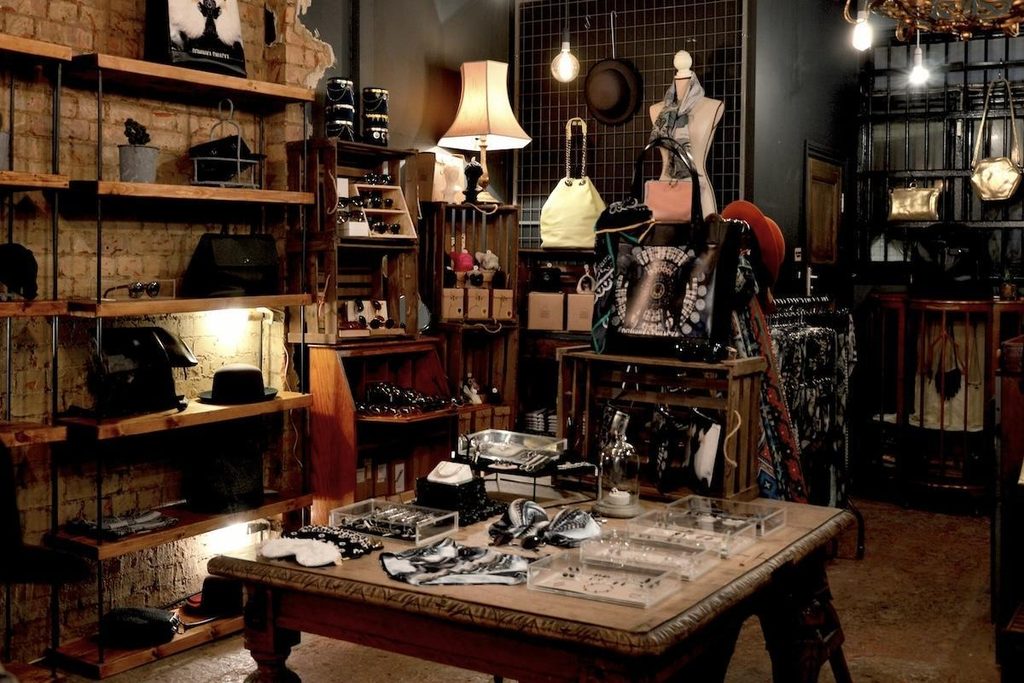
Photo: Unsplash
Tokyo is a city full of people who care deeply about the things they own. Whether it is fashion, furniture, or tableware. That passion has shaped a vintage scene unlike anywhere else in Japan.
The four neighborhoods featured in this guide each have their own unique atmosphere, character, crowd, and way of doing things. Take a moment to watch the people around you, and you will find what makes each neighborhood distinct. Even just walking through the streets gives you a sense of the culture and creativity that make each area unique.
Somewhere in these neighborhoods, you will find shops and people who share your taste. That is what makes vintage shopping in Tokyo so enjoyable. The key to enjoying vintage shopping in Tokyo is to take your time. Move slowly, browse without rushing. If you hurry, you might walk right past the best finds without even noticing them.
Do not be afraid to talk to the staff. The people working in these shops are vintage lovers themselves — just like you. Ask for recommendations, or find out the story behind a piece. That kind of conversation can turn a good shopping trip into a great one. Vintage shopping in Tokyo is not just about finding things. It is about finding your people. Take your time, trust your instincts, and enjoy the search.
To make the most of your visit, having reliable internet access on your phone is essential. Google Maps will help you find hidden shops down narrow backstreets, and a translation app will come in handy more than once. An eSIM is the easiest way to stay connected from the moment you arrive. Check out our recommended eSIM options for Japan here: https://getjapanesim.com