Photo: Pexels
Japan is one of the best countries in the world for hot springs. Hot springs are called onsen in Japanese.
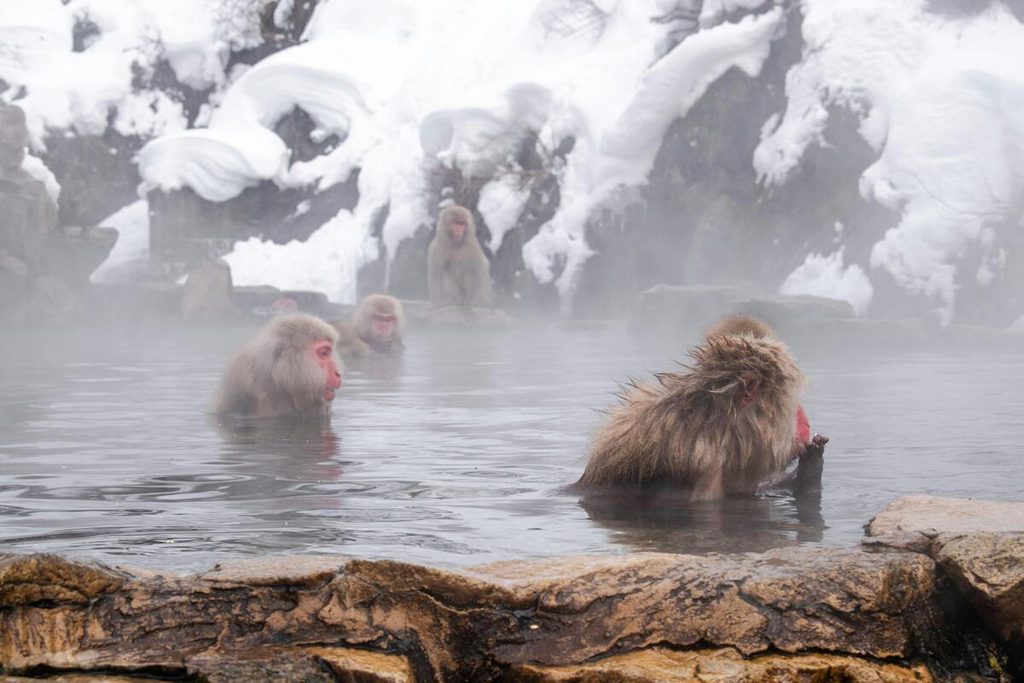
Onsen are popular with both Japanese people and visitors. In fact, even monkeys can be seen enjoying hot springs during winter in Nagano. For many people, onsen are more than just a place to bathe. They are enjoyed for relaxation, health, and unique travel experiences.
Many towns in Japan are built around hot springs. There are many different types of onsen. Some are large resort destinations, while others are small traditional villages with a slower pace of life.
Each onsen town has its own scenery, atmosphere, and bathing culture. From mountain retreats to seaside resorts, every destination offers a different experience. This guide introduces some of Japan’s most famous hot spring areas. It also explains what makes onsen special and how to enjoy them during your visit.
What is Onsen?
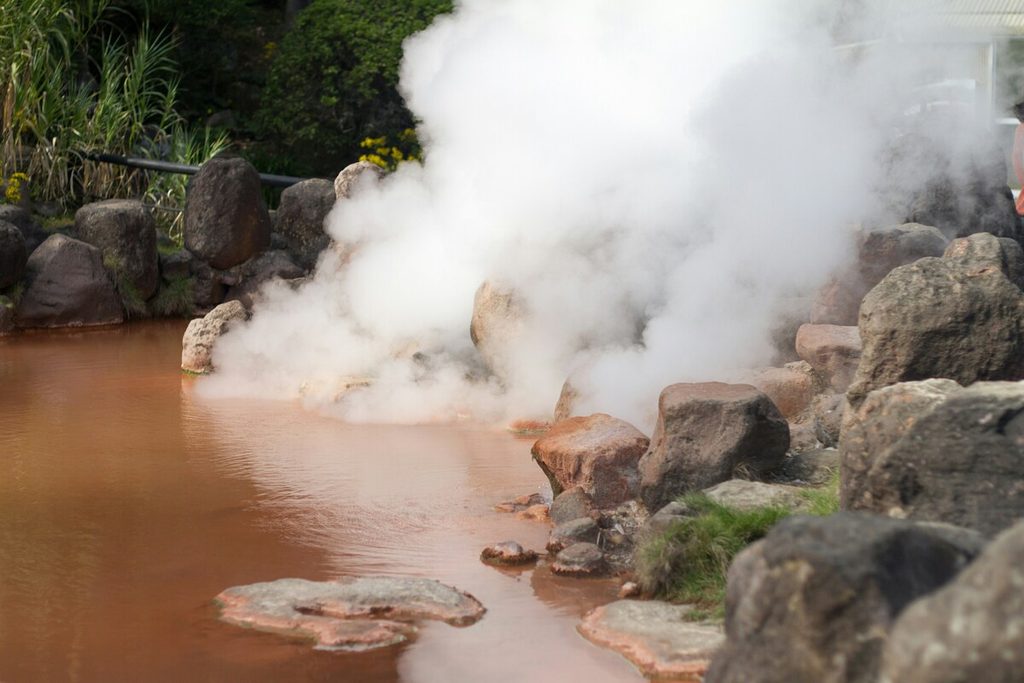
Photo: Unsplash
An onsen is a natural hot spring bath. The water comes from deep underground, heated by volcanic activity. Japan has many volcanoes. This is why hot springs are common here.
There are thousands of onsen sources across the country.
Onsen water contains natural minerals and these minerals change by location.
Each type of water has different qualities. Some waters feel soft on the skin. Some are rich in salt or sulfur. Others are clear and simple. Many people believe that onsen supports health, may help with tired muscles and stress, and also help people sleep better.
Basic Onsen Etiquette
Onsen are shared public baths.
There are simple rules to follow:
- Before entering, wash your body. Clean yourself at the washing stations first.
- Do not wear swimsuits in most onsen. Bathing is usually done without clothes.
- Do not put towels in the bath water. Use a small towel outside the bath only.
- Do not swim, splash, or run in the area.
- Onsen are quiet places for relaxation. Keep your voice low at all times.
Respect other guests, onsen are places for calm and relaxation.
Some onsen may restrict tattoos, this depends on the facility. However, more places now welcome international visitors.
Choosing the Right Onsen
There are many types of onsen towns in Japan.
Some are easy to access from Tokyo; others are in remote mountain areas.
Some are famous for views of nature; others are known for traditional streets.
Some specialize in strong healing waters; others provide beautifying baths.
Travel time, scenery, and bath style are different. Choosing the right destination depends on your trip.
1. Beppu Onsen (Oita)
ーJapan’s Largest Hot Spring City
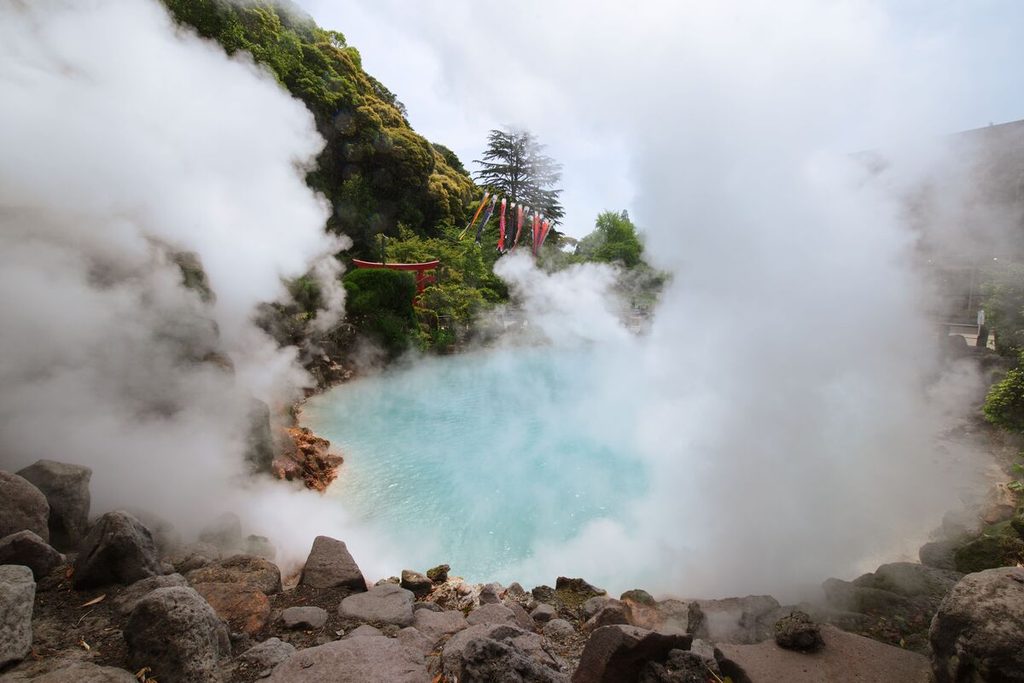
Photo: Pexels
Beppu is one of Japan’s most famous hot spring destinations. It is located in Oita Prefecture on Kyushu Island.
Beppu produces more hot spring water than almost anywhere else in Japan. The city has many different hot spring areas called “Beppu Hattou” , which is a collective name for eight hot spring areas. Each area has different types of baths and atmospheres. The water quality and mineral types also vary widely across the city.
Because of this richness, Beppu is not a place to experience just one onsen. Instead, visitors are encouraged to enjoy multiple hot springs in different areas. Trying different baths is part of the Beppu experience itself. You can find public baths, sand baths, and mud baths. This makes it ideal for trying different onsen experiences.
One of the main attractions is the “Hells of Beppu.” These are colorful hot spring ponds for viewing only. They are not for bathing but for sightseeing. Sand baths are another unique experience in Beppu. Your body is covered with naturally heated sand. It feels heavy but very relaxing.
Highlights:
- Japan’s largest hot spring output area
- Eight different hot spring districts (Beppu Hattou)
- Wide variety: public baths, sand baths, mud baths
- “Hells of Beppu” sightseeing hot spring ponds
- Unique sand bath experience on the beach
How to access:
From Tokyo
- Flight to Oita Airport: about 1.5 hours
- Airport bus to Beppu: about 50 – 60 minutes
- Total: about 2.5 – 3 hours
- Alternative: Shinkansen + limited express: about 6 – 7 hours total
From Osaka
- Flight to Oita Airport: about 1 hour
- Airport bus to Beppu: about 50 – 60 minutes
- Total: about 2 – 2.5 hours
- Alternative: Shinkansen + train: about 4.5 – 5.5 hours total
From Fukuoka (Hakata)
- Limited express train (Sonic): about 2 hours
- Or highway bus: about 2.5 – 3 hours
- Total: about 2 – 3 hours
Hakone Onsen (Kanagawa)
ーEasiest Hot Spring Trip from Tokyo
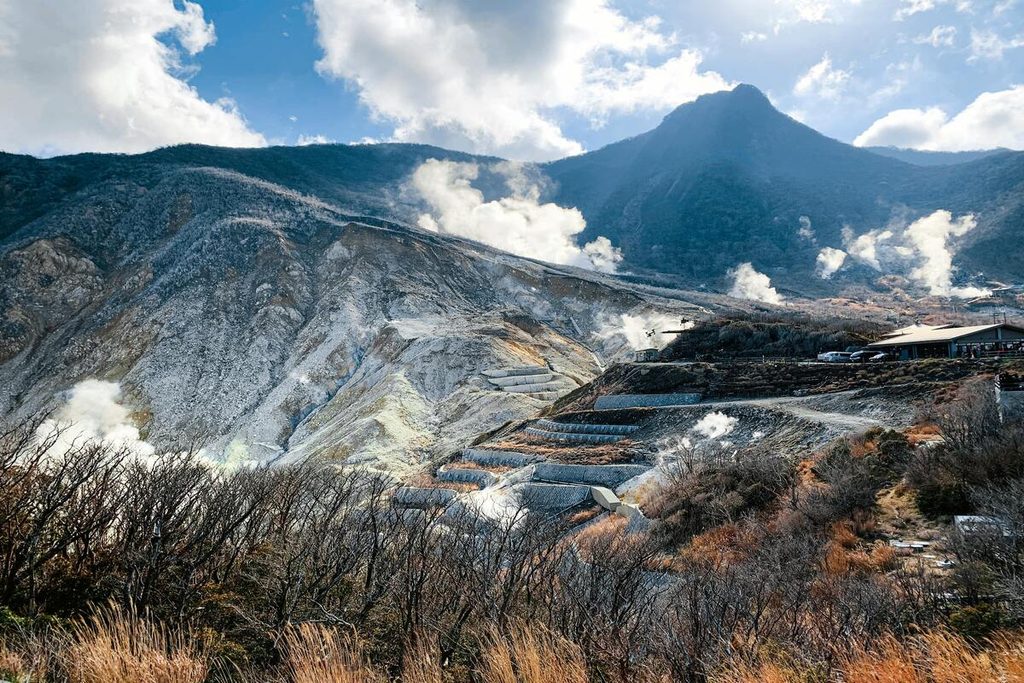
Photo: Pexels
Hakone is one of the most popular onsen areas in Japan. It is located in Kanagawa Prefecture near Tokyo. Hakone is known for easy access and good infrastructure. It is a common overnight or weekend trip from Tokyo.
The area offers a mix of nature, culture, and hot springs. On clear days, you can see Mount Fuji from some baths. Lake Ashi is a major sightseeing spot in Hakone. Visitors can take sightseeing boats across the lake. Hakone also has many museums and art galleries.This makes it more than just a hot spring destination.
There are many types of accommodation. Luxury ryokan and budget options are both available.
Highlights:
- Easy access from Tokyo (about 90 minutes)
- One of Japan’s most popular hot spring resorts
- Views of Mount Fuji from some baths
- Lake Ashi sightseeing and boat rides
- Many ryokan, from luxury to budget
How to access:
From Tokyo (Shinjuku)
Option 1: Odakyu Romancecar (Direct train)
- Departure: Shinjuku Station
- Arrival: Hakone-Yumoto Station
- Travel time: about 85 – 100 minutes
- No transfer needed
Option 2: Local train
- Shinjuku → Odawara (about 80 – 90 minutes by Odakyu Line)
- Odawara → Hakone-Yumoto (about 15 minutes by Hakone Tozan Line)
- Total: about 1.5 – 2 hours
From Tokyo (via Shinkansen)
- Tokyo Station → Odawara Station: about 35 – 40 minutes (Tokaido Shinkansen)
- Odawara → Hakone-Yumoto: about 15 minutes
- Total: about 1 – 1.5 hours (plus transfer time)
Kusatsu Onsen (Gunma)
ーOne of Japan’s Best Quality Hot Springs
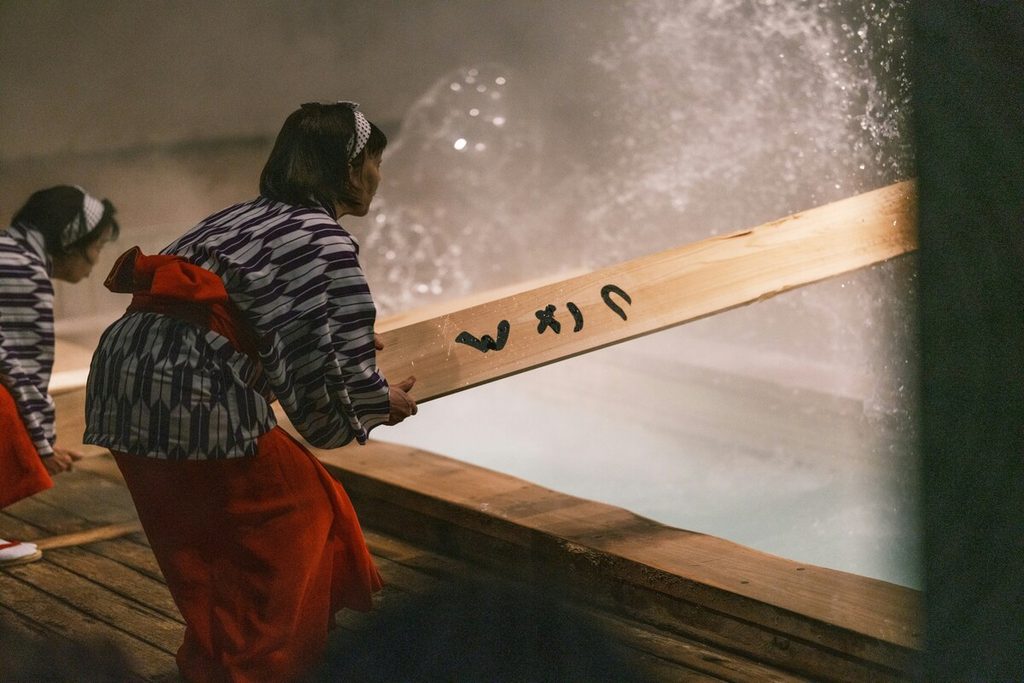
Photo: Unsplash
Kusatsu is located in Gunma Prefecture in the mountains.
It is known for strong and high-quality hot spring water. The water in Kusatsu is highly acidic.
It is believed to have strong cleansing properties.
Locals often describe it as “healing water.”
The center of the town is called Yubatake. Hot spring water flows through wooden channels here. It is the symbol of Kusatsu Onsen.
Visitors can also see traditional water stirring shows. This is called “yumomi,” a local cultural performance.
Kusatsu has a traditional mountain town atmosphere.
Highlights:
- One of Japan’s top-quality hot spring areas
- Highly acidic water with strong cleansing properties
- Famous central symbol: Yubatake (hot water field)
- Traditional “yumomi” water stirring performance
- Mountain resort town with seasonal scenery
How to access:
From Tokyo (Shinjuku)
Option 1: Highway Bus (Most Direct)
- Shinjuku Highway Bus Terminal → Kusatsu Onsen Bus Terminal
- Travel time: about 4 to 4.5 hours
Option 2: Train + Bus (via Naganohara-Kusatsuguchi)
- Tokyo → Takasaki (Shinkansen, about 50 – 60 minutes)
- Takasaki → Naganohara-Kusatsuguchi Station (JR Agatsuma Line, about 2 hours)
- Naganohara-Kusatsuguchi Station → Kusatsu Onsen (bus, about 25 – 30 minutes)
- Total: about 3.5 – 4.5 hours
From Tokyo (via Shinkansen + transfer option)
- Tokyo → Karuizawa (Shinkansen, about 70 – 80 minutes)
- Karuizawa → Kusatsu Onsen (bus, about 80 – 90 minutes)
- Total: about 3 – 3.5 hours
From Nagano Area (Karuizawa)
- Karuizawa Station → Kusatsu Onsen (direct bus)
- Travel time: about 80 – 90 minutes
Izu Peninsula Onsen (Shizuoka)
ーHot Springs with Ocean Views
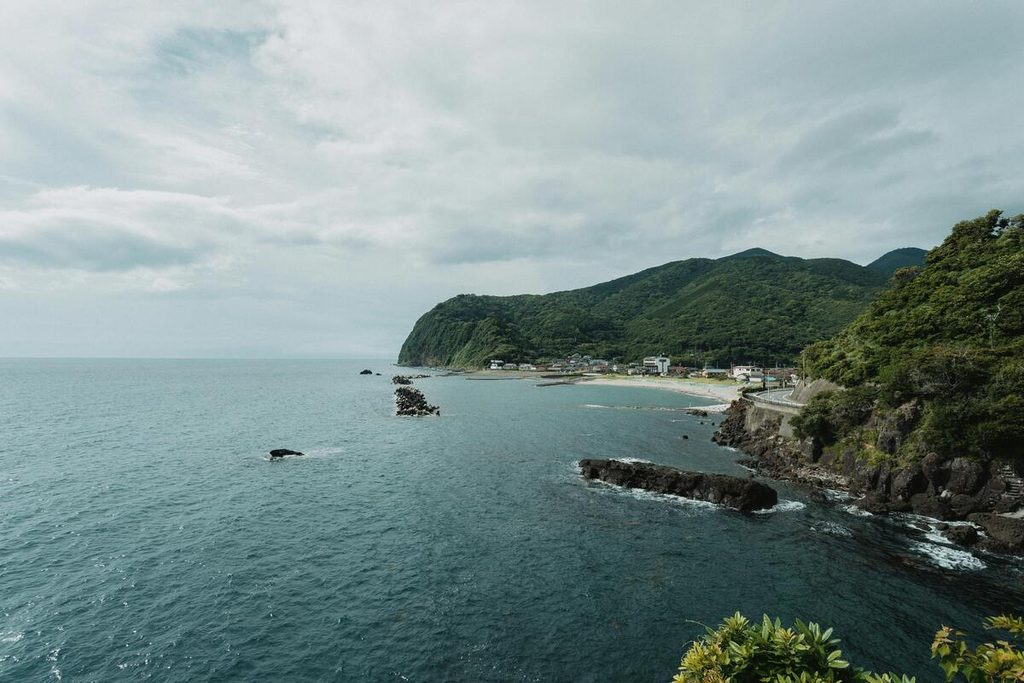
Photo: Pexels
The Izu Peninsula is located south of Tokyo. It is known for coastal scenery and hot springs.
Unlike inland onsen towns, Izu faces the Atlantic ocean. Many baths offer views of the sea. Some onsen are located right next to the coastline. You can hear the sound of the waves crashing on the coast while bathing in hot water.
Izu is also famous for fresh seafood. Local dishes often include fish and shellfish. Atami and Ito are popular towns. Both are well-developed hot spring resorts.
Izu is a good choice for a relaxing seaside trip. It combines food, ocean views, and onsen.
Highlights:
- Coastal hot spring area near Tokyo
- Open-air baths with ocean views
- Fresh seafood and local cuisine
- Popular resort towns: Atami and Ito
- Relaxed seaside atmosphere
How to access:
From Tokyo (to Atami – Northern Izu Gateway)
Option 1: Shinkansen (Fastest)
- Tokyo Station → Atami Station
- Travel time: about 35 – 45 minutes
Option 2: Limited Express Train (Odoriko)
- Tokyo/Shinjuku → Atami
- Travel time: about 80 – 100 minutes
- Scenic route along the coast
- Direct access to Izu resorts
From Atami to Major Izu Areas
Atami is the main gateway to eastern Izu.
Atami → Ito
- Local train (JR Ito Line)
- Travel time: about 20 – 25 minutes
Atami → Shimoda (southern Izu)
- Limited express train (via Izukyu Line)
- Travel time: about 1.5 – 2 hours
From Tokyo (direct to Ito option)
- Tokyo → Ito (Limited Express Odoriko)
- Travel time: about 90 – 100 minutes
Ginzan Onsen (Yamagata)
ーA Traditional Hot Spring Town
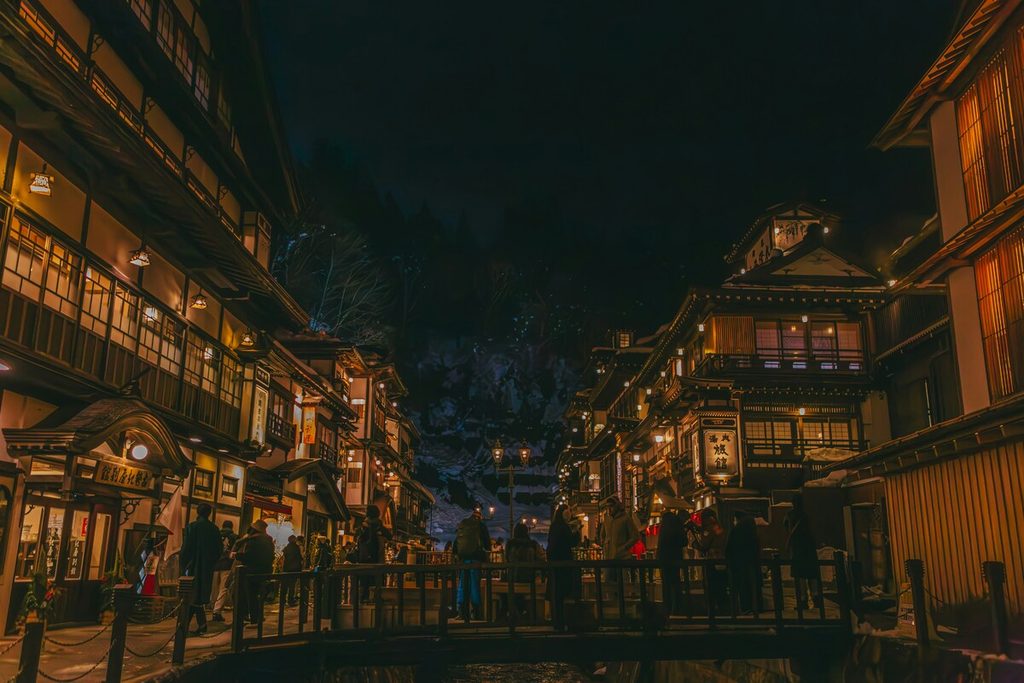
Photo: Unsplash
Ginzan Onsen is a small hot spring town in Yamagata. It is famous for its preserved traditional streets. Wooden ryokan line both sides of a small river.
The town is especially beautiful in winter. At night, gas lamps light the streets and the snow creates a very quiet and scenic atmosphere.
Ginzan Onsen feels like a historical film set. It is popular for photography and slow travel. The town is small and easy to walk around. It is best for overnight stays rather than day trips.
Highlights:
- Traditional wooden hot spring town
- Taisho-era streetscape along a river
- Gas lamps create a nostalgic night view
- Especially famous for winter snow scenery
- Small town ideal for slow travel and overnight stay
How to access:
From Tokyo
- Tokyo Station → Oishida Station (Yamagata Shinkansen)
- Travel time: about 3 to 3.5 hours
- Local bus or taxi: Oishida Station → Ginzan Onsen
- Bus: about 35 – 40 minutes / Taxi: about 30 minutes
- Total travel time: About 4 to 4.5 hours in total
From Sendai
- Sendai → Sendai Station → Oishida Station (Shinkansen via Fukushima/Yamagata line connections)
- Oishida → Ginzan Onsen (bus or taxi)
- Total travel time: about 3.5 to 4.5 hours (depending on connections)
From Yamagata City
- Yamagata Station → Oishida Station (Shinkansen)
- Oishida → Ginzan Onsen (bus or taxi)
- Total travel time: about 2 to 3 hours
Onsen Culture in Japan
Hot springs are an important part of life in Japan.
They are not only for tourists. Many Japanese people enjoy visiting onsen as part of their daily lives or during weekends and holidays. Onsen are places to relax and rest. People go after work, travel, or sports. They are also places where families and friends spend time together.
Bathing culture in Japan is very old. Public baths have existed for centuries. For many Japanese people, onsen are a familiar part of everyday life rather than a luxury experience. Onsen also reflect respect for stillness and cleanliness. People wash before entering the bath. They share the space calmly with others.
Seasonal changes are important. Many people enjoy soaking in outdoor baths surrounded by winter snow, spring blossoms, or colorful autumn leaves.
Onsen connect nature, health, and daily life. This is why they remain important in Japan today.
Summary
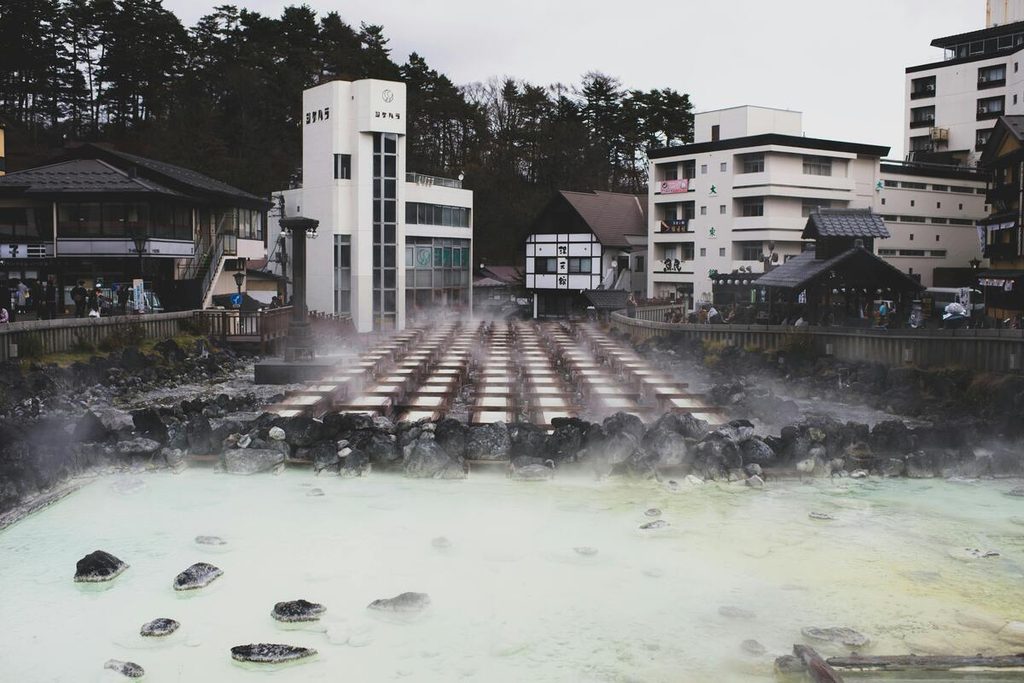
Photo: Pexels
Japan offers many different types of hot springs. Each destination has a different style and atmosphere.
Beppu is known for its variety of baths and abundant hot spring sources. Hakone is popular for its convenient access from Tokyo and views of Mount Fuji. Kusatsu is famous for its strong mineral-rich waters. Izu is loved for its ocean views and fresh seafood. Ginzan Onsen is known for its nostalgic atmosphere and beautiful seasonal scenery.
Onsen travel is one of the best ways to experience Japan. Whether you are looking for relaxation, nature, culture, or local traditions, onsen are a good option. Each onsen town offers a different way to experience Japan.