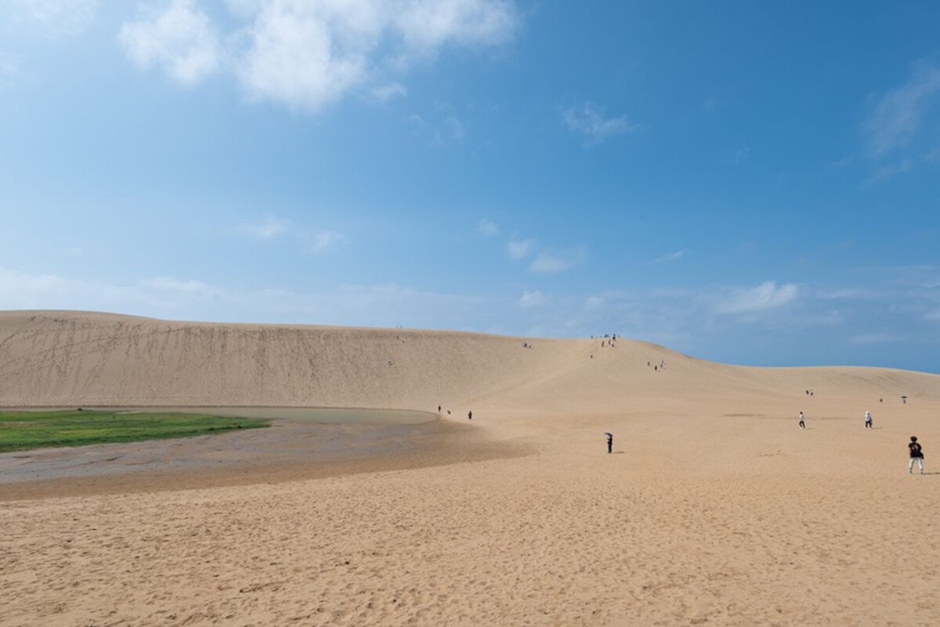
 Photo: Pexels
Introduction
Tottori Sand Dunes looks easy to add to a Japan itinerary. The photographs show open sand, the Sea of Japan, and a ridge that seems close to the entrance. What they do not show is how loose sand changes a 400-meter walk, how quickly coastal weather can turn, or how much a missed return bus can reshape the day.
This guide explains what the dunes are really like, which experiences deserve your time, where to stop, and how to reach the area without turning the visit into a transport exercise.
You will learn:
- How long to allow for the walk to Umanose
- Which three places are worth building into the visit
- How heat, wind, rain, and footwear affect the day
- Which bus stops, official pages, and map pins to save before leaving
The route is easier when maps, weather updates, and bus times are available as soon as you need them. Check Japan eSIM plans before departure so you are not relying on public Wi-Fi at the station or dunes.
Overview
The full Tottori Sand Dunes area extends roughly 16 kilometers from east to west and 2.4 kilometers from north to south. Most visitors experience a much smaller section around the main entrance, Umanose, the Visitor Center, and the Sand Museum. That compact visitor area is why a half-day works, even though the wider landscape is far larger than a first visit suggests.
What defines the dunes:
- A protected coastal landscape beside the Sea of Japan
- A main ridge called Umanose that rises about 47 meters
- Wind patterns that can redraw the surface overnight
- Free access to the outdoor dunes, with separate hours and fees for nearby facilities
Tottori is sometimes described as Japan’s largest sand dune. That wording is too simple. The prefectural government explains that it is not the country’s largest by area. Its appeal comes from the height changes, moving sand, open access, and the moment the sea appears beyond the ridge.
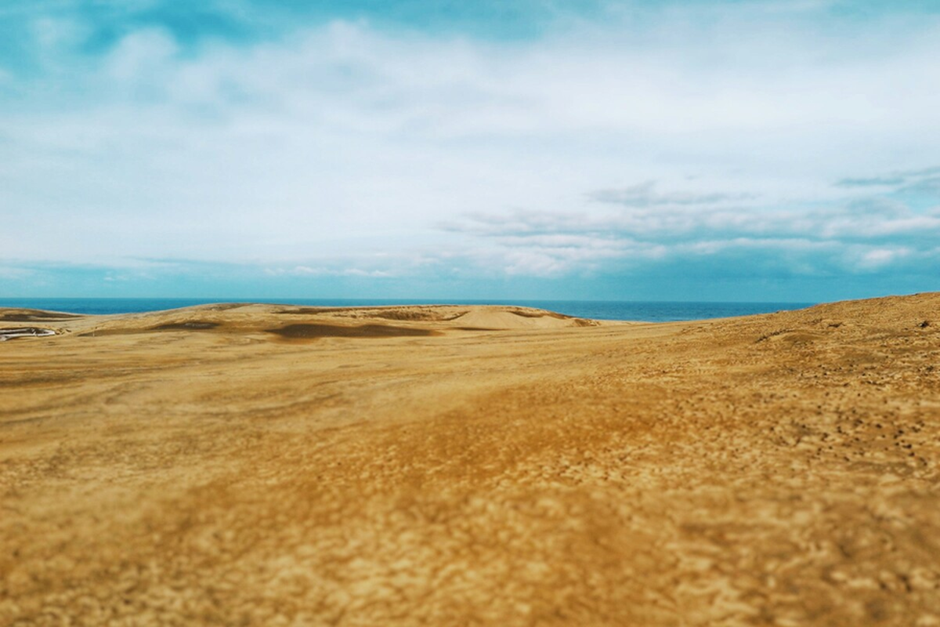
Photo: Unsplash
For phone setup before the trip, read how a Japan eSIM works while you still have a reliable connection at home.
Best Things to Do
Explore the walk to Umanose
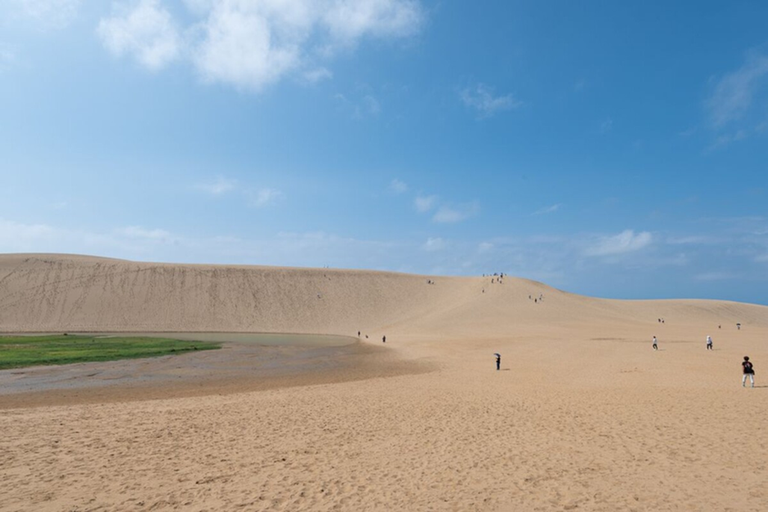
Umanose, or Horse’s Back, is the main event. The straight-line distance from the entrance is about 400 meters. On pavement that sounds minor. On loose sand, each step slips back slightly and the final slope feels steeper than it looks from below.
Allow about one hour for a relaxed return walk. That gives you time to pause, choose a diagonal line up the ridge, and reach the top without turning the climb into a race. The beach below is reachable, but descending to it means another climb on the way back. Travelers with a train or bus connection should treat the ridge as the natural turning point.
The reward arrives late. The sea remains hidden during much of the approach. Near the crest, the wind becomes more noticeable, the sand often feels firmer, and a few more steps reveal the Sea of Japan on the far side.
Enjoy the wind patterns and changing light
The Japanese word fumon refers to the fine ripples created by wind. They are easiest to see where feet have not broken the surface and where low sunlight draws a narrow shadow beside each line. Early morning often gives the cleanest patterns, especially after a windy night.

Photo: Unsplash
Do not expect one fixed version of the dunes. Rain leaves darker bands. Calm weather softens the patterns. A busy afternoon covers the main route with footprints. The landscape is most interesting when you stop looking for a postcard-perfect surface and notice what the weather has changed.
Try an activity without building the day around it
Depending on weather and operator schedules, the area may offer camel experiences, sandboarding, paragliding, fat bikes, and guided walks. These can be memorable additions, but they are not dependable enough to become the foundation of a tight itinerary.
Camel experiences can close irregularly, and other activities may require advance booking or use a meeting point away from the main bus stop. Confirm the operator, meeting place, weather policy, and cancellation terms before assuming an activity happens on a fixed schedule.
Recommended Spots
Three stops cover the landscape, its story, and a practical indoor option. They are close on a map but serve different purposes, so the order should change with the weather.
Umanose
Umanose gives the visit its natural shape. The walk begins across a broad, open basin, then rises sharply near the ridge. People on the crest look like small marks against the sky, which is the quickest way to understand the scale.
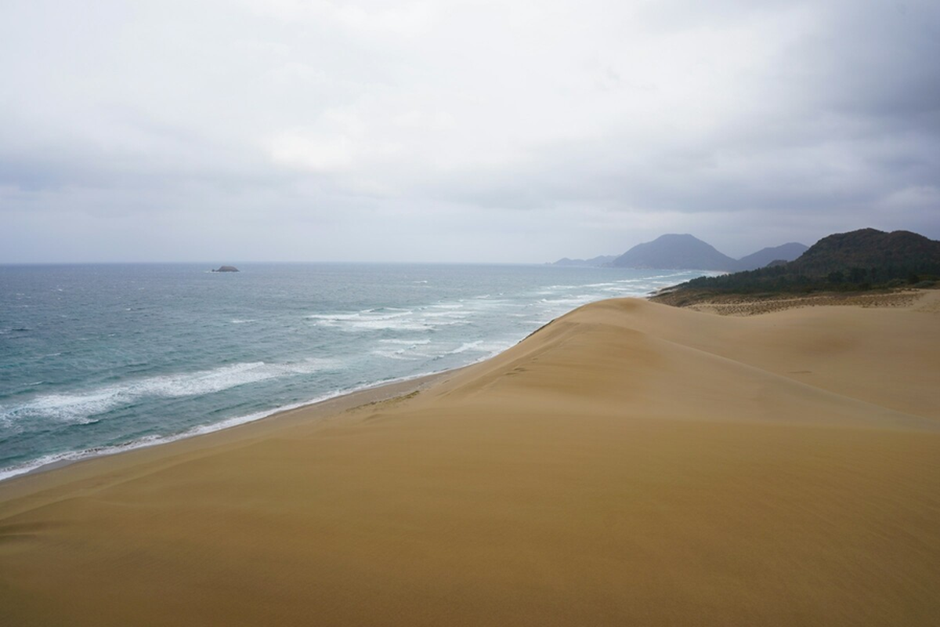
Photo: Unsplash
Highlights: The climb, the sudden Sea of Japan view, and the height difference across the main visitor area.
Time: About 60 minutes for a relaxed return walk from the entrance. Add more time if you continue toward the beach.
Access: Walk roughly 400 meters from the main dunes entrance. There is no shade once you leave the entrance area.
Official website: Official website link
Location: Google Maps link
The Sand Museum
The Sand Museum is not a small room of local crafts. It is an indoor exhibition of large sand sculptures made from sand and water around a changing international theme. Faces, buildings, clothing, and complete street scenes are carved at a scale that makes the material difficult to believe.
The 2026 exhibition focuses on Spain and runs from April 24, 2026, through January 3, 2027. The museum closes during exhibition preparation periods. It is indoors, but the exhibition room remains close to the outside temperature to protect the sculptures, so dress for the season.
Highlights: Large temporary sculptures, a different international theme each year, and detailed work that rewards a slower look.
Time: Allow 45 to 60 minutes. Stay longer if you enjoy studying small carving details rather than walking through for photographs.
Access: Use the Suna no Bijutsukan Mae bus stop or walk from the main dunes entrance area.
Official website: Official website link
Location: Google Maps link
Live maps and return-bus checks matter most in the middle of the day, when plans begin to change. Choose a Japan eSIM plan before travel so the useful connection is already in place.
Tottori Sand Dunes Visitor Center
The Visitor Center is the best first stop for a first visit. Staff provide current information, free maps, and guidance on conditions. Exhibits explain how wind, plants, insects, and human activity have shaped the dunes. The SUNAKURA dome film shows the landscape changing across the seasons.
The center also has an indoor rest area, foot showers, toilets nearby, and a limited number of special wheelchairs designed for sand. A panoramic terrace can be reached from the parking area by a wooden slope, giving visitors who cannot manage the full walk a useful view of the landscape.
Highlights: Current local guidance, the dune formation exhibits, free maps, foot showers, and the panoramic terrace.
Time: Allow 20 to 30 minutes before the walk. Add time if you watch the dome film or speak with staff about conditions.
Access: Located beside the main entrance area and Sakyu Kaikan bus stop.
Official website: Official website link
Location: Google Maps link
Travel Tips
Let the weather decide the order
Spring and autumn usually offer the easiest balance. The air is milder than midsummer, the sand is more comfortable underfoot, and lower sunlight returns texture to the slopes. Summer can be beautiful, but there is no shade on the main route. Start early, carry more water than you expect to need, and do not wait until your feet feel hot before leaving exposed sand.
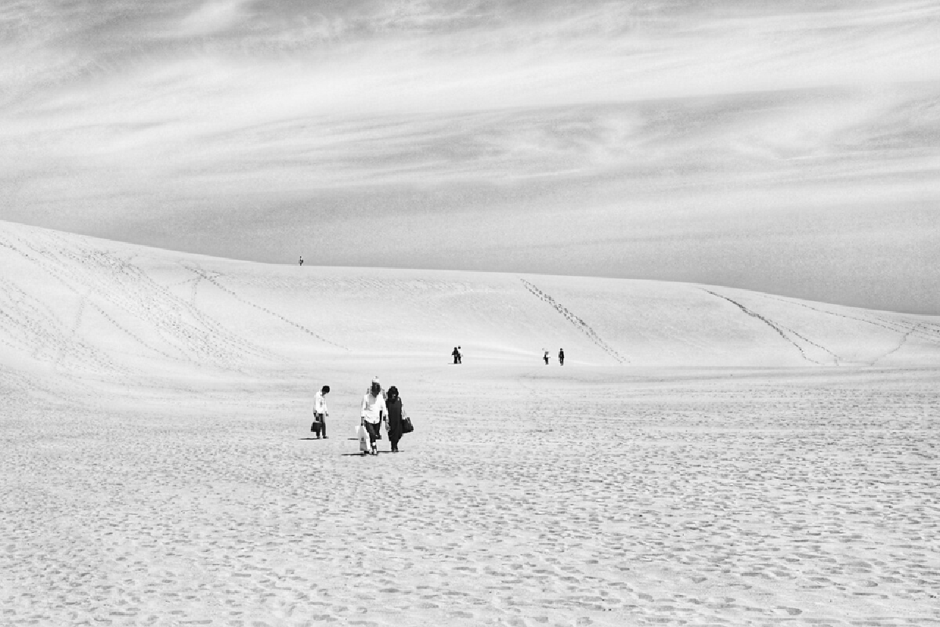
Photo: Unsplash
Rain does not automatically ruin the visit. Wet sand can be firmer, and the museum gives you an indoor option while conditions change. Strong wind is the more serious reason to shorten the walk. Fine sand blowing into your eyes can make the open landscape uncomfortable very quickly.
Official website: Official website link
Protect your feet, phone, and camera
Sneakers are the safest general footwear, although sand will get inside low-cut shoes. Bare feet and sandals can feel pleasant in mild weather, but the surface can approach 60 degrees Celsius during hot summer conditions. Pumps and heels sink quickly and make the climb harder.
Fine sand can enter a camera dial, charging port, or open bag in seconds. Change lenses before stepping onto the dunes, keep spare equipment sealed, and avoid placing a phone directly on the ground for a low-angle photograph. A simple zip pouch is more useful here than an expensive open-top camera bag.
Respect the protected landscape
Stay within permitted areas and keep away from protected vegetation. Writing messages in the sand is prohibited, swimming along the coast beside the dunes is not allowed, and drone flights require advance notification. Pets and sledding are also covered by local rules, so check the official guidance when either affects your visit.
Official website: Official website link
Access
From JR Tottori Station
Local buses leave from Tottori Station Bus Terminal and reach the dune area in about 20 minutes under normal conditions. The Sakyu Line and Iwami or Iwai Line do not use exactly the same stopping pattern. Sakyu Kaikan is convenient for the main entrance and Visitor Center, while the Sand Museum has its own nearby stop.
Older travel pages may say that Tottori buses do not accept transport IC cards. As of March 21, 2026, this no longer applies. Local route buses in the prefecture now accept nationwide transport IC cards, including ICOCA and Suica. Carrying some cash remains sensible as a backup.
Official website: Official website link
Location: Google Maps link
From Osaka
The Limited Express Super Hakuto connects the Osaka area with JR Tottori Station in about two hours and 40 minutes. The train uses both JR and Chizu Express tracks, so some rail passes do not cover the full journey. Check coverage before boarding and reserve a seat during weekends and Japanese holiday periods.
A same-day trip is possible, but it leaves little room for weather changes. An overnight stay gives you a better chance of seeing early wind patterns and removes pressure from the final bus back to the station.
From Tokyo
Flights connect Haneda Airport with Tottori Sand Dunes Conan Airport. Check ground transport at the same time as the flight, because not every arrival has a convenient onward bus. Depending on the schedule, travel through Tottori Station or take a taxi toward the dunes.
The rail alternative usually requires a transfer through the Kansai or Okayama area and takes much longer. It works when Tottori is part of a wider western Japan route, but it is a poor fit for a rushed day trip from Tokyo.
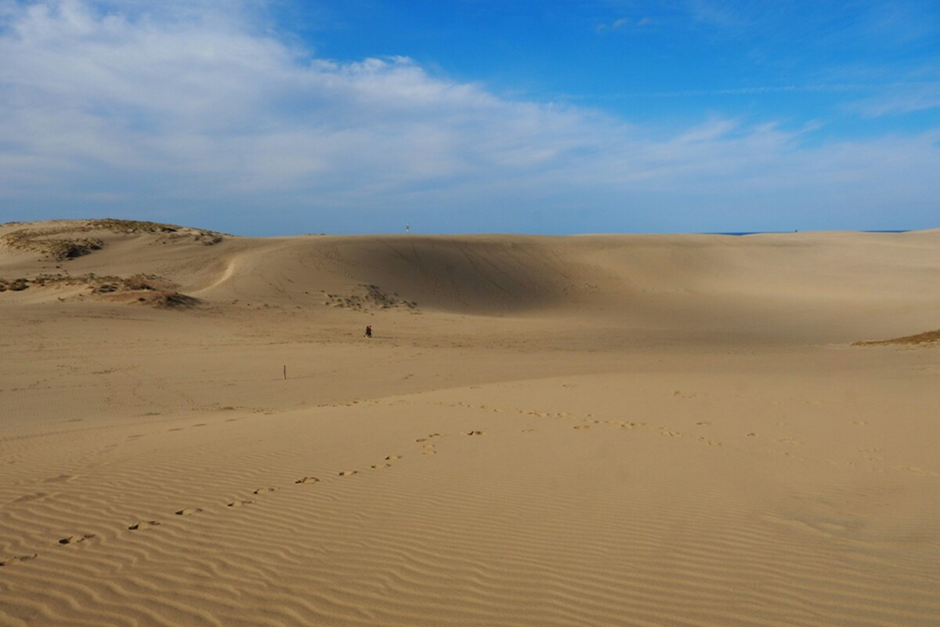
Photo: Unsplash
Summary
Tottori Sand Dunes deserves more than a quick photograph beside the entrance. Give Umanose about an hour, use the Visitor Center for current conditions, and keep the Sand Museum available when heat, rain, or wind changes the order of the day.
The best version of the visit is not complicated. Arrive with enough time, save the correct bus stop and map pins, and leave some margin for the coast to set the pace.
Bus times and weather can change while you are moving. Check Japan eSIM plans before departure, then put the phone away when the sand, sea, and wind finally take over.