Introduction
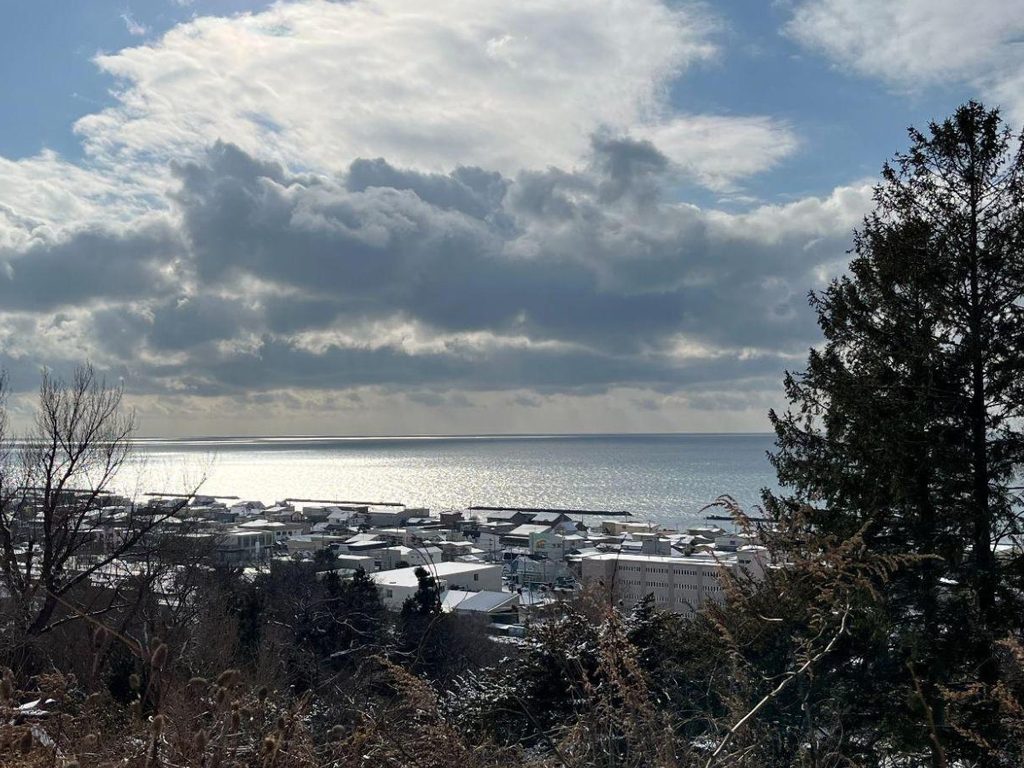
Toyako, the town surrounding Hokkaido’s caldera lake of the same name, is best known internationally for its hot springs and volcanic scenery. Beyond those attractions, the town holds two very different experiences worth seeking out: a dazzling winter light tunnel in the heart of its onsen district, and a centuries-old shrine on a nearby hillside said to sit along a legendary “dragon vein” of natural energy.
In this article, you will learn:
- Where to see Toyako’s winter illumination displays
- The history and legends behind Abuta Shrine
- What makes the shrine’s hillside trail and its “Dragon’s Pearl” monument worth the climb
- The best spots to explore around Toyako
- How to get to Toyako from Sapporo and New Chitose Airport
Since several of Toyako’s most memorable sights depend on seasonal timing and weather, an eSIM is worth having on hand to check illumination schedules and trail conditions before heading out.
Overview of Toyako
Toyako Town was formed in 2006 through the merger of the former Toyako-cho and Abuta-cho municipalities, bringing together the lakeside hot spring resort for which the area is famous for and the older coastal community of Abuta, which faces Funka Bay (Volcano Bay). This means a single visit to Toyako can combine caldera lake scenery with a quieter, more historic side of the town facing open water.
Toyako Onsen, the resort area along the lake’s southern shore, developed around hot springs fed by the volcanic activity of nearby Mount Usu. Every winter, the town’s central square transforms into a glowing showcase of light, drawing visitors who might otherwise associate Toyako purely with its summer scenery. A short distance away, in the older Abuta district, a shrine founded in 1804 has become known as one of Hokkaido’s more distinctive spiritual sites, tied to both a striking winter weather phenomenon and a modern hillside pilgrimage trail.
Key Features
- A large-scale seasonal illumination tunnel in Toyako Onsen
- Abuta Shrine, a historic shrine linked to a Hokkaido-wide “dragon vein” legend
- A rare winter phenomenon in which snow forms a snake-like shape on the shrine’s torii gate
- A hillside trail leading to a modern “Dragon’s Pearl” wish-making monument
- Sweeping views over Funka Bay from the shrine’s forested hillside
Toyako Onsen’s illumination tradition centers on the Illumination Tunnel, a seasonal installation built each year in the Nigiwai Hiroba plaza at the heart of the hot spring district. Using roughly 400,000 LED lights strung across a 70-meter tunnel structure and a nine-meter-wide domed section, the display transforms an ordinary town square into a glowing, walk-through art piece each winter. A separate, simpler Illumination Street runs along the lakeside year-round, but the tunnel itself is very much a cold-season attraction, running from early November through late April each season.
Abuta Shrine tells a very different story about Toyako. Founded in 1804 with a spirit division from Kyoto’s Fushimi Inari Taisha, the shrine sits in the older Abuta district facing Funka Bay. According to local tradition rooted in feng shui concepts, Abuta Shrine lies along a ley line connecting three of Hokkaido’s prominent peaks, Mount Rishiri, Mount Yotei, and Mount Komagatake, and along a “dragon vein” believed to carry energy from Mount Yotei through Lake Toya and Mount Usu to Mount Komagatake across the bay. This has made the shrine a well-known spiritual destination, particularly among visitors interested in Japan’s power spot culture.
Taken together, these two sides of Toyako reflect a broader pattern found across the region: a landscape shaped by volcanic activity that has, over time, produced both a modern hot spring tourism industry and a much older set of local beliefs about the energy running through the land itself. Visitors who spend time in both halves of town come away with a noticeably fuller picture of Toyako than a lake cruise or hotel stay alone would provide.
Best Things to Do in Toyako
Toyako rewards visitors willing to look beyond the lake itself, offering a striking mix of manufactured winter spectacle and centuries-old local legend within a short distance of one another.
Walk Through the Toyako Onsen Illumination Tunnel
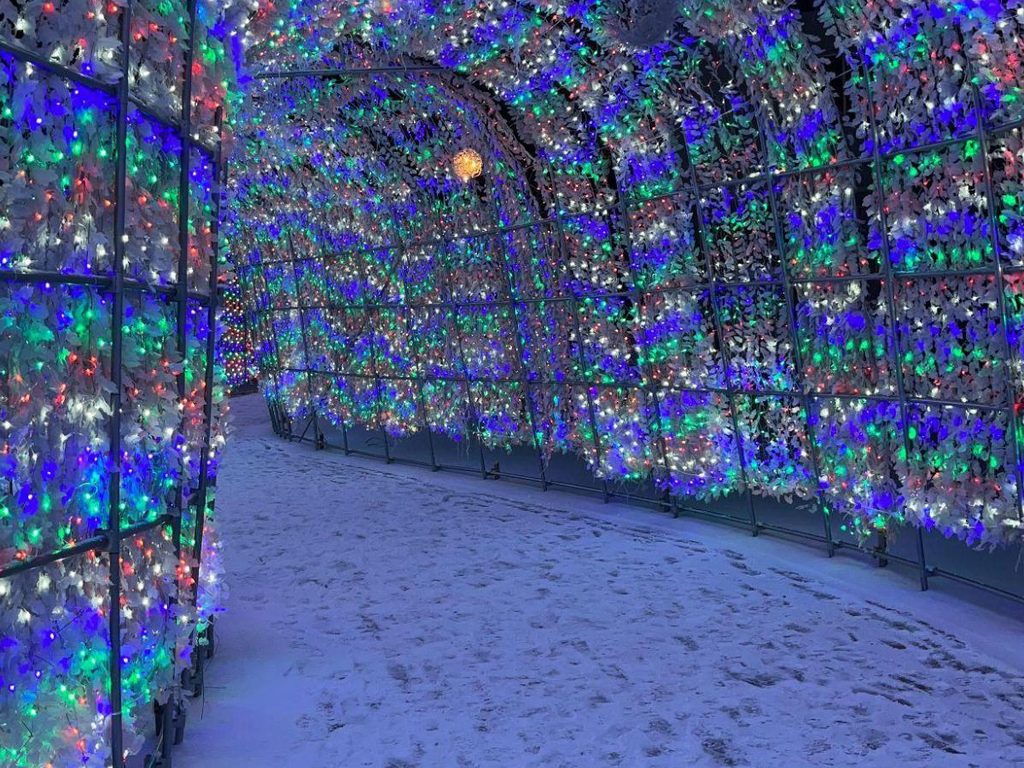
The centerpiece of Toyako’s winter season is the Illumination Tunnel, set up each year in the plaza at the center of the hot spring district. Walking through the glowing tunnel feels like stepping into a corridor made entirely of colored light, with blue, green, red, and white bulbs woven through artificial vines and leaves overhead. A domed section partway through opens into a wider, similarly lit space before the path continues onward.
Snow on the ground beneath the tunnel adds to the atmosphere, reflecting the colored lights and softening the surrounding darkness. The display is especially popular with couples and photographers, and its relatively short length makes it an easy stop even on a cold evening, without requiring a long walk in the winter air.
Beyond the tunnel itself, a separate lakeside Illumination Street runs year-round after sunset, adding a softer, more ambient layer of light along the walk toward the lake, distinct from the more concentrated spectacle of the tunnel.
Highlights
- A 70-meter tunnel and 9-meter dome built entirely from colored LED lights
- A popular photo spot for couples and families
- Snow-covered ground that reflects and softens the surrounding light
- Easy access from central Toyako Onsen
Details
- Time required: 15–30 minutes
- Admission: free
- Season: early November through late April, lit from 17:00 to 22:00 in the colder months and 18:00 to 22:00 in March and April
- Access: about 10 minutes on foot from the Toyako Onsen bus terminal, or a 5-minute drive from Abuta-Toyako Interchange on the Doou Expressway
Stroll the Year-Round Illumination Street
Unlike the seasonal tunnel, the Illumination Street runs along the lakeside through every season, using around 12,000 lights strung along the walking path closest to the water. The display is simpler than the tunnel’s dense canopy of bulbs, but its length makes for a pleasant, unhurried walk after dinner, especially when the lake itself reflects some of the light back toward the shore.
Because the street stays lit throughout the year rather than only through the winter season, it gives visitors a reason to walk the lakeside even outside the tunnel’s operating months, pairing naturally with a meal or a hot spring soak on the same evening.
Highlights
- Roughly 12,000 lights running along the lakeside path
- A year-round display, unlike the seasonal tunnel
- Reflections visible on the lake’s surface after dark
- An easy add-on to an evening in Toyako Onsen
Details
- Time required: 15–20 minutes
- Admission: free
- Hours: lit from sunset until around 22:00 year-round
- Access: runs directly along the lakeside through central Toyako Onsen
Visit Abuta Shrine, a Ley-Line Power Spot
A short distance from the lake, in the older Abuta district, Abuta Shrine offers a completely different kind of experience. Founded in 1804 as an Inari shrine with a spirit division from Kyoto’s Fushimi Inari Taisha, the shrine has become known across Japan as a power spot thanks to its position along a ley line linking three significant mountains, and along the wider “dragon vein” said to run through Lake Toya itself.
The shrine grounds are framed by forested hills, with a main approach leading up to the shrine buildings and several torii gates. Beyond its spiritual reputation, the shrine’s setting rewards visitors with genuinely pleasant surroundings, changing with the seasons much like other Japanese shrines, from hydrangeas along the approach in summer to quiet, snow-covered paths in winter.
Highlights
- Historic shrine buildings and multiple torii gates
- A well-known ley line and “dragon vein” legend
- Seasonal scenery, from summer hydrangeas to snow-covered winter paths
- The starting point for the Ryuzando trail
Details
- Time required: 20–40 minutes for the shrine grounds alone
- Access: about a 10-minute walk from JR Toya Station, and close to Toyako Onsen
- Notes: free parking is available except during the shrine’s mid-August festival period
Hike the Ryuzando Trail to the Dragon’s Pearl
Behind the main shrine buildings, a walking trail known as Ryuzando, or “Dragon Mountain Path,” climbs roughly 15 minutes up the forested slope of Aoba-yama. The path is gentle enough for casual hikers, with a rope strung alongside much of the route and walking sticks left available near the trailhead.
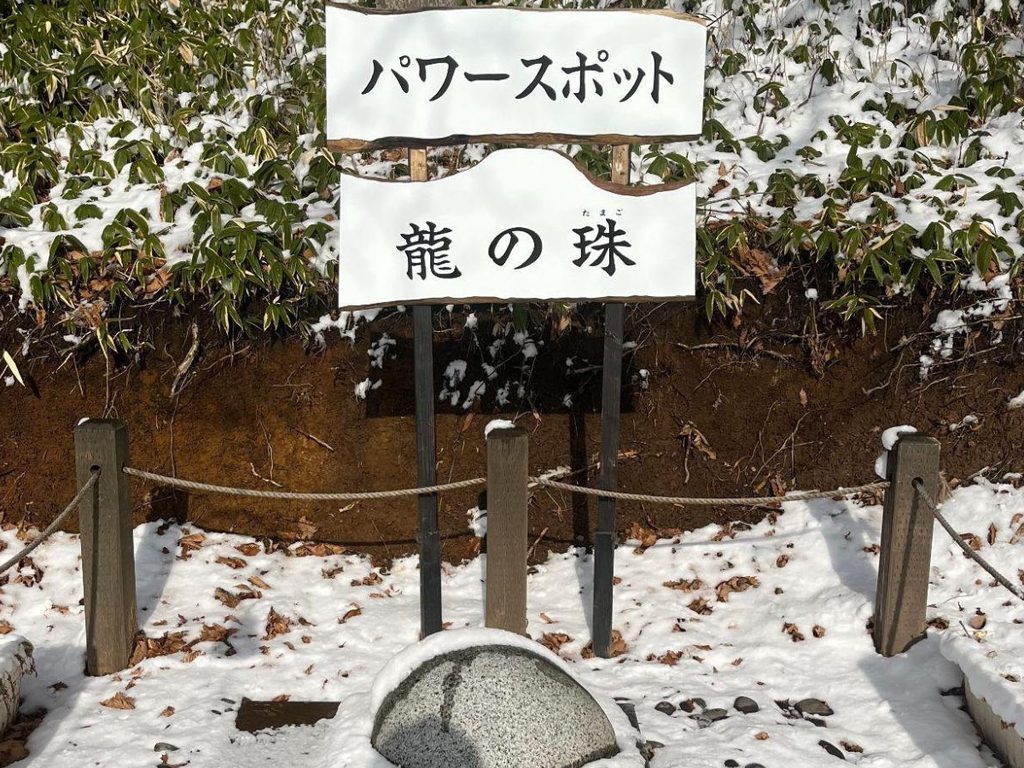
At the top, a monument known as the Dragon’s Pearl, installed in 2017, marks the trail’s main destination. Shaped to resemble a dragon holding a pearl, the monument is where visitors traditionally make a wish, following a small ritual that involves writing a wish on paper, leaving it with a modest offering, and ringing a bell at the site. Along the way and from the viewing area near the monument, the trail offers sweeping views over Funka Bay and, on clear days, toward Mount Komagatake across the water.
Since the trail is not cleared of snow in winter, footing can be uneven and occasionally slippery during the colder months, so sturdy footwear and a cautious pace make for a safer climb when snow is on the ground.
Highlights
- A rope-lined forest trail suitable for casual hikers
- The Dragon’s Pearl monument and its wish-making ritual
- Sweeping views toward Funka Bay and Mount Komagatake
- A quiet, forested contrast to the shrine grounds below
Details
- Time required: 30–45 minutes round trip
- Access: trailhead located just behind the main Abuta Shrine buildings
- Notes: the trail is not cleared of snow in winter, so caution and sturdy footwear are recommended during colder months
Warm Up in a Lakeside Hot Spring
No visit to Toyako Onsen feels complete without a soak in the hot springs that gave the district its name. Most hotels along the lakeside draw directly from Toyako’s geothermal water supply, offering both indoor and outdoor baths with views toward the lake or surrounding hills. Many properties also open their baths to day visitors for a set fee, making it possible to combine a walk through the Illumination Tunnel with a hot spring soak on the same cold evening.
Bathing after dark pairs particularly well with the illumination season, since the contrast between the cold night air, warm water, and glowing lights nearby creates a distinctly wintertime version of the town’s hot spring culture. Even a short soak helps take the edge off an evening spent walking between the tunnel, the lakeside street, and dinner nearby.
Highlights
- Direct access to Toyako’s natural hot spring water
- Indoor and outdoor baths with lake or mountain views
- Day-use bathing available at many hotels
- A relaxing pair to an evening at the Illumination Tunnel
Details
- Time required: 30–60 minutes for a soak
- Cost: day-use fees vary by hotel, generally a few hundred to around ¥1,500
- Access: most bathing facilities sit within the main Toyako Onsen hotel district
- Notes: bring a small towel, as not all day-use baths provide one
Watch for the Legendary Snow Snake (Winter Only)
Abuta Shrine’s most talked-about feature is a rare winter phenomenon involving its torii gates. Under specific weather conditions, snow blown against the gate’s wooden pillars gradually slides downward as temperatures rise slightly, forming a shape that closely resembles a pale, coiled snake wrapping around the post. Known locally as “yukihebi,” or snow snake, the phenomenon has appeared only a handful of times over the past decade or so, each occurrence drawing local media attention and a steady stream of visitors hoping to see it in person.
White snakes hold a long-standing association with good fortune in Japanese folk belief, often linked to Inari or Benzaiten as divine messengers, and are considered symbols of financial luck, health, and wish fulfillment. Because the snow snake depends on a precise combination of wind, temperature, and snowfall, its appearance cannot be scheduled or guaranteed, so spotting it is treated as a stroke of luck in its own right, rather than a planned part of any visit.
Highlights
- A rare snow formation resembling a coiled snake on the torii pillars
- Considered a symbol of good fortune in local tradition
- Documented only a handful of times over the past decade or so
- A feature unique to Abuta Shrine’s torii gates
Details
- Time required: a few minutes to check, if conditions allow
- Access: visible from the shrine’s main torii gates when present
- Notes: appearance depends on precise weather conditions and cannot be predicted or scheduled
Travel Tips for Visiting Toyako
Check the Illumination Schedule in Advance
Lighting hours shift slightly between the winter and spring portions of the season, so confirming the current schedule before heading out helps avoid an unlit tunnel.
Dress for Cold, Icy Conditions
Both the illumination area and the Ryuzando trail involve walking on snow or ice for part of the year, so warm layers and grippy footwear make a noticeable difference in comfort and safety.
Don’t Expect the Snow Snake on Demand
The torii gate’s snow snake phenomenon depends on precise weather conditions and appears only occasionally. Treat any sighting as a bonus rather than a guaranteed part of a shrine visit.
Climb the Ryuzando Trail with Care in Winter
Since the trail is not cleared of snow, visiting during or immediately after heavy snowfall increases the risk of slipping. A cautious pace and trekking poles, if available, help considerably.
Combine Both Areas of Town
Since Toyako Onsen and Abuta Shrine sit a short distance apart, planning a single day to cover both the illumination area and the shrine makes efficient use of a visit to the town.
Carry Small Change for Shrine Offerings
The wish-making ritual at the Dragon’s Pearl monument involves a small monetary offering, so keeping some cash on hand is useful.
How to Get to Toyako
From Sapporo
- By car via the Doou Expressway: about 2 hours to Toyako Onsen
- By train: JR limited express to Toya Station, followed by a short bus or taxi ride to Toyako Onsen
From New Chitose Airport
- By direct highway bus: roughly 2.5–3 hours to Toyako Onsen, depending on the route and stops
- By car: about 2 hours via the Doou Expressway
From JR Toya Station
- By Donan Bus: about 20 minutes to the Toyako Onsen bus terminal
- On foot: Abuta Shrine is roughly a 10-minute walk from the station, on the way toward the onsen district
*Travel times, fares, and illumination schedules are subject to change. Please check official transport and event websites for up-to-date information.
Summary
Toyako offers two very different sides of the same small Hokkaido town: a dazzling, manufactured winter spectacle at the Illumination Tunnel, and a much older, quieter tradition at Abuta Shrine, where a legendary dragon vein, a rare snow-formed snake on the torii gate, and a hillside wish-making trail combine into one of the region’s more distinctive spiritual destinations.
Visiting both in a single trip gives a fuller picture of the town than the lake alone provides, pairing a lively evening walk through colored lights with a quieter, more reflective climb toward sweeping views of Funka Bay. As with much of rural Hokkaido, having a reliable eSIM on hand makes it easier to track illumination hours, trail conditions, and transport schedules while moving between the two halves of town.
Whether timed around a winter evening for the lights or a clear day for the shrine’s hillside views, Toyako rewards travelers willing to look past its lake for a night, and see what the surrounding hills and streets have to offer instead.