Photo: Unsplash
Introduction
Japan’s restaurant scene is one of the highlights of any trip. But many visitors arrive with a worry: “What if I accidentally do something rude?”, “Are there any rules I should know about?”
The good news is that Japanese restaurant etiquette is not as complicated as it might seem. A few key points are all you need to eat out with confidence. Struggling with chopsticks? Forks are available. Wondering about tipping? It is not expected here. And the staff will genuinely appreciate your effort to enjoy the food culture.
In this article you will learn:
- How to order at different types of Japanese restaurants
- Chopstick etiquette and what to do if you prefer a fork
- Dining manners, including noodle slurping and bowl etiquette
- Sushi etiquette for conveyor belt and traditional restaurants
- What otoshi is and how paying works in Japan
- Why tipping is not done in Japan — and what to do instead
Overview
Japanese food culture is rooted in “Omotenashi” which means the Japanese philosophy of wholehearted hospitality. Every detail, from the ingredients to the plating to the way a dish is served. Chefs are treated as craftspeople, and even a single bowl of ramen can represent years of skill. Food here is not just fuel. It is culture.
The variety of restaurants is one of the things that makes Japan so enjoyable to eat in. From high-end sushi and kaiseki to casual ramen shops, teishoku dinners and Izakaya.
Types of Restaurants in Japan
Japan has a wide variety of dining styles. Knowing a little about each one makes it much easier to choose where to eat — and what to expect when you get there.
Kaiseki
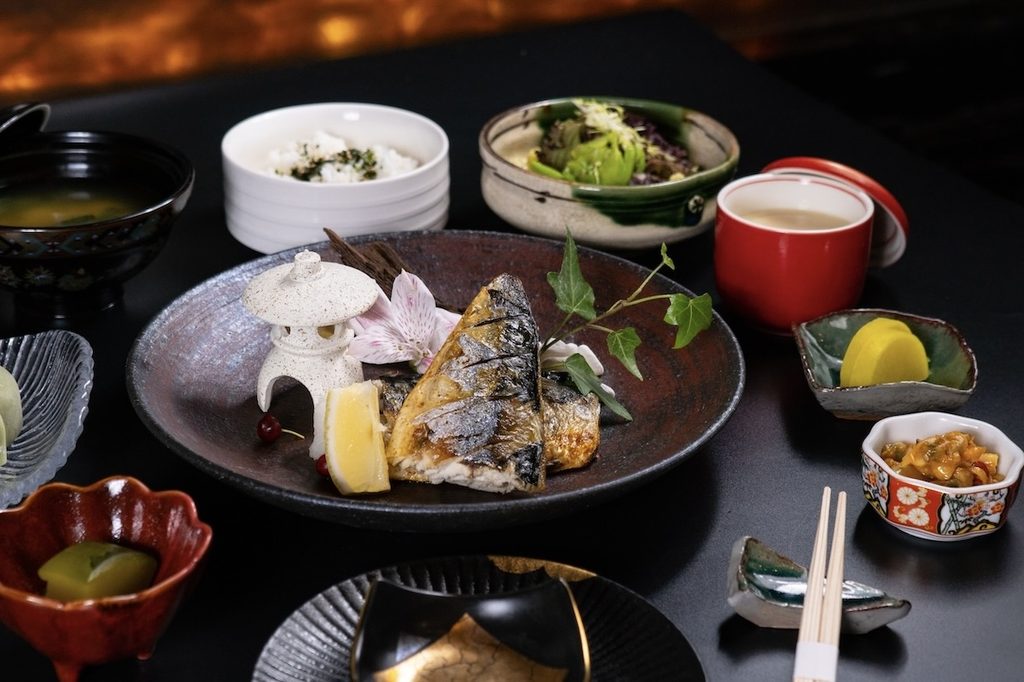
Photo: Pexels
Kaiseki is Japan’s traditional haute cuisine, served as a multi-course meal. Each dish is prepared with seasonal ingredients and presented one at a time, with careful attention to flavour, plating, and the choice of tableware. It is one of the most refined expressions of Japanese food culture.
Teishoku
Teishoku is a set meal that typically includes rice, miso soup, a main dish, and a small side. It is the most basic Japanese meal. It is affordable, filling, and widely available at casual diners. There are chain restaurants such as Ootoya and Yayoi-ken that specialise in these rounded simple meals. A great option for anyone who wants to experience everyday Japanese home-style cooking.
Izakaya
An izakaya is a Japanese-style pub where food and drinks are enjoyed together. The atmosphere is lively and relaxed, making it a favourite spot for friends and colleagues after work. Expect a long menu of small dishes — yakitori (grilled chicken skewers), karaage (Japanese fried chicken), edamame, and more. It is one of the best places to soak up the local atmosphere.
Ramen
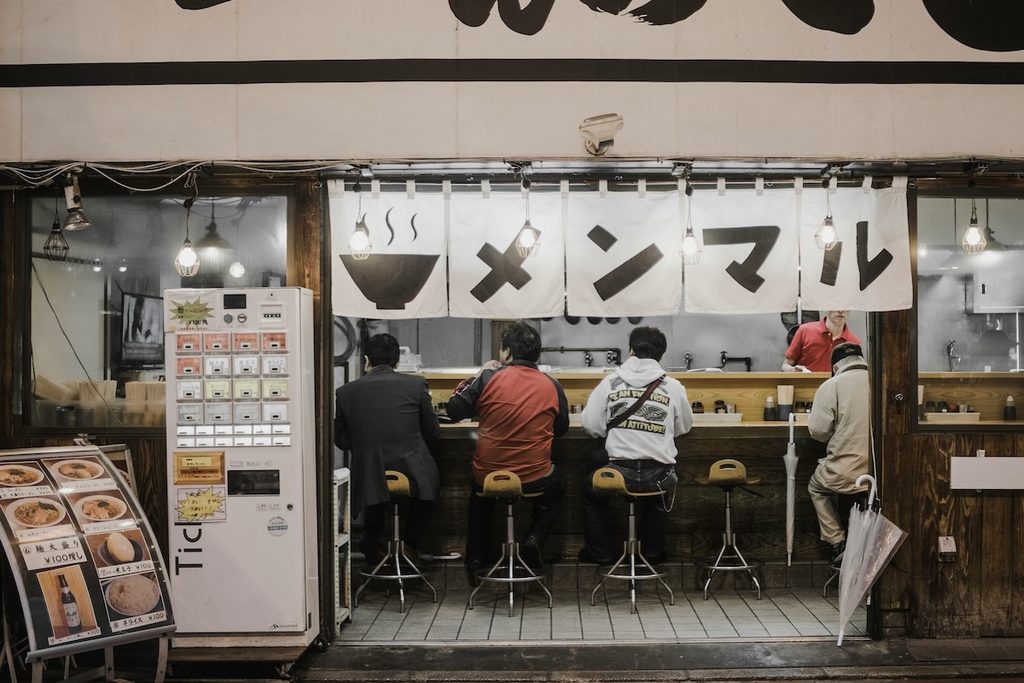
Photo: Unsplash
Ramen is one of Japan’s most beloved comfort foods. The broth varies by region, for example, tonkotsu is Fukuoka, shoyu is Tokyo, miso is Sapporo, and shio is the coast. Most ramen shops use a ticket machine for ordering. Seating is usually at a counter, which may feel different from ramen restaurants abroad where table seating is more common. In Japan, sitting at the counter and focusing on your bowl is simply part of the experience.
Yakiniku
Yakiniku is grilled meat, literally, cooked by you at the table over a built-in grill. You order cuts of beef, pork, or chicken and choose between tare (sauce) or shio (salt). It is a popular choice for groups and a fun time.
Udon / Soba
Udon and soba are two of Japan’s most classic noodle dishes. Train stations in particular are home to many standing noodle bars — quick, cheap, and perfect for eating on the move. Some shops are typical restaurant style or self-service, where you pick your toppings and pay before sitting down.
Sushi / Conveyor Belt Sushi (Kaiten-zushi)
Sushi is one of Japan’s most iconic foods, and there are two main types of restaurants to choose from. Conveyor belt sushi restaurants such as Sushiro and Hamazushi are casual, affordable, and easy to enjoy even on a first visit — plates travel around on a belt, and you take whatever looks good. Traditional sushi restaurants offer a more considered experience, and reservations are usually required. For etiquette tips and more detail, see the Sushi Etiquette section below.
Family Restaurant
Family restaurants such as Denny’s, Gusto, and Royal Host offer a wide menu in a relaxed setting. Orders are placed on a touch panel, and English is available at many locations. They are easy to walk into at any time of day, welcoming for solo diners, families, and anyone looking for a straightforward meal.
How to Order
Ordering at a Japanese restaurant depends on the type of restaurant you are in. There are three main styles: calling a staff member directly, buying a ticket from a machine in advance, or ordering through a touch-panel system.
Ticket Machine (Shokken-ki)
Common in ramen shops, gyudon chains, and other casual spots. The usual process is to buy your ticket at the entrance, take a seat, and hand the ticket to the staff. That said, rules can vary between restaurants. Check for signs or staff instructions, and do not hesitate to ask if you are unsure.
Calling the Staff
When you are seated, staff will usually let you know how to call them. Whether that is pressing a call button, saying “sumimasen” (excuse me), or using an app. Just follow whatever they show you, and you will be fine. Do not wait for the staff to come to your table, call them whenever you need assistance, it is not rude.
Touch Panel
Common in conveyor belt sushi chains and family restaurants. The tablet is set right on the table, and most have a language option. Switch to English and you are good to go.
Reading the Menu
English menus are becoming common in tourist areas and larger cities. Many restaurants also use photo menus, so you can simply point at what you want. If the menu is in Japanese only, Google Lens is your friend. Just point your camera at the page and it will translate on the spot.
Convenient translation tools like Google Lens only work with mobile data. If you have not sorted out your connection yet, check out our recommended eSIM options for Japan here: https://getjapanesim.com
Chopstick Etiquette
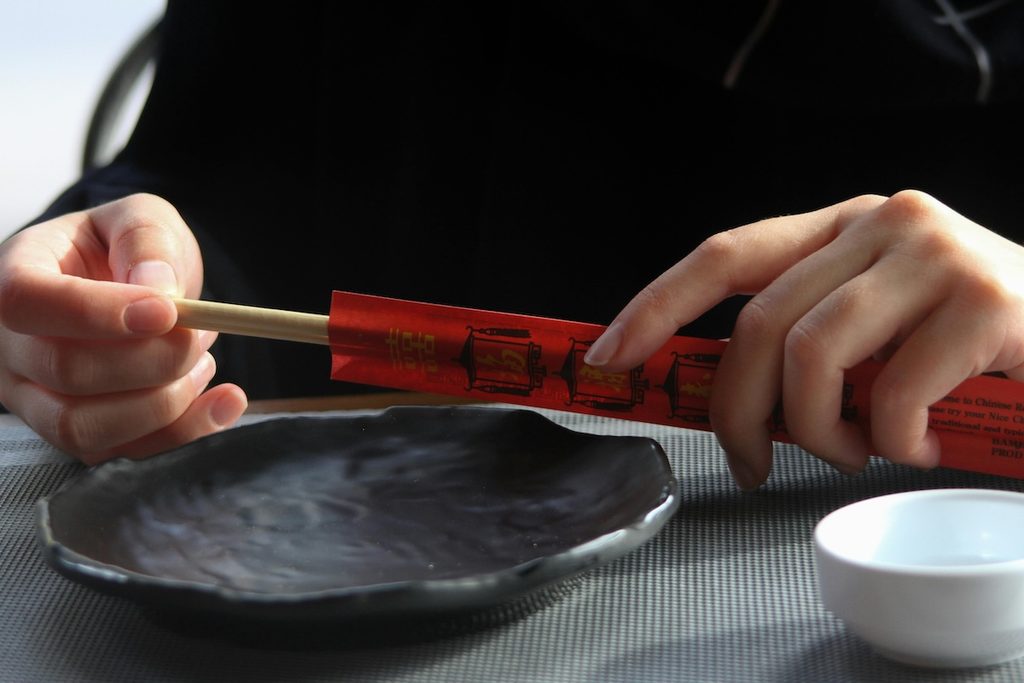
Photo: Pexels
Many dishes in Japan are eaten with chopsticks. If you have never used them before, there is no need to worry. Ask the staff, and most restaurants will bring you a fork or spoon without any issue. It is also completely fine if you cannot use them perfectly. The effort to try is something staff genuinely appreciate.
However, if you do use chopsticks, it is worth knowing a few things to avoid. In Japan, chopsticks are not simply a utensil. They were originally used in sacred rituals as a bridge between people and the gods. And that significance has carried through into everyday use.
Here are the key things not to do:
- Standing chopsticks upright in food
This is associated with funeral rituals in Japan. Instead, rest your chopsticks on a chopstick holder or across the edge of your dishes. - Passing food from chopstick to chopstick
It is also linked to funeral ritual customs. Use a small plate to transfer food. - Spearing food with chopsticks
Using chopsticks like a fork is also considered bad manners. If you have trouble picking something up with chopsticks, try using a spoon or fork instead. - Dragging dishes toward you with chopsticks
Chopsticks should only be used for eating, not for moving dishes around. If you need to bring a plate closer, use your hands instead. - Licking chopsticks
Again, Chopsticks should only be used for eating, not licking. This is considered poor table manners in Japan.
Dining Etiquette
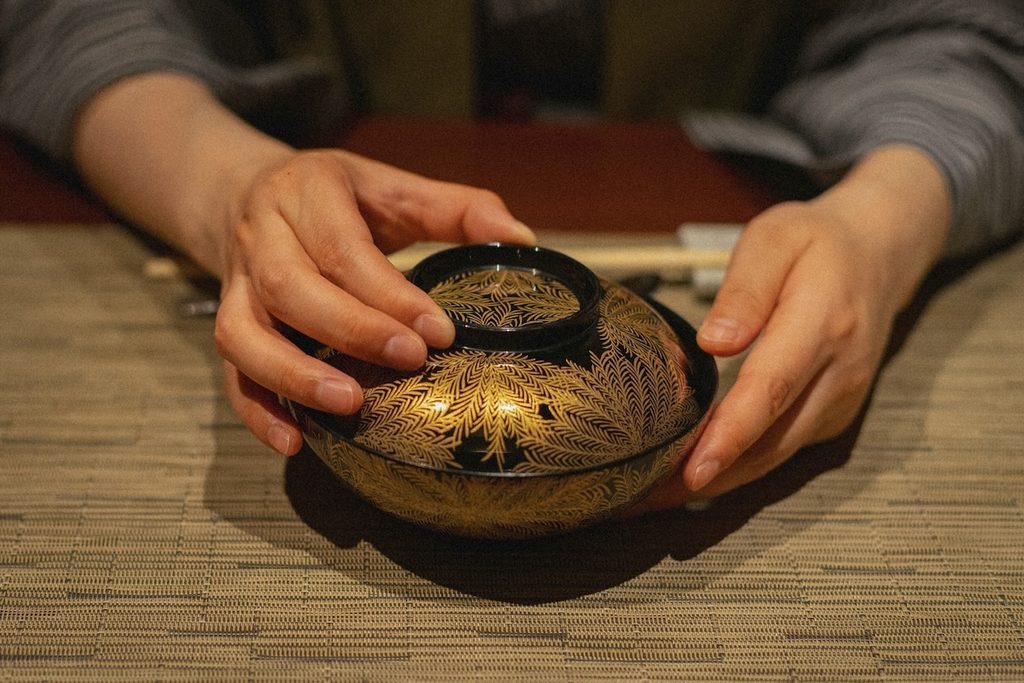
Photo: Pexels
Consideration for those around you is at the heart of Japanese dining. A few habits go a long way.
Keep the Noise Down
Loud conversation is generally avoided in restaurants in Japan. That said, izakaya and other lively spots are already noisy by nature — read the room and match the energy of the space. What to avoid in any setting: clanking dishes together and chewing with your mouth open. The latter is one of the eating habits Japanese people find most off-putting.
Slurping Noodles is Fine
Slurping is not only acceptable for noodles, such as udon, soba, and Ramen. It is also part of how these dishes are meant to be enjoyed and bring out the aroma of the noodles. So, do not be surprised if you hear it around you, and feel free to join in.
Hold Your Bowl
In Japan, it is polite to lift your rice bowl or soup bowl when eating from it. Large plates stay on the table. Holding your bowl is a sign of good table manners.
The Meaning Behind “Itadakimasu” and “Gochisousama”
Before eating, many Japanese people say “itadakimasu” and often press their hands together lightly. The word “itadakkimasu” is a humble expression meaning to receive or to be given something. Over time, it became a way to express gratitude for the people who prepared it and for the ingredients for the food itself, for the lives of the plants and animals that became the meat that went into it. After finishing, “gochisousama” is said to close the meal with the same sense of thanks.
You are not expected to follow these customs as a visitor. But do give them a try, it will be warmly received.
Sushi Etiquette
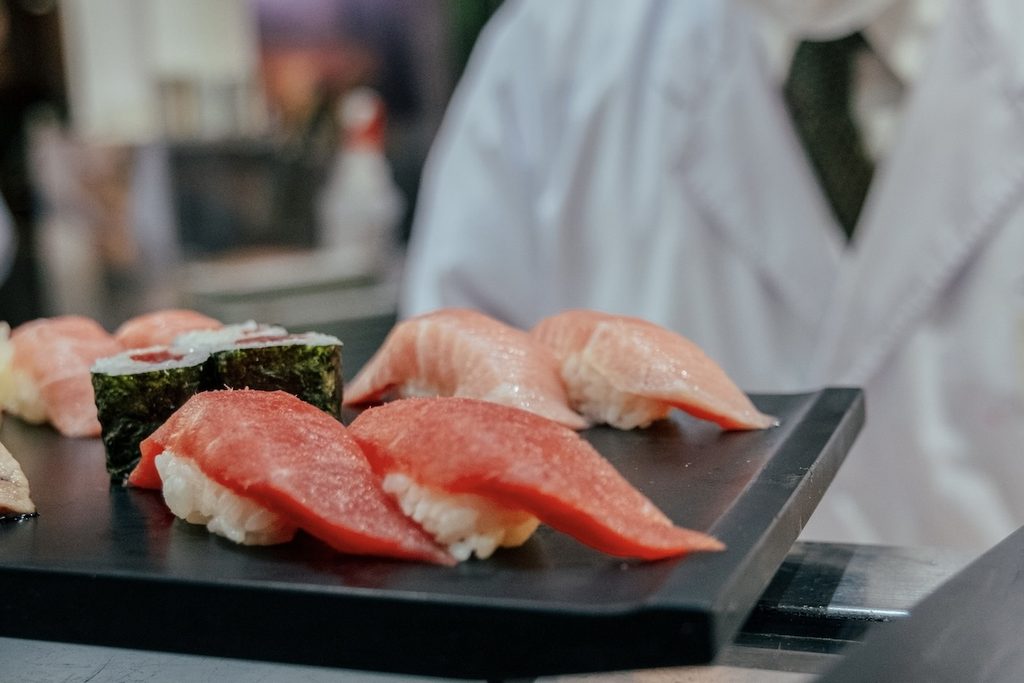
Photo: Pexels
Sushi is one of Japan’s most iconic foods. Whether you visit a conveyor belt restaurant or a traditional counter, a few basics will help you get the most out of the experience.
The Basic
Some people may be surprised to learn that eating sushi with your hands is completely acceptable, although using chopsticks is also fine. When using soy sauce, dip the fish side (called “neta”) into the sauce rather than the rice. Dipping the rice can cause it to fall apart and may overpower the flavor of the sushi.
The pickled ginger served alongside sushi (called “gari”) is meant to cleanse your palate between different types of sushi. Wasabi is entirely a matter of personal preference, so feel free to adjust the amount to your liking.
Conveyor Belt Sushi (Kaiten-zushi)
Conveyor belt sushi is one of the most fun and approachable ways to eat sushi in Japan. Plates travel around the restaurant on a belt, and you simply take whatever looks good. Most places also have a touch panel for ordering specific items, often with English available. Plates are colour-coded by price, and the bill is calculated by counting the plates at the end of your meal. It is relaxed, affordable, and a great option for first-timers.
Traditional Sushi Restaurant
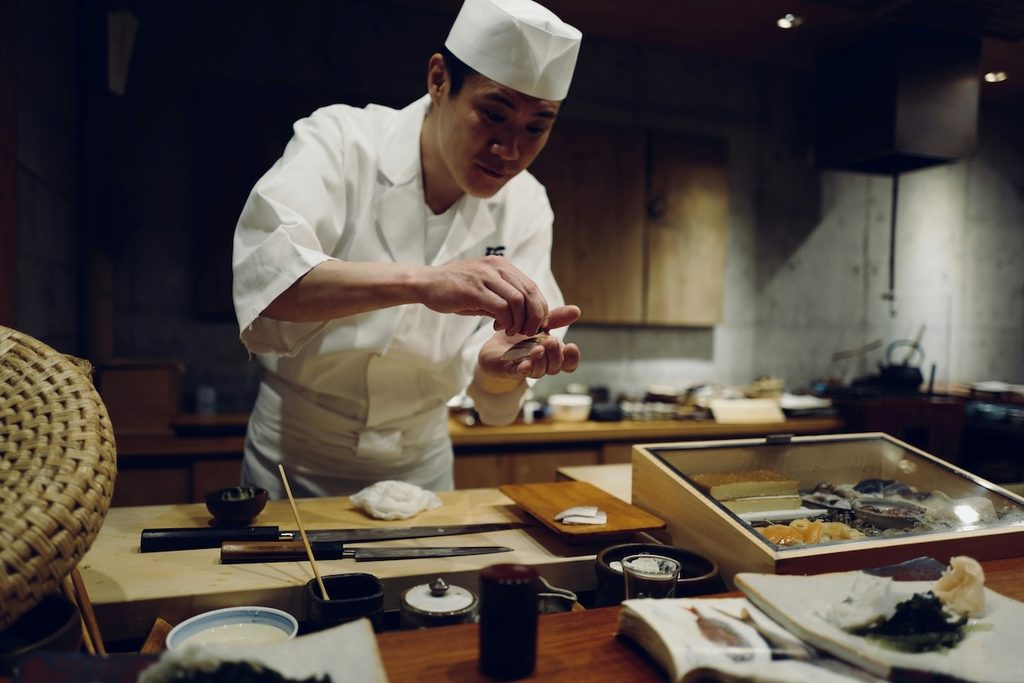
Photo: Unsplash
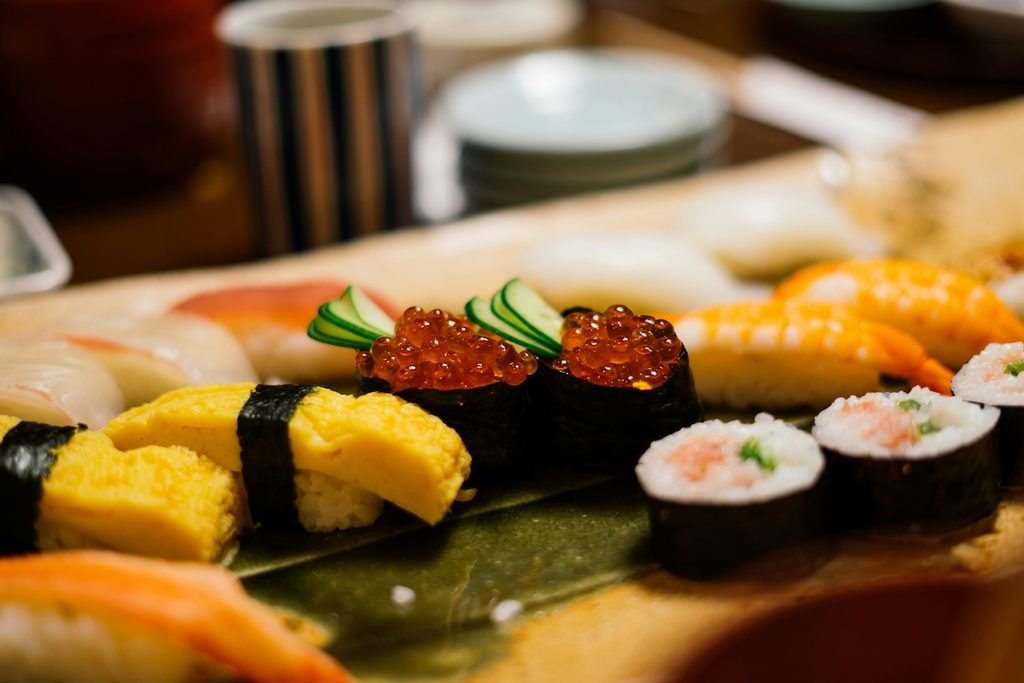
A traditional sushi restaurant offers a quieter, more refined dining experience. Reservations are usually required, often weeks in advance for well-known establishments. Most offer an “omakase” course, where the chef selects the finest ingredients of the day and prepares each piece in front of you at the counter. The pacing is unhurried — each piece is served one at a time, and eating it promptly while it is fresh is part of the etiquette.
One thing to keep in mind: wearing strong perfume or cologne is considered inconsiderate in this setting. The subtle aromas of fresh fish are central to the experience, and heavy scents can interfere with them for everyone at the counter. This is actually common in many restaurants in Japan. Just something to be aware of.
What is Otoshi? : The Table Charge
At izakaya and some traditional restaurants, a small dish will arrive shortly after you sit down, even though you did not order it. This is called “Otoshi”, and it comes with a small charge, typically between 300 and 500 yen. In most places, it is not possible to skip it.
Think of it as a cover charge. The dish itself is usually something the kitchen has prepared with care, such as a seasonal bite, a small appetizer that reflects the character of the restaurant. For visitors, it is often an unexpected and pleasant introduction to the meal. Going in with that mindset makes it easy to enjoy.
How to Pay
Payment customs vary between restaurants, so it helps to know what to expect.
When and Where to Pay
Some restaurants ask you to pay at the register on your way out. Others will bring the bill to the table. And for ticket machine restaurants, payment happens before you even sit down. If you are unsure, a quick check when you are seated will save any confusion later.
Payment Methods
Cash is still the most common form of payment in many Japanese restaurants, particularly smaller and more traditional ones. It’s a good idea to carry some with you just in case. Credit cards are accepted at an increasing number of establishments, although contactless payment is not always supported, so you may need to insert your card and enter a PIN.
IC cards such as Suica and Pasmo are also accepted at some restaurants, including family restaurants, fast food chains, and coffee shop chains. QR code payment services like PayPay are also available, but they are mainly used by local customers.
Splitting the Bill
Splitting the bill is normally common in Japan. If you would like separate checks, let the staff know when you order or at least before you ask for the bill. Most restaurants are happy to accommodate.
Tipping in Japan
Tipping is not part of Japanese culture, and you do not need to leave one. Japanese hospitality is built on the idea of serving guests wholeheartedly (Omotenashi) — not because of extra payment, but because giving your best is simply what the job means. Offering a tip, while well-intentioned, can sometimes feel awkward for staff to receive.
The best way to show appreciation is through words instead of tips. A simple “Arigato gozaimasu” (thank you so much) goes a long way. Telling the staff that the food was delicious, which is “Oishikatta desu” will make their day. A little warmth in your words is the kind of thanks that means the most here.
Summary
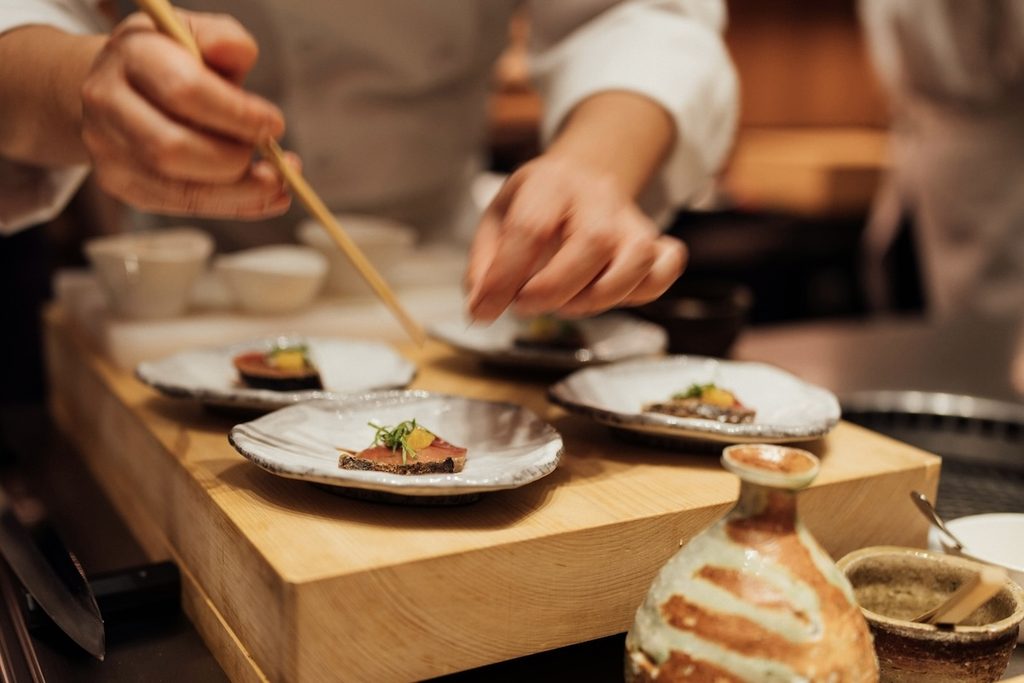
Photo: Unsplash
Japanese restaurant etiquette does not need to be overthought. At the heart of it, Japanese people want visitors to enjoy the food and the experience of Japanese culture, and that goodwill goes a long way.
If you are unsure how to order, the staff will guide you. If chopsticks feel awkward, ask for a fork. Slurping your noodles is not just allowed — it is the right way to eat them. If an “Otoshi” arrives, treat it as a small welcome from the kitchen. And when your meal is over, a heartfelt “arigato” or “Ghochisousama” means more than any tip ever could.
What matters most is respect for the staff and the people around you. Bring that, and everything else will be fine. Use this guide as a reference, and then go enjoy one of the best food cultures in the world.
One last thing before you go: make sure you have reliable mobile data for your trip. From navigating with Google Maps to translating menus on the spot, staying connected makes everything easier. Check out our recommended eSIM options for Japan here: https://getjapanesim.com