Introduction
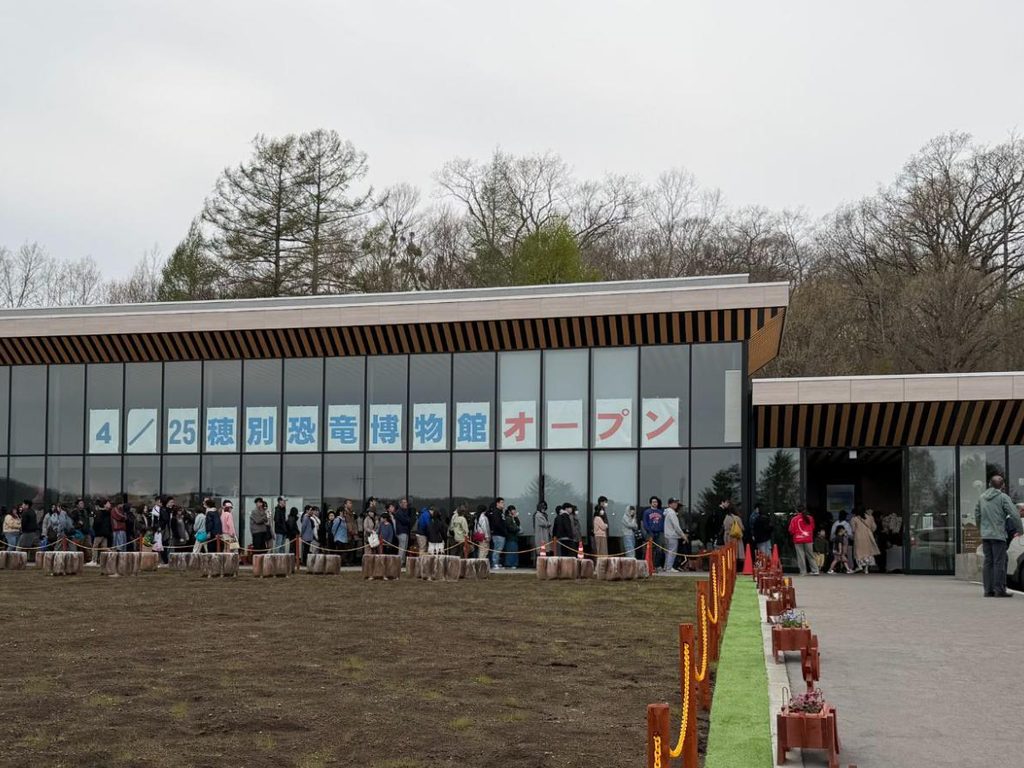
Mukawa, a small town on Hokkaido’s Pacific coast, is home to one of Japan’s most important paleontological discoveries: Kamuysaurus japonicus, better known by its local nickname, Mukawaryu, or “the Mukawa Dragon.” Between its newly expanded Hobetsu Dinosaur Museum, a free outdoor fossil park, and a local food scene built entirely around its prehistoric fame, Mukawa offers a rare combination of serious science and playful local charm found nowhere else in Japan.
In this article, you will learn:
- The best dinosaur and fossil experiences in Mukawa
- What makes Kamuysaurus japonicus such a significant discovery
- Where to eat Mukawa’s dinosaur-themed local cuisine
- The best spots to explore around the Hobetsu Dinosaur Museum
- How to access Mukawa from Sapporo and New Chitose Airport
Mukawa’s dinosaur sites are spread across a quiet, rural part of Hokkaido with limited public transport, so having reliable navigation on hand is genuinely useful here. An eSIM makes it easier to check driving directions, museum hours, and restaurant details along the way.
Overview of Mukawa
Mukawa Town was formed in 2006 through the merger of two former municipalities, Mukawa and Hobetsu, which sit roughly 38 kilometers apart. The coastal Mukawa area is a quiet fishing and farming community with its own small train station, while inland Hobetsu, surrounded by forested hills, is where nearly all of the fossils that made the town famous have been unearthed.
The Hobetsu area sits on rock layers formed roughly 100 million to 70 million years ago, when this part of Hokkaido was still ocean floor. Thanks to this geology, the region has produced an unusually rich collection of marine reptile fossils, alongside one extraordinary land-dwelling exception: Kamuysaurus japonicus, a plant-eating hadrosaur discovered here in 2013 and 2014.
Key Features
- Kamuysaurus japonicus, the most complete dinosaur skeleton ever found in Japan
- A newly expanded museum split between a Dinosaur Hall and a Marine Fossil Hall
- A free outdoor fossil park with large-scale dinosaur sculptures
- A local food scene built around dinosaur and fossil themes
- A quiet coastal train terminus reflecting the town’s rural character
The discovery of Kamuysaurus began with a set of tail vertebrae found by a local collector back in 2003, though the bones were not recognized as dinosaur remains until years later. Once researchers realized what they had found, large-scale excavations in 2013 and 2014 recovered roughly 80 percent of the skeleton by volume, making it the most complete dinosaur fossil ever discovered in Japan. Formal research led by Hokkaido University concluded that the specimen represented an entirely new genus and species, and it was officially named Kamuysaurus japonicus in 2019, meaning “divine reptile of Japan” in a nod to the Ainu language and culture.
Mukawa’s fossil history goes back further than Kamuysaurus. In 1975, a nearly complete plesiosaur skeleton was discovered in Hobetsu, later named Hobetsu-Araki-ryu. This earlier find was significant enough that the town built its first museum in 1982 specifically to preserve and display it, laying the groundwork for the fossil-focused identity Mukawa still carries today.
In April 2026, the original Hobetsu Museum completed a major renewal, reopening as the Hobetsu Dinosaur Museum. The original building was preserved as the Marine Fossil Hall, continuing to display the plesiosaur, mosasaurs, ammonites, and other marine life once found here, while an entirely new building, the Dinosaur Hall, was constructed specifically to house Kamuysaurus and tell the story of the dinosaur world more broadly. A single ticket covers both halls, allowing visitors to trace Mukawa’s prehistoric story from ancient seas to the one dinosaur that once walked its shores.
Best Things to Do in Mukawa
Mukawa’s attractions center almost entirely around its fossil discoveries, but the experience ranges from serious science to lighthearted local food and souvenirs, giving the town a distinct identity that goes beyond a typical museum visit.
Explore the Dinosaur Hall and Meet Kamuysaurus
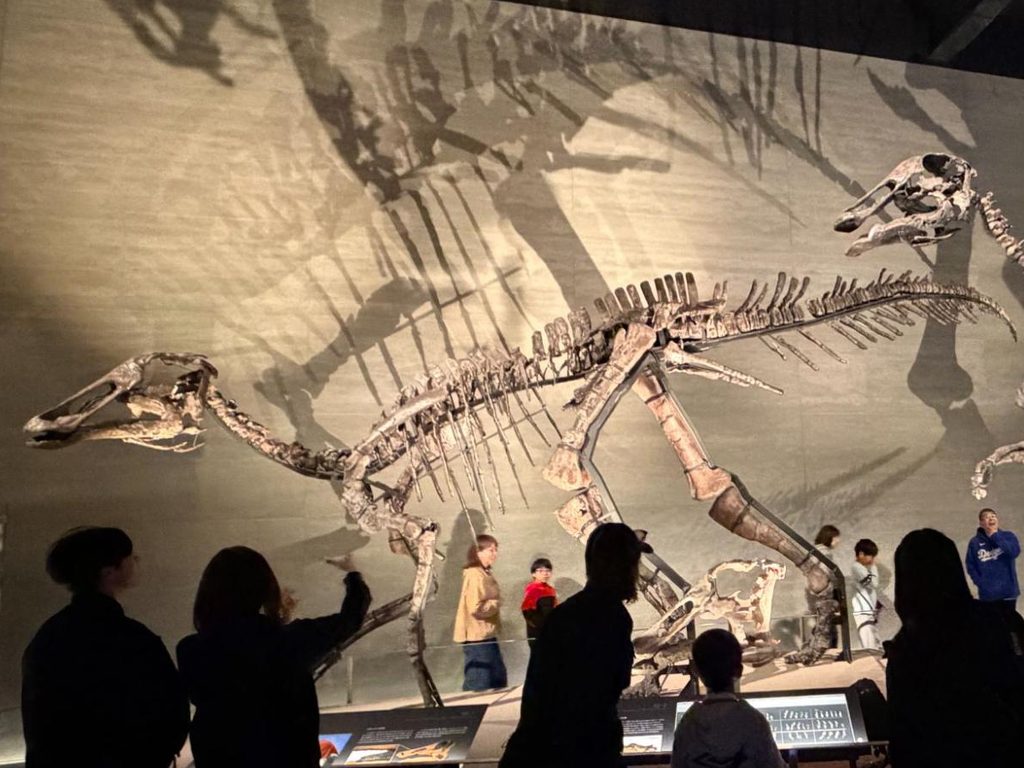
The centerpiece of any visit to Mukawa is the Dinosaur Hall, the new wing of the Hobetsu Dinosaur Museum built specifically around Kamuysaurus japonicus. The hall displays both genuine fossil material and a full-scale reconstructed skeleton stretching eight meters long, representing an animal that lived roughly 72 million years ago.
Alongside Kamuysaurus, the hall places Mukawa’s discovery in a broader context, with skeletal casts and displays illustrating the broader dinosaur world across ancient Asia and North America. Large theropod skeletons are displayed alongside crocodilian and marine reptile specimens, offering a striking sense of scale next to Kamuysaurus’s more modestly sized frame.
Interpretive panels throughout the hall explain how the fossil was identified, cleaned, and researched over a period of more than a decade. Starting with its initial discovery as a handful of tail vertebrae to its eventual recognition as a new genus and species in 2019. For visitors with even a casual interest in paleontology, this hall makes clear why the discovery was treated as such a major event in Japanese science.
Discover Ancient Seas at the Marine Fossil Hall
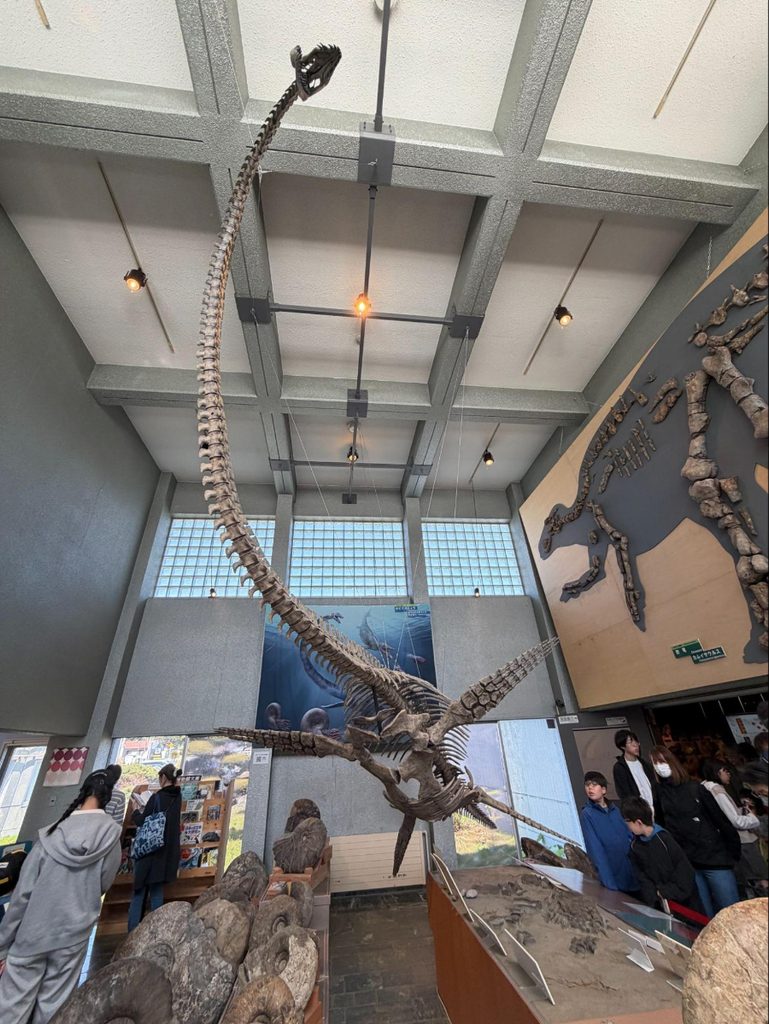
Connected to the Dinosaur Hall, the original museum building now serves as the Marine Fossil Hall, focusing on the marine reptiles and invertebrates that once filled the ocean covering this part of Hokkaido. A large reconstructed plesiosaur skeleton hangs dramatically overhead, representing Hobetsu-Araki-ryu, the fossil whose 1975 discovery led to the museum’s original founding.
Alongside the plesiosaur, the hall displays mosasaur skeletons, sea turtle fossils, and an extensive collection of ammonites in a wide range of sizes and forms. Because Hobetsu’s rock layers were laid down almost entirely underwater, marine fossils vastly outnumber land-based finds here, making Kamuysaurus something of a rare exception worth appreciating.
Visiting both halls together, rather than treating them as separate stops, gives a much clearer picture of how unusual Mukawa’s one dinosaur discovery really is against a backdrop of ancient seas.
Walk Through the Free Outdoor Dinosaur Park
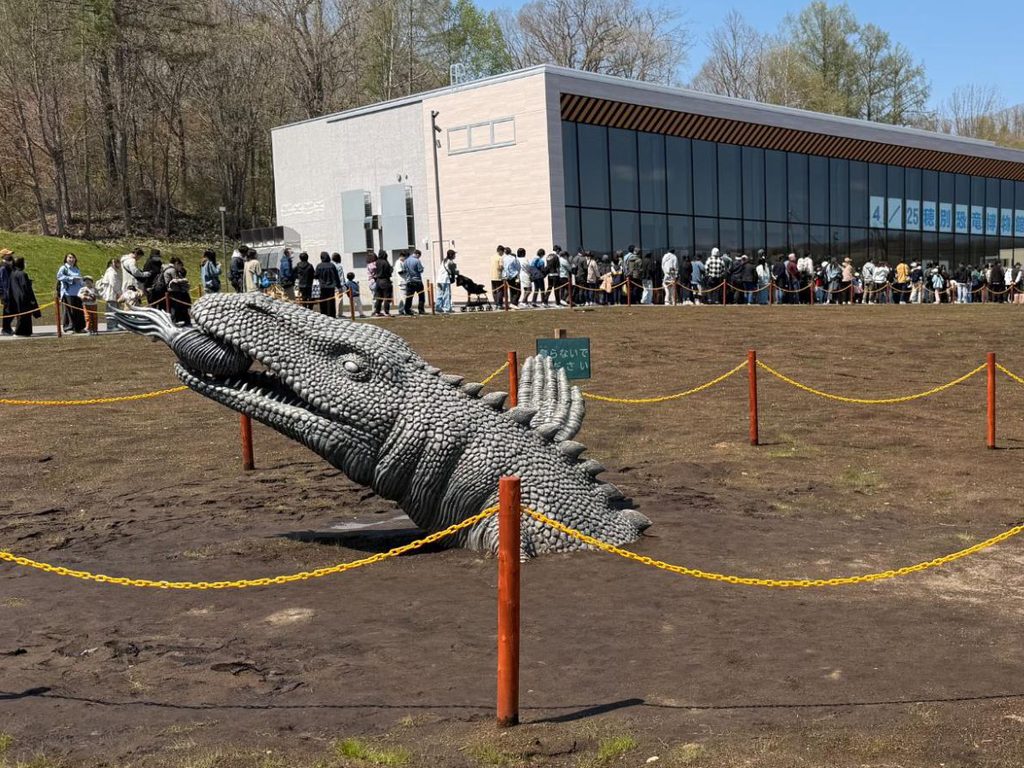
Just outside the main museum buildings, the Hobetsu Outdoor Museum offers a free, open-air complement to the ticketed exhibits. Large sculptures, including a plesiosaur head and tail rising dramatically from the lawn, recreate scenes from Mukawa’s ancient seas at full scale, set against the surrounding hills.
Since entry is free and the area is outdoors, this makes an easy stop even for travelers short on time, or as a place for children to run around after a more structured museum visit. The sculptures are popular photo spots, particularly with the museum’s new building visible in the background.
Sample Dinosaur-Themed Local Cuisine
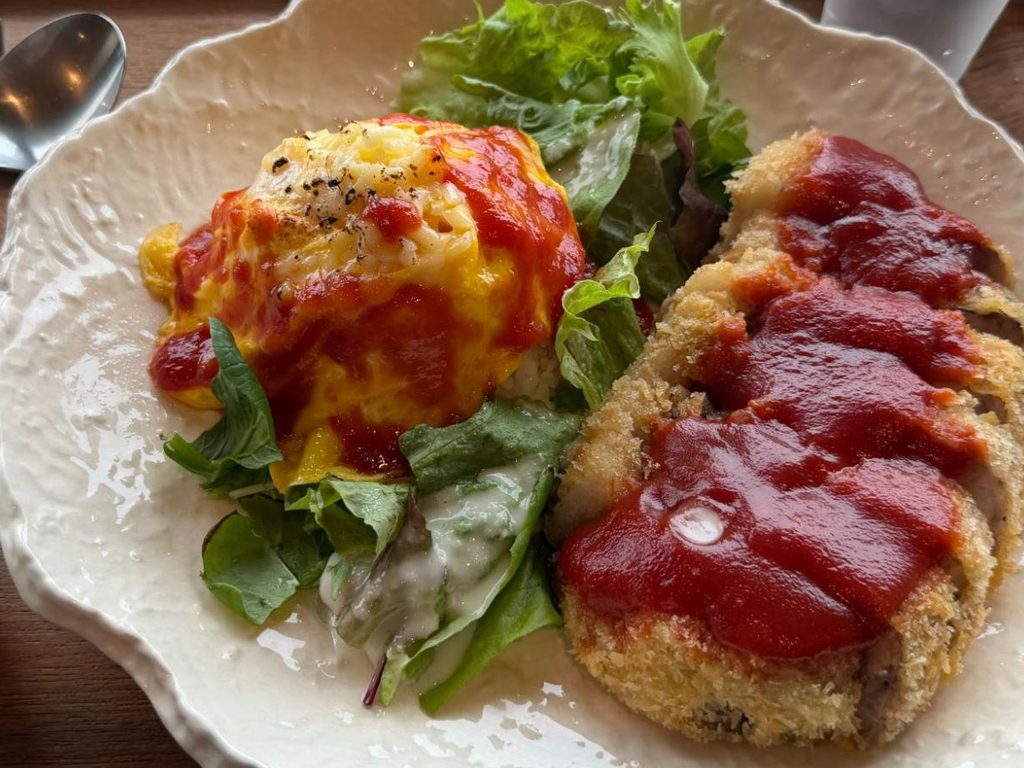
Food in Mukawa leans enthusiastically into the town’s prehistoric identity, and the restaurant beside the museum, part of the Jukai Onsen Hobetsu facility, serves an entire menu built around dinosaur and fossil themes. Dishes include a hearty curry named after a tyrannosaur, an “Ammonite Burger,” and several bowls of ramen labeled by geological period, alongside a rich katsu rice dish topped with a fried cutlet, a fried egg, and a generous swirl of ketchup, plated to resemble a small volcanic landscape.
One standout item, listed under a playful crocodile mascot, is made from real crocodile meat, a slightly cheeky nod to the reptilian theme running through the museum next door. Portions are generally substantial, and the restaurant sees a steady stream of museum visitors around lunchtime, so arriving slightly before or after the midday peak makes for a more relaxed meal.
Bring Home Dinosaur-Themed Souvenirs
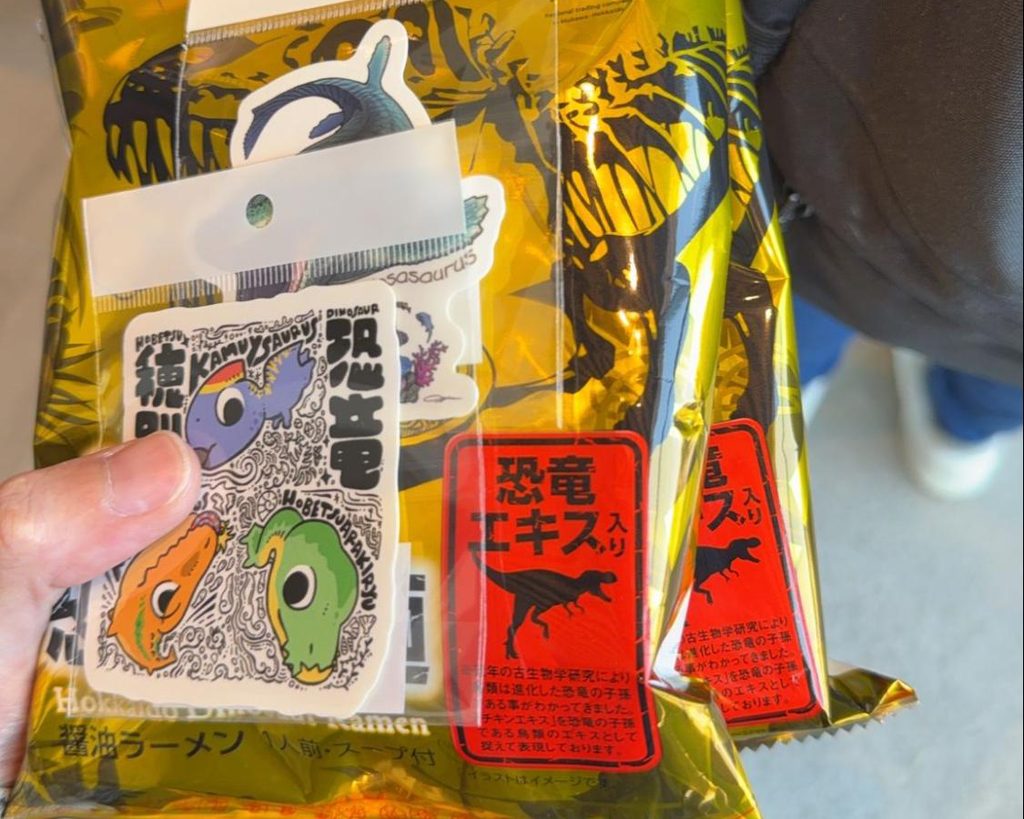
The museum’s gift shop and nearby stores sell a wide range of Kamuysaurus-branded goods, from illustrated stickers featuring the dinosaur in bright, cartoonish styles to locally produced dinosaur-themed ramen packaged with playful labeling noting its “dinosaur extract,” a lighthearted reference rather than a literal ingredient. These souvenirs make for easy, packable gifts that reflect Mukawa’s identity far more specifically than generic Hokkaido merchandise.
Recommended Spots in Mukawa
Most of Mukawa’s main attractions sit within walking distance of one another in the Hobetsu area, making it possible to cover the highlights in a single day, while the coastal Mukawa area offers a quieter, more residential contrast nearby.
1. Hobetsu Dinosaur Museum
The newly expanded museum forms the heart of any visit to Mukawa, combining the new Dinosaur Hall with the original building’s Marine Fossil Hall under a single admission ticket.
Highlights
- The full-scale Kamuysaurus japonicus skeleton and real fossil material
- A large reconstructed plesiosaur skeleton in the Marine Fossil Hall
- Extensive ammonite and marine reptile collections
- Modern architecture with dinosaur motifs worked into the building’s signage
Details
- Time required: 1.5–2.5 hours for both halls
- Admission: general (high school age and above) ¥600, elementary and junior high students ¥300, preschool-age free
- Hours: 9:30–17:00, last admission 16:30; closed Mondays and the day after national holidays, with no closures during Hokkaido’s summer holiday period
- Access: located in Hobetsu, Mukawa Town; best reached by car, as public transport to this inland area is limited
2. Jukai Onsen Hobetsu
Sitting right beside the museum, this hot spring and restaurant facility serves the bulk of Mukawa’s dinosaur-themed cuisine, making it a natural lunch stop before or after a museum visit.
Highlights
- A full menu of dinosaur and fossil-themed dishes
- A hearty katsu rice dish plated to resemble a volcanic landscape
- A hot spring bath for relaxing after a day of sightseeing
- Views toward the surrounding Hobetsu hills
Details
- Time required: 45–60 minutes for a meal; longer if also using the hot spring
- Access: directly adjacent to the Hobetsu Dinosaur Museum, within a short walk
- Notes: expect a wait around midday when museum visitors arrive for lunch
3. Hobetsu Outdoor Museum
This free, open-air area beside the main museum recreates scenes from Mukawa’s ancient seas through large-scale sculptures set into the lawn.
Highlights
- Large plesiosaur and marine reptile sculptures
- Free admission with no set opening hours
- Popular photo spots with the main museum building visible behind
- A relaxed outdoor space suited to children and families
Details
- Time required: 15–30 minutes
- Access: directly outside the Hobetsu Dinosaur Museum entrance
- Notes: best combined with a visit to the museum itself rather than as a standalone stop
4. Earth Gallery and Hobetsu Citizens’ Forest Entrance
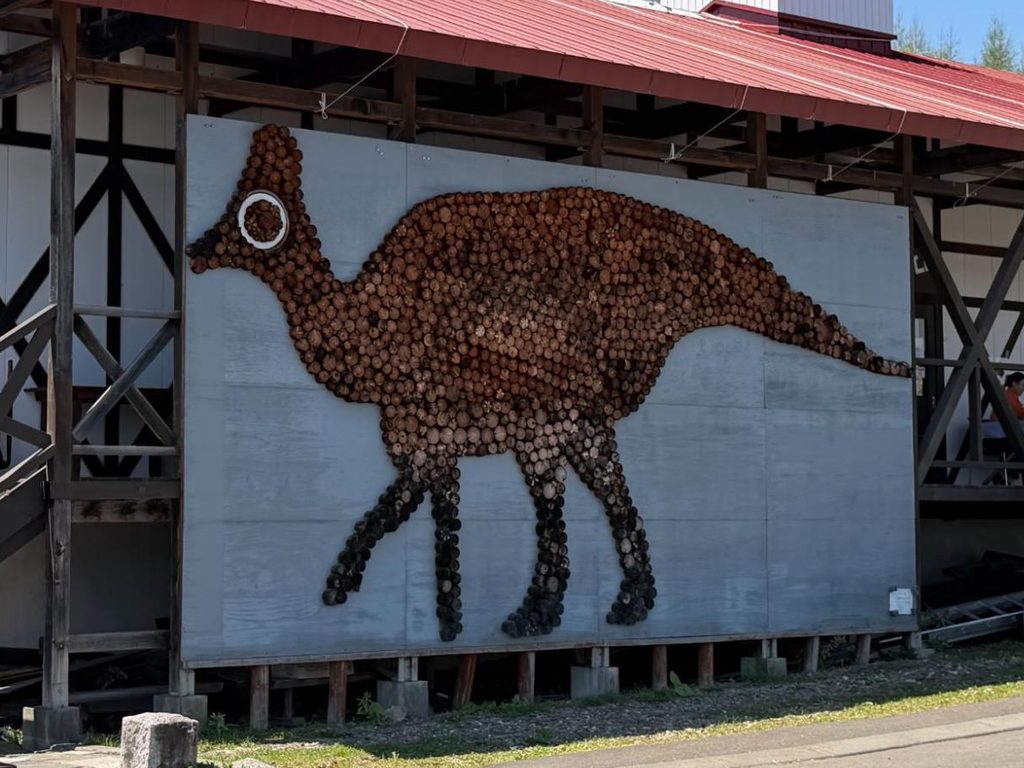
A short walk from the museum, this community-made attraction features a large mural of a dinosaur formed entirely from stacked log sections, marking the entrance to the Hobetsu Citizens’ Forest walking trails.
Highlights
- A distinctive log-mosaic dinosaur mural built by local residents
- Free access to view the artwork from the street
- Connection to forest walking trails for those wanting a quieter nature stop
- A glimpse of Hobetsu’s small-town creativity beyond the main museum
Details
- Time required: 10–15 minutes to view; longer if continuing onto the forest trails
- Access: a short walk from the Hobetsu Dinosaur Museum along the main road
- Notes: this is an outdoor community feature rather than a staffed attraction, so there is no set admission or hours
5. Mukawa Station
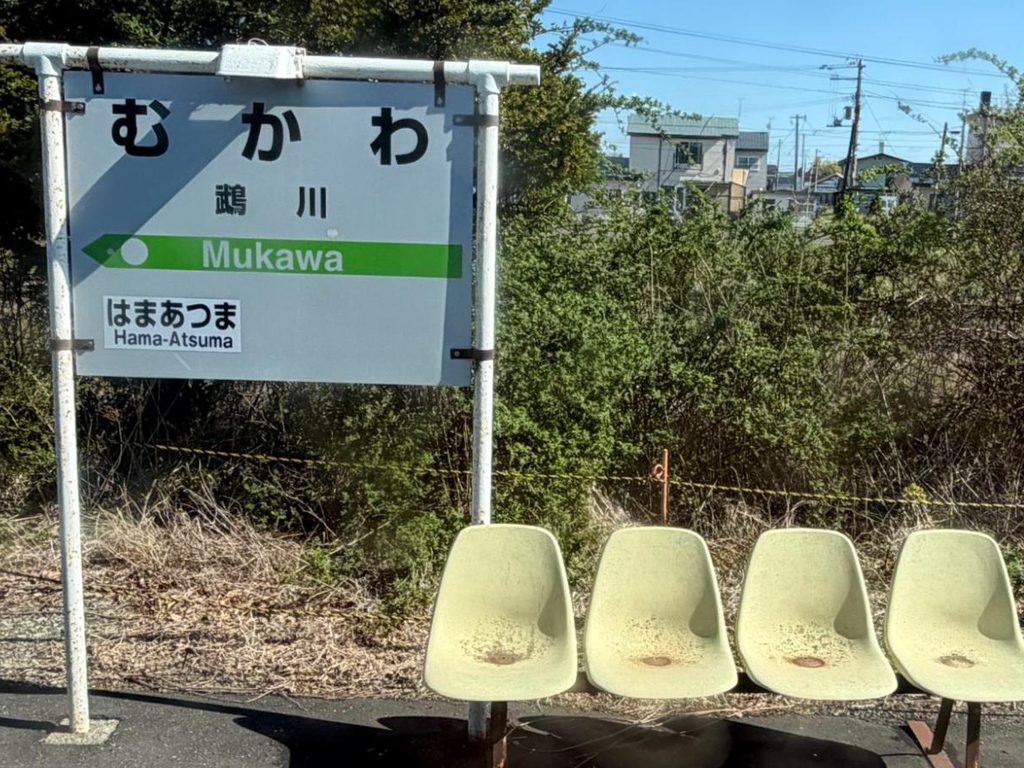
On the coast, roughly 38 kilometers from Hobetsu, Mukawa Station marks the current terminus of JR Hokkaido’s Hidaka Main Line, following the closure of the line’s southern section in 2021. The quiet platform, with its weathered signage and simple bench seating, reflects a slower, more residential side of the town, distinct from the museum-focused energy of Hobetsu.
Highlights
- The current end-of-line terminus for the Hidaka Main Line
- A quiet, small-town atmosphere distinct from the Hobetsu museum area
- Nearby local shops, including a bakery known for dinosaur-themed sweets
- A glimpse of coastal Mukawa’s everyday rhythm
Details
- Time required: 20–30 minutes
- Access: reachable directly by JR train from Tomakomai Station
- Notes: this area is separate from Hobetsu and the dinosaur museum, so a car is needed to combine both parts of town in one trip
Travel Tips for Visiting Mukawa
Rent a Car if Possible
Public transport between coastal Mukawa and inland Hobetsu is limited, and the museum area itself is not well served by trains or buses. A rental car makes it far easier to combine the museum, restaurant, and outdoor sites in a single day.
Visit Around Lunchtime Strategically
The restaurant beside the museum draws a steady crowd of visitors at midday. Arriving for an early or late lunch helps avoid the busiest stretch.
Check the Museum Calendar Before Visiting
The museum closes on Mondays and the day after national holidays outside of Hokkaido’s summer season, so confirming the schedule in advance helps avoid a wasted trip.
Allow Time for Both Halls
Since a single ticket covers both the Dinosaur Hall and the Marine Fossil Hall, budgeting enough time to see both gives a much fuller picture of Mukawa’s fossil history than visiting just one side.
Carry Cash for Smaller Shops
Some local restaurants and souvenir stands in the area still prefer cash, particularly outside the main museum building.
Dress for Outdoor Walking
Since several attractions, including the outdoor museum and the Earth Gallery, are outside, comfortable footwear and weather-appropriate clothing make the day considerably more comfortable.
How to Get to Mukawa
From Sapporo
- By car via Chitose: about 2 hours to Hobetsu
- By car via the Doto Expressway, exiting at Mukawa-Hobetsu Interchange: about 20 minutes from the interchange to the museum
From New Chitose Airport
- By car: roughly 1–1.5 hours to Hobetsu, depending on route
- Public transport options are limited, so a rental car is recommended for this leg of the trip
From Tomakomai
- By car: about 1.5 hours to Hobetsu
- By JR train: direct service to Mukawa Station on the coast, though a separate car journey is needed to reach Hobetsu and the museum
*Travel times and fares are subject to change. Please check official transport websites for up-to-date schedules.
Summary
Mukawa offers a travel experience built almost entirely around a single, remarkable discovery: Kamuysaurus japonicus, found in the hills above a quiet Hokkaido fishing town and later confirmed as the most complete dinosaur skeleton ever unearthed in Japan. From the newly expanded Dinosaur Hall and its accompanying Marine Fossil Hall to a free outdoor sculpture park, a dinosaur-themed restaurant, and a community-made log mural marking the edge of the forest, the town has built an identity that is equal parts serious paleontology and local playfulness.
Its quieter coastal side, anchored by the modest terminus of the Hidaka Main Line, offers a contrasting glimpse of small-town Hokkaido life a world away from the museum crowds. Together, these two halves of Mukawa make for a memorable stop for travelers with even a passing interest in dinosaurs, fossils, or Hokkaido’s rural character.
As with more remote parts of Hokkaido, having a reliable eSIM on hand makes it easier to navigate between Hobetsu and coastal Mukawa, check museum hours, and find local restaurants along the way. Whether visited as a day trip from Sapporo or as part of a longer Hokkaido itinerary, Mukawa rewards travelers willing to venture slightly off the beaten path.