Introduction
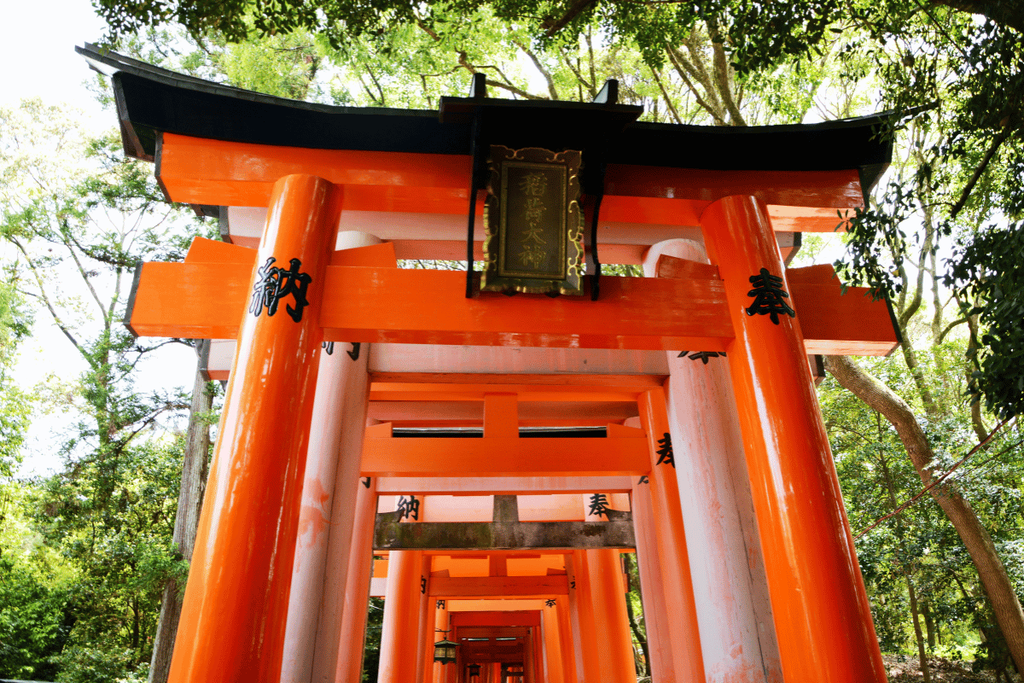
Photo: Pexels
Not sure where to go for the best views in Kyoto? With so many temples, hills, and bamboo paths competing for your attention, it can be hard to know which spots actually deliver that breathtaking panorama — and which ones are just crowded for the photo opportunity. The good news is that Kyoto’s landscape is genuinely stunning, and knowing where to look makes all the difference.
This guide walks you through Kyoto’s finest scenic viewpoints, from sweeping city overlooks to serene garden vistas and forested hillside trails. Whether you’re chasing a sunrise from a temple terrace or a sea of autumn maples reflected in a still pond, Kyoto rewards those who seek out its quieter, more elevated corners.
In this article you will learn:
- The best viewpoints in Kyoto for city panoramas and mountain scenery
- Hidden landscape gems beyond the standard tourist trail
- Practical tips for visiting each spot, including access and timing
- How to make the most of Kyoto’s changing seasons from its scenic lookouts
Before you head out, make sure you have reliable internet access throughout your trip. A Japan eSIM allows you to stay connected from the moment you land — no SIM swapping, no roaming fees, and no hunting for a vending machine at the airport.
Overview of Kyoto’s Scenic Landscape
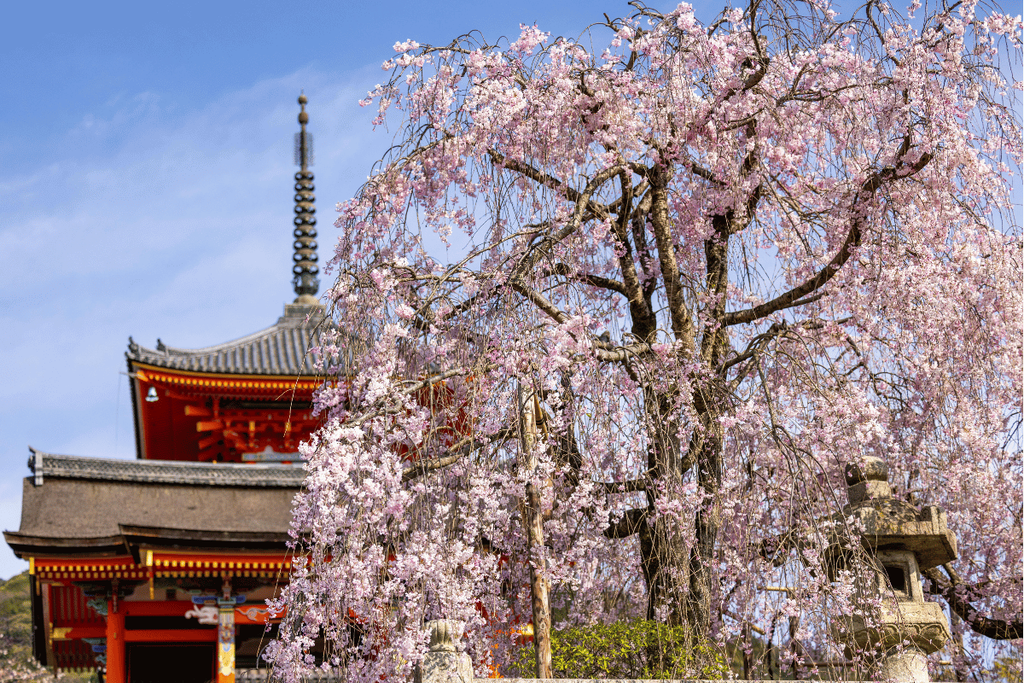
Photo: Pexels
Kyoto sits in a basin ringed by low mountains on three sides — the Higashiyama range to the east, the Kitayama hills to the north, and the Nishiyama hills to the west. This geography is what gives the city its character. Temples and shrines tend to climb the hillsides, which means many of Kyoto’s most historic sites also happen to sit at points with exceptional views. The city has been carefully preserved for centuries, so what you see from these heights is a rare sight in modern Japan: a low skyline of traditional rooftops, pagoda tips, and tree canopy stretching toward the mountains.
The views change dramatically by season. Spring brings the famous cherry blossoms, which paint the hillsides pink and spill across temple gardens. Summer turns the forests a deep green, and evening light on the Kamo River and its surrounding hills can be almost theatrical. Autumn is arguably the finest season for landscape lovers — the maple trees across Kyoto’s eastern and northern hills turn brilliant shades of reds and oranges, making every hillside temple a natural spectacle. Winter brings occasional snow, and a light dusting on the vermilion torii of Fushimi Inari or the mossy rocks of a Zen garden is an image that stays with you.
What makes Kyoto’s scenic spots different from those in other Japanese cities is the density of meaningful places. You’re rarely just looking at a pretty view — you’re standing on a temple veranda that’s been there for a thousand years, or pausing in a garden that was designed centuries ago to frame a specific mountain. The scenery and the culture are inseparable.
Key features of Kyoto’s scenic landscape:
- Mountain-ringed basin with forested hills easily accessible from the city center
- Dramatic seasonal changes: cherry blossoms, summer green, autumn maples, winter snow
- Historic temples and shrines positioned on hillsides with panoramic terrace views
- Traditional low-rise cityscape largely free of modern towers, visible from multiple lookouts
For a broader introduction to the city before you plan your viewpoint visits, take a look at our Kyoto Travel Guide.
Best Things to Do for Scenic Views in Kyoto
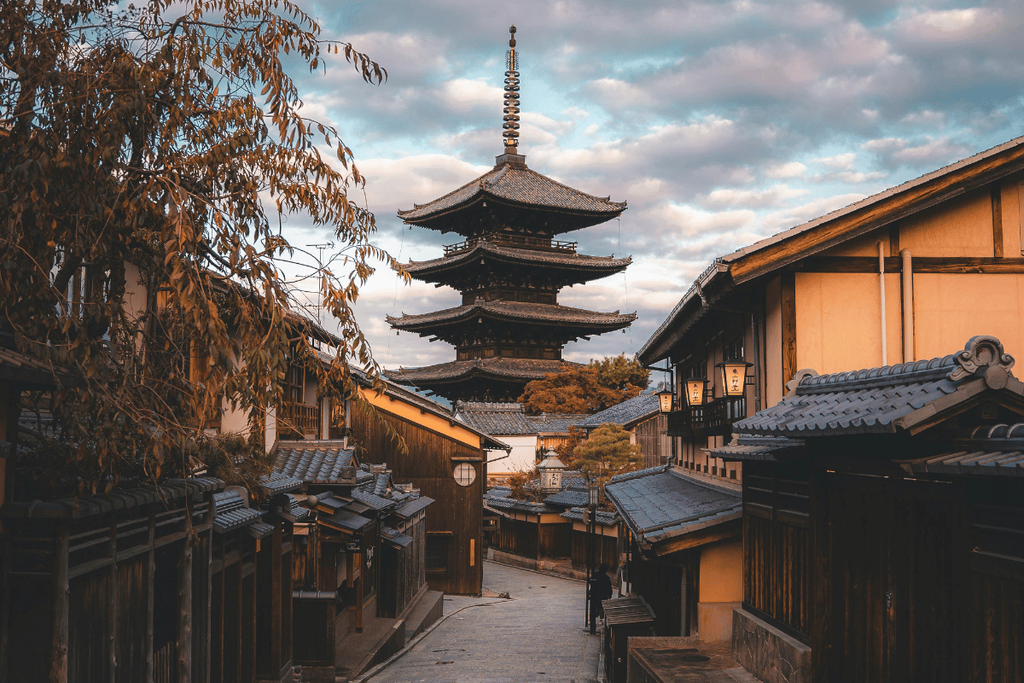
Photo: Pexels
Kyoto’s scenic appeal goes well beyond simply standing at a viewpoint — the experiences around each lookout are part of what makes them worth visiting.
Explore the Hillside Trails
Many of Kyoto’s finest views are reached by foot along forested paths that connect temples and shrines across the eastern and northern hills. The Higashiyama Trail, which runs between Kiyomizudera and Ginkakuji, is one of the most rewarding walks in the city — a stone-paved path that climbs through wooded hillsides, past moss-covered stone lanterns, and along ridge lines with glimpses of the city below. Hiking even a short section reveals a Kyoto that feels genuinely removed from the streets below.
- Walk the Higashiyama Trail between Kiyomizudera and Nanzenji
- Follow the forest paths behind Kurama to reach mountain panoramas
- Hike the Fushimi Inari trails past the main torii gate crowds to quieter upper viewpoints
Enjoy Garden and Temple Panoramas
Kyoto’s temple gardens were designed with scenery in mind, and many of them frame specific views of the surrounding hills or the city below. Standing on the wooden veranda of Kiyomizudera, for example, is essentially a curated viewing experience — the architects knew exactly what you’d see when you stepped out. Similarly, the carefully raked gravel gardens of Zen temples like Ryoanji and Daitokuji create a kind of internal landscape that rewards slow, unhurried looking. These aren’t just historic buildings; they’re places designed to shape how you experience the natural world around them.
- Stand on the wooden stage at Kiyomizudera for the city overview
- Visit strolling gardens like Shinjuen and Kokedera (Moss Garden) for designed landscape views
- Climb to Daikakuji’s viewing platforms for reflections of the hills on Osawa Pond
Try Dusk and Early Morning Visits
Kyoto’s scenic spots look entirely different at the edges of the day. Early morning visits — before 8am at most places — mean dramatically fewer people, softer light, and a sense of calm that’s hard to find later in the day. At spots like Fushimi Inari, which is open around the clock, hiking up before sunrise to catch the light filtering through the torii gates is one of the genuinely memorable experiences the city offers. Evening is equally rewarding, especially in autumn when many temples hold special night illuminations, lighting up their maple trees and garden ponds after dark.
- Visit Fushimi Inari before sunrise for uncrowded golden-hour light through the gates
- Arrive at Kiyomizudera just after opening (6am) to beat the first tour groups
- Check for autumn and spring night illumination events at Eikando, Kodaiji, and Kiyomizudera
Recommended Scenic Viewpoints in Kyoto
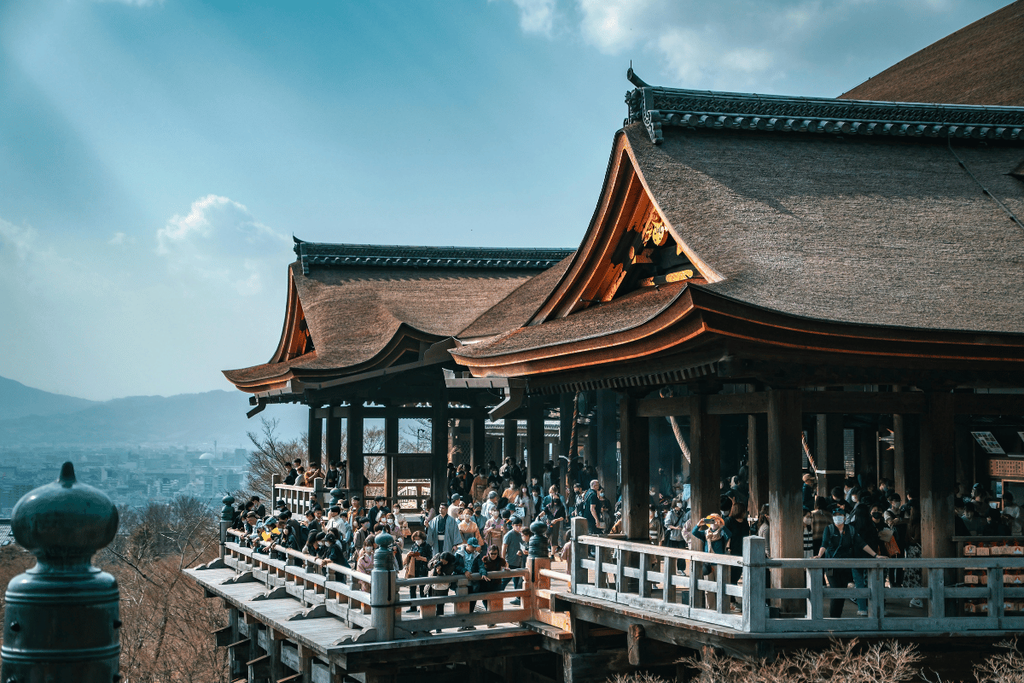
Photo: Pexels
From open-air temple verandas to forested hilltop shrines, here are the spots that consistently deliver Kyoto’s most striking views.
1. Kiyomizudera Temple
Kiyomizudera is the most famous viewpoint in Kyoto, and for good reasons. The temple’s wooden main hall is built into the hillside on a massive frame of interlocking pillars — no nails used — and its large veranda extends out over the slope, offering an unobstructed view across the city. On clear days you can see all the way to the mountains that bracket the western horizon. The view is best appreciated in cherry blossom season and autumn, when the trees covering the hillside directly below the stage turn into a beautiful swatch of color.
The approach to Kiyomizudera through Sannenzaka and Ninenzaka is itself part of the experience. These stone-paved lanes lined with traditional wooden shophouses and tea houses are some of the most photographed streets in Japan — and the gentle uphill walk through them builds a sense of anticipation before the main event. Once you reach the temple complex and climb to the main hall, the view from the veranda feels like the natural payoff.
Kiyomizudera is open from 6am, which makes it one of the most accessible early-morning spots in the city. Arriving before 8am not only means you’ll have much of the veranda to yourself; the morning light hitting the rooftops and garden below has a warmth that the midday sun can’t match. The temple is busiest between 10am and 3pm, when tour groups arrive, so plan around those hours if you can.
Highlights:
- Expansive wooden veranda with panoramic views over Kyoto’s cityscape and western hills
- One of Japan’s most historically significant and visually dramatic temple complexes
- Beautiful in all seasons — especially cherry blossom (late March/April) and autumn foliage (November)
Details:
- Time required: 1.5 to 2 hours
- Access: About 15 minutes on foot from Kiyomizumichi bus stop, reached by city bus from Kyoto Station (approximately 20 minutes total from the station).
- Location: Google Maps
2. Fushimi Inari Taisha — Upper Trails
Most visitors to Fushimi Inari walk through the famous lower gates and turn back — and that’s understandable, because the main gate tunnels are genuinely spectacular. But the real scenic reward is higher up, past the point where most crowds thin out. As you continue up the mountain trail through thousands of vermilion torii gates, the path emerges at several open viewpoints that look back across southern Kyoto and, on clear days, as far as Osaka. The contrast between the dense gate corridors and the sudden open sky of the clearing viewpoints is one of Kyoto’s most surprising experiences.
The full circuit of the Inari mountain trail takes around two to three hours at a comfortable pace. The trail is well-maintained and largely stone-paved, though it does involve a sustained climb through the lower and middle sections. The top of the mountain — Ichinomine — sits at around 233 meters, and the trail is open 24 hours a day, 365 days a year. Many people choose to start the climb in the late afternoon, reach the upper viewpoints at dusk, and descend in the early evening.
The best views from Fushimi Inari are at Yotsutsuji intersection, roughly halfway up, where the path opens to a bench area with a wide vista over the city to the north. This is a natural stopping point if you don’t want to complete the full circuit. The section above Yotsutsuji continues through quieter, more forested paths with smaller sub-shrines, a more meditative atmosphere, and progressively fewer visitors.
Highlights:
- Thousands of torii gates winding up a forested mountain — a uniquely Japanese landscape
- Panoramic views over southern Kyoto from Yotsutsuji and the upper trails
- Open 24 hours — ideal for sunrise hikes or evening ascents away from the main crowds
Details:
- Time required: 2 to 3 hours for the full circuit; 1 hour to Yotsutsuji viewpoint
- Access: About 5 minutes on foot from Inari Station (JR Nara Line, approximately 5 minutes from Kyoto Station).
- Location: Google Maps
3. Daikakuji Temple and Osawa Pond
Daikakuji sits in the Sagano area of Arashiyama and is far less visited than the bamboo grove nearby — which is exactly what makes it special. The temple was originally the imperial villa of Emperor Saga, and its most extraordinary feature is Osawa Pond, one of the oldest man-made garden ponds in Japan. The pond was designed to reflect the surrounding hills and sky, and it still does so beautifully, especially in the early morning when the water is still and the reflection of the forested mountains along the northern edge appears perfectly mirrored below.
Walking the path around Osawa Pond takes about 20 to 30 minutes and passes through several different visual angles — each one offering a distinct framing of the hills, the water, and the temple structures at the edge of the pond. In autumn, the maples at the far end of the pond turn a vivid orange and red, and their reflection in the water doubles the impact. In spring, the cherry trees along the southern edge bloom above the water. The whole place feels quietly orchestrated.
Daikakuji holds special significance for moon-viewing, a tradition called otsukimi, and the pond was specifically designed to reflect the full autumn moon. The temple sometimes holds evening moon-viewing events in September and October that are worth checking for in advance. Even outside those special events, the combination of the historic temple buildings, the scenic pond, and the relative quiet of the Sagano neighborhood makes Daikakuji one of Kyoto’s genuinely underrated scenic destinations.
Highlights:
- Osawa Pond offers stunning mirror reflections of the surrounding mountains and temple buildings
- One of Japan’s oldest imperial garden ponds — historically designed for moon-viewing
- Peaceful and far less crowded than the nearby Arashiyama bamboo grove
Details
- Time required: 1 to 1.5 hours
- Access: About 25 minutes from Kyoto Station by city bus to the Daikakuji bus stop.
- Location: Google Maps
4. Shorenin Temple and Chion-in Environs
Tucked against the base of the Higashiyama hills just north of Maruyama Park, Shorenin is a serene temple known for its ancient camphor trees, which are so large and old that their canopy has become a landmark in its own right. The temple grounds open to a garden that looks out toward the hills above, and the stone paths through the trees create a landscape that feels ancient and sheltered at the same time. The view from the garden looking back toward the city through the gnarled trunks of the camphor trees is one of the more unusual scenic perspectives in Kyoto.
Just south of Shorenin, the approach to Chion-in temple is another impressive scenic experience. The main gate — Sanmon — is the largest wooden gate in Japan, standing over 24 meters tall, and passing through it gives a sense of entering a different spatial world. The courtyard and steps leading up from the Sanmon, framed by tall cedars and the hillside above, offer a dramatic viewpoint that many visitors don’t photograph enough because they’re busy being overwhelmed by the scale of the gate itself.
The area between Maruyama Park, Shorenin, and Chion-in is one of the most densely scenic stretches of Higashiyama and can easily be combined into a single afternoon walk. Maruyama Park itself, with its weeping cherry tree that’s among the most famous in Japan, is a beautiful open landscape in spring — the tree is lit up at night during cherry blossom season, creating a glowing spectacle that draws crowds but fully earns them.
Highlights:
- Magnificent ancient camphor trees creating a cathedral-like canopy over the temple garden
- Chion-in’s enormous Sanmon gate — Japan’s largest wooden gate — framed by hillside cedars
- Close to Maruyama Park’s iconic weeping cherry tree, stunning in spring and during evening illuminations
Details:
- Time required: 1.5 to 2 hours for the full area
- Access: About 20 minutes from Kyoto Station by city bus to Chion-in-mae or Jingu-Michi bus stop.
- Location: Google Maps
5. Kurama and Kibune — Northern Mountain Scenery
For those willing to venture a little further from central Kyoto, the twin mountain villages of Kurama and Kibune offer a completely different kind of scenic experience — one that’s less about panoramic city views and more about deep forest atmosphere, mountain streams, and the feeling of being immersed in a wild landscape that happens to sit just 30 minutes from the city. Kurama is home to Kurama-dera temple, which climbs the mountain through thick cedar forest to a main hall perched at 570 meters, with views over the northern valleys.
The trail connecting Kurama and Kibune is one of the best short hikes accessible from Kyoto. The path climbs steeply from Kurama station through the temple complex, reaches the ridge at the mountaintop, and then descends through forested terrain into the narrow valley of Kibune, a village of traditional ryokan and restaurants built along a mountain stream. The one-way hike takes about two hours and ends in a different valley from where you started, which means you’ll need to take the Eizan Railway back from Kibune-guchi station.
Autumn is the finest time to make this trip. The entire ridge between Kurama and Kibune turns red and orange from late October through mid-November, and the contrast of the autumn color against the dark cedar forest and rocky mountain stream is exceptional. The Kibune valley in particular, where restaurants set up riverside dining platforms (kawadoko) over the stream in summer and lanterns light the paths in autumn, has a scenery that feels very far from any city — which is remarkable given that Kyoto Station is only half an hour away.
Highlights:
- Deep cedar forests, mountain ridges, and dramatic valley views accessible on a 2-hour trail
- Spectacular autumn foliage through the Kurama-Kibune corridor from late October to mid-November
- Kibune’s lantern-lit valley and riverside restaurants create an unforgettable atmospheric landscape
Details:
- Time required: Half day (3 to 4 hours including travel)
- Access: About 30 minutes from central Kyoto on the Eizan Railway to Kurama Station (from Demachiyanagi Station). Demachiyanagi is approximately 20 minutes from Kyoto Station by city bus.
- Location: Google Maps
6. Yoshida Hill and Yoshida Shrine
Yoshida Hill is one of Kyoto’s more quietly known viewpoints — popular with locals but rarely mentioned in standard tourist guides. The forested hill sits just east of Kyoto University’s main campus in the northern part of the Higashiyama district, and its summit (around 105 meters) can be reached in a short 20-minute walk from the base. The view from the hilltop looks out west over the city toward the mountains of Arashiyama, with the low rooftops of the university area and surrounding neighborhoods spread out below — a calmer, less crowded angle on Kyoto than the more famous hillside temples provide.
Yoshida Shrine, which spreads across the lower slopes of the hill, is worth walking through on the way up or down. The shrine complex includes several smaller sub-shrines linked by forested stone paths, and it has a distinctly older, quieter atmosphere than the major temples nearby. In early February, it hosts one of Japan’s largest Setsubun festivals, with fire rituals, stalls, and enormous crowds — a very different scene from the usual quiet, but a vivid one.
The area around Yoshida Hill is also one of the best places in Kyoto to enjoy a low-key afternoon walk with local character. The streets between Yoshida Shrine and the Okazaki museum district are lined with small cafes, old bookshops, and traditional houses, and the neighborhood has the feel of a university town that’s never tried too hard to be picturesque — which somehow makes it more so.
Highlights:
- Quiet hilltop viewpoint with westward panoramas over Kyoto’s rooftops, popular with locals
- Yoshida Shrine’s forested stone paths and atmospheric sub-shrines are largely crowd-free
- Pleasant walking neighborhood between the hill and Okazaki — good cafes, old bookshops, local feel
Details:
- Time required: 1 to 1.5 hours
- Access: About 30 minutes from Kyoto Station by city bus to Kyoto Daigaku-mae bus stop; the hill entrance is a short walk from there.
- Location: Google Maps
Before you head out, make sure you have reliable internet access throughout your trip. An eSIM allows you to stay connected from the moment you land — no SIM swapping, no roaming fees, and no hunting for a vending machine at the airport.
Travel Tips for Visiting Kyoto’s Scenic Spots
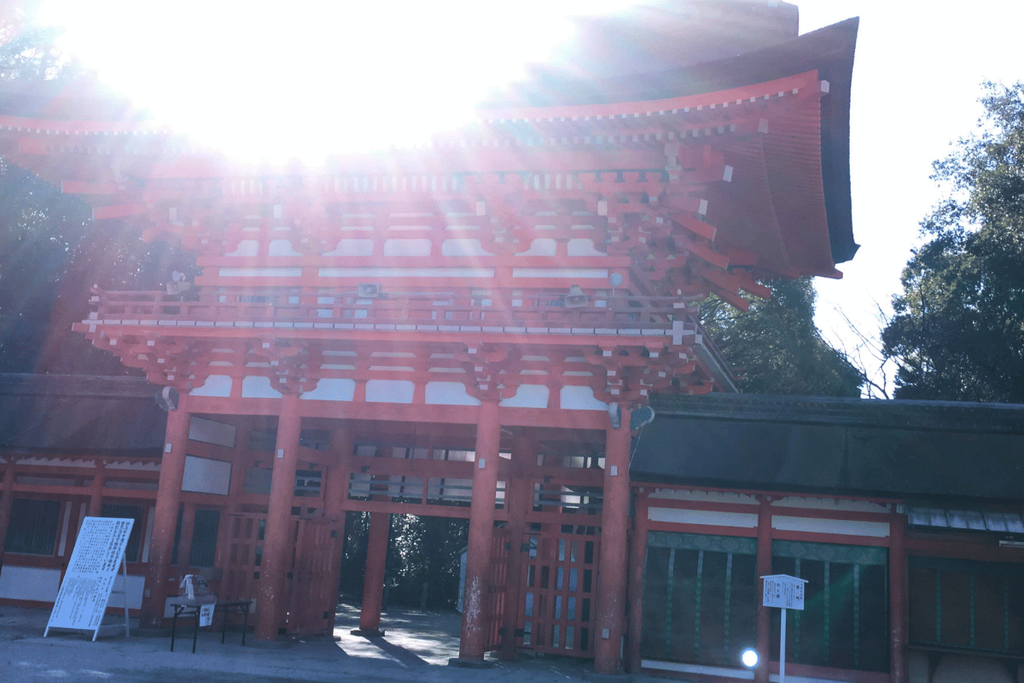
- Arrive early: Most of Kyoto’s scenic viewpoints — particularly Kiyomizudera and Fushimi Inari — are dramatically less crowded before 8am. Opening times are often 6am, so the window before the tour buses arrive is genuinely worth the early start.
- Plan around seasons: Spring (late March to early April) and autumn (mid-October to late November) offer the most visually dramatic scenery, but also the heaviest crowds. If you’re flexible, late November weekdays and early April mornings offer a good balance of foliage and manageable crowds.
- Check for night illumination events: Many of Kyoto’s temples hold special evening illumination events during the cherry blossom season and autumn. These events — at Kiyomizudera, Eikando, Kodaiji, and others — offer a completely different visual experience and are worth planning around if the timing aligns.
- Download offline maps: Cell service can be patchy on Fushimi Inari’s upper trails and in the Kurama-Kibune mountains. It might be better to download the relevant map areas on Google Maps or Maps.me before setting out.
- Combine spots into walking routes: Kyoto’s Higashiyama district is compact enough that Kiyomizudera, Shorenin, Chion-in, and Maruyama Park can all be combined into a single half-day walk. Building your route around a trail rather than individual destinations is a much more satisfying way to experience the area.
- Prices and hours can change: Admission fees and temple opening hours do change, especially for special events and seasonal illuminations. Always check the official websites before visiting to confirm current details.
How to Get to Kyoto

Photo: Pexels
Kyoto is well connected to Japan’s main transport hubs. Here’s how to reach the city from the most common starting points.
From Tokyo to Kyoto Station
- Shinkansen (bullet train)
- Time: about 2.5 hours
- Cost: around ¥14,000*
From Osaka to Kyoto Station
- JR train
- Time: about 30 minutes
- Cost: about ¥600*
From Kansai International Airport to Kyoto Station
- JR Haruka Express
- Time: about 75 minutes
- Cost: about ¥3,000*
From Narita International Airport to Kyoto Station
- Narita Express + Shinkansen
- Time: about 3.5–4 hours
- Cost: about ¥18,000*
*Prices are subject to change. Please check the official website for up-to-date information.
Summary
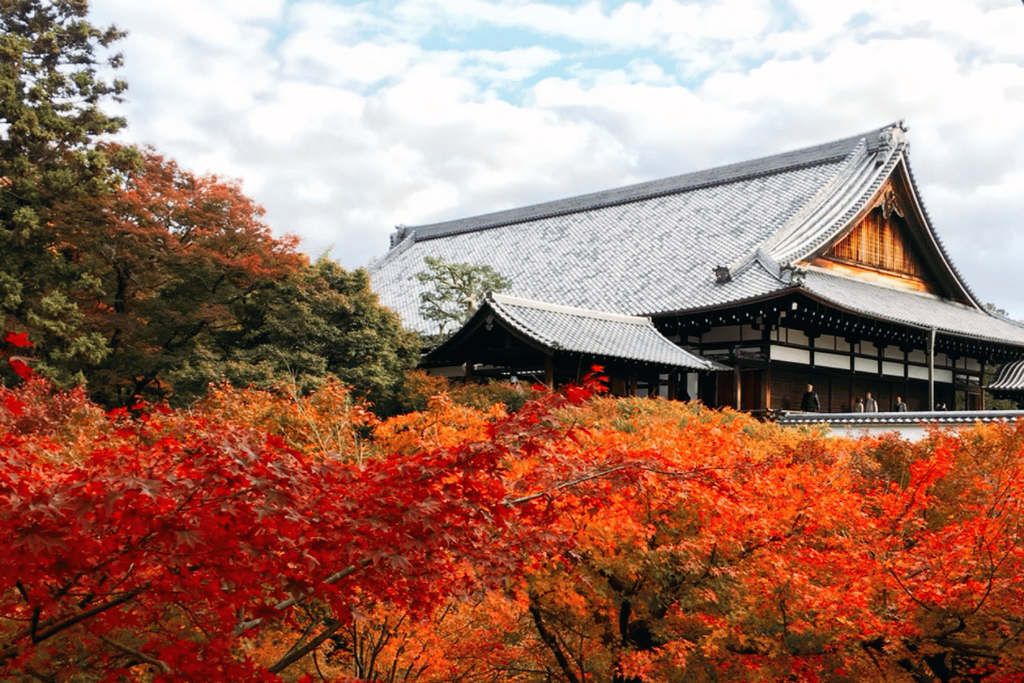
Kyoto’s scenic viewpoints are among the most varied and rewarding in Japan — ranging from open temple terraces with city panoramas to mountain ridge trails that feel entirely wild, and tranquil garden ponds that seem designed to hold the sky. The six spots covered in this guide barely scratch the surface of what’s available across the city’s hills and neighborhoods, but they represent a strong cross-section of the landscape experiences Kyoto makes possible, from accessible and famous to quiet and local.
If you can only visit in one season, autumn is the strongest recommendation for scenic landscape visits. The combination of fall foliage across the Higashiyama and Kitayama hills, evening illumination events at the major temples, and the generally clear skies of October and November make it the finest overall visual experience the city offers. That said, Kyoto in any season has something genuinely worth seeing — even the grey skies and the rainy season lend a particular mood to the forested hillside temples that’s hard to find elsewhere.
Make sure you’re connected and ready to navigate from the moment you land. A Japan eSIM keeps you online across Kyoto’s hills, mountain trails, and city streets — no hunting for Wi-Fi, no roaming charges, and no fuss at the airport.
Enjoy discovering Kyoto’s most beautiful landscapes and create unforgettable memories during your trip to Japan.