
Introduction
Many first-time visitors to Japan plan for shrines, countdown events, and winter illuminations during the New Year season.
What often stays in their memory longer is the food.
In early January, mochi appears almost everywhere. Small white rice cakes stacked beside shrine offerings. Toasted mochi floating in hot soup during breakfast. Temporary food stalls sending soy sauce smoke into the cold air. Convenience stores suddenly fill entire shelves with seasonal sweets that disappear a few weeks later.
Mochi is not just a snack in Japan.
For many families, it is tied to New Year rituals that continue year after year: preparing it together, displaying it inside the home, and eating it on the first morning of the year.
You do not need to understand every layer of tradition to enjoy it. But knowing a little context changes the experience completely.
For travelers visiting Japan during the New Year period, mochi also becomes one of the easiest ways to experience traditional Japanese food culture in everyday settings rather than formal tourist attractions.
In this article you will learn:
- Why mochi is deeply connected to Japanese New Year culture
- Which mochi foods first-time visitors should try
- Where travelers can watch mochitsuki(mochi making) or try seasonal dishes
- Practical tips for enjoying mochi safely and comfortably during winter travel
One thing many travelers discover quickly during New Year in Japan: schedules become unpredictable. Smaller restaurants may close temporarily, shrine areas get crowded, and opening hours often change at short notice.
Having mobile data for maps, translation apps, and updated schedules makes a real difference. Stay connected in Japan with an eSIM
What Is Mochi?
Mochi is made from glutinous rice called mochigome. The rice is steamed, then pounded repeatedly until it becomes smooth, dense, and stretchy.
The texture surprises many first-time visitors.
Some travelers expect something similar to bread or cake. Others imagine the ice cream mochi sold overseas. Fresh Japanese mochi feels very different from both. Warm mochi stretches slightly when pulled apart and becomes softer than many visitors expect.
The process of making mochi is called mochitsuki.
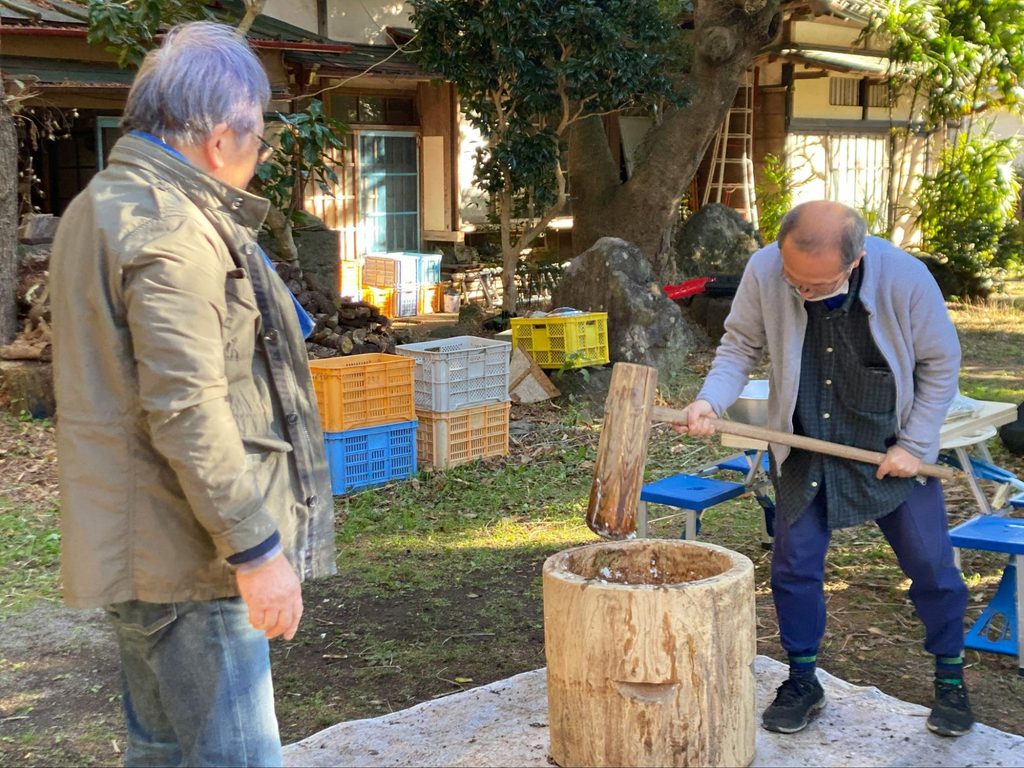
Traditionally, steamed rice is placed into a large mortar while one person pounds it with a heavy wooden mallet and another turns the rice between strikes. It takes speed and coordination. Watching it in person feels more physical and intense than most travelers could have imagined beforehand.
During late December and early January, mochitsuki events appear at shrines, community centers, and local festivals across Japan.
Heavy rhythmic pounding echoes through shrine grounds while steam rises into the winter air. Nearby, volunteers shape fresh mochi by hand while families gather around temporary food stalls. The smell of soy sauce and charcoal drifts over from grills a few meters away.
Even travelers who stop for only a short time often remember the sound and atmosphere long after returning home.
Why Mochi Matters During Japanese New Year
The connection between mochi and Japanese New Year is centuries old. References to mochi offerings appear in historical texts from more than a thousand years ago, though exact origins are still debated.
For visitors, two traditions appear most often during New Year travel.
Kagami Mochi
Kagami mochi is a decorative stack of round mochi displayed during the New Year period.
Travelers often notice it near shrine entrances, hotel lobbies, department stores, and restaurant counters without realizing what it represents.
Traditionally, two round mochi cakes are stacked with a bitter orange called daidai placed on top. The display is an offering for the new year.
Around January 11th, many families hold kagami biraki, a ceremony where the hardened mochi is broken apart and eaten, often in sweet red bean soup. Some community centers and businesses hold their own versions, which are occasionally open to visitors.
Ozoni
Ozoni is the soup eaten during the first days of the new year, and almost every region in Japan has its own version.
Tokyo-style ozoni often uses a clear broth with square mochi. In Kyoto, white miso broth with round mochi is more common. In parts of Kagawa Prefecture, some versions even include sweet red bean paste inside the mochi, which catches many visitors completely off guard.
The soup itself looks simple.
But eating a hot bowl of ozoni after standing outside in cold winter crowds during hatsumode(first shrine visit) feels very different from ordering soup at a random restaurant in another season. The timing is part of what it is.
Is Mochi Worth Trying for First-Time Visitors?
Worth trying, but approach it differently depending on what you want.
If you want cultural context, mochitsuki events at shrines give you more than the food itself. The sound, the crowd, the winter air, all of it becomes part of what you taste afterward.
If you want the easiest possible entry point, a convenience store daifuku costs almost nothing and requires no Japanese ability. It is a completely reasonable place to start.
One thing applies regardless of where you try it: mochi is sticky in a way that surprises people who have never eaten it fresh.
Japan’s Consumer Affairs Agency publishes a public safety advisory every New Year specifically about choking risk, particularly for elderly people. Mochi does not dissolve while chewing, the normal practice is to cut or tear mochi into small pieces before eating rather than taking a large bite.
Eating slowly matters more here than with most foods.
This is not a reason to avoid mochi. Millions of people eat it every year without incident. It just rewards patience.
Mochi Foods You May Encounter
Isobeyaki
Grilled mochi brushed with soy sauce and wrapped in seaweed.
For many first-time visitors, this becomes the easiest style to enjoy because the flavor is savory and smoky rather than sweet. The outside becomes lightly crisp while the inside stays soft and stretchy.
The smell alone usually draws people toward the stall before they even see it.
Many visitors expect mochi to be sweet, so isobeyaki often comes as a surprise. The combination of soy sauce and seaweed makes it feel more like a light snack than a dessert.
Daifuku
Soft mochi filled with sweet fillings such as red bean paste or fruit.
Strawberry daifuku becomes especially common during winter and early spring. Many visitors who normally dislike sweet bean paste end up enjoying strawberry daifuku because the fruit cuts through the sweetness in a way that just works.
Different regions sometimes have their own versions of daifuku, and seasonal fillings change throughout the year
Kirimochi
Rectangular cut blocks of mochi commonly sold in supermarkets and convenience stores during winter.
Often toasted until the outside becomes crispy while the inside stretches when pulled apart. This is the type many Japanese households prepare at home during New Year.Many households keep kirimochi at home during winter because it stores well and can be prepared quickly. It often appears in New Year meals, especially in ozoni, where the texture changes as it absorbs the broth.
Hanabira Mochi
A traditional January sweet associated with New Year tea ceremonies.
It contains sweet white miso paste and burdock root wrapped inside soft pink-and-white mochi. The flavor is less sweet than most wagashi(japanese sweets), and the burdock adds something earthy that makes the combination stranger and more interesting than it sounds.
It is usually available only in January. Many travelers visit Japan without realizing it is only available for a short period each year. For travelers interested in seasonal food culture, that limited availability is part of what makes it memorable.
How to Choose and Where to Try Mochi
1. Freshly Pounded Mochi at Shrine Events
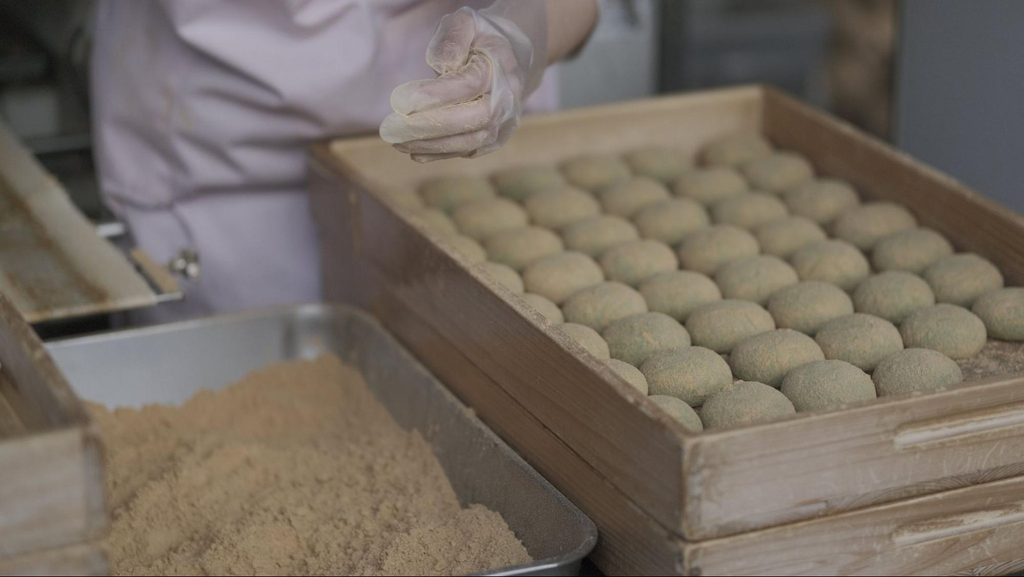

Watching mochitsuki in person changes how mochi tastes afterward.
The process feels louder, faster, and more physical than most visitors expect from photos or videos online. One person turns the rice between strikes while another swings a heavy wooden mallet at surprising speed. Steam rises from fresh rice nearby while visitors wait for small portions to be handed out.
Best for:
- Travelers visiting Japan during late December or early January
- Families and groups
- Visitors interested in seasonal traditions without language barriers
Time required: About 30 to 60 minutes
Best time: Morning, when events feel more energetic and shrine grounds are easier to move through before larger crowds arrive by midday
Access or Booking: Most public shrine events do not require reservations, but schedules change yearly. Check the shrine’s official website before visiting.
2. Ozoni at Shrine Food Stalls or Traditional Restaurants
Trying ozoni near a shrine during hatsumode, the first shrine visit of the year, works on a level that eating the same soup elsewhere does not quite replicate.
Cold weather, crowds, the smell of incense, and then a warm bowl of soup. It becomes a complete moment rather than just a meal.
Best for:
- Visitors experiencing hatsumode
- Travelers interested in regional food differences
- Anyone doing cold-weather sightseeing who needs a warm stop
Why it works:
- Regional variations are genuinely different and worth comparing if you visit more than one city
- Food stalls near major shrines are usually easy for walk-in visitors
- Good warm meal during winter sightseeing
Time required: About 15 to 30 minutes
Best time: Morning from January 1st to 3rd, when shrine food stalls are most active and the New Year atmosphere is strongest
Access or Booking: Food stalls are usually walk-in. Traditional restaurants may require reservations during the New Year period, which books out early.
What to check: Holiday closures and morning opening hours before traveling to the area.
3. Convenience Store and Supermarket Mochi
This is where many Japanese people actually buy mochi during the holiday season, and it is worth taking seriously as a traveler option rather than a fallback.
Pre-cut kirimochi, daifuku, and seasonal sweets appear in large quantities from late December onward.
Buying snacks in a Japanese convenience store late at night on New Year’s Eve has its own atmosphere.
Holiday music plays quietly while shelves carry seasonal foods that disappear almost immediately after January.
Best for:
- Travelers staying in apartments or hotels with kitchen access
- Visitors wanting to try multiple varieties without committing to a restaurant
- Anyone nervous about first-time food experiences
Why it works:
- Wide variety in one place
- No reservation or queue
- Seasonal products that are different from the rest of the year
Time required: About 10 to 20 minutes
Best time: Late December through early January
Product selection changes quickly during the holiday seasonA seasonal sweet that appears on New Year’s Eve may be gone a few days later. If something looks interesting, it is usually better to try it when you first see it.
Travel tip:
Fresh mochi hardens quickly at room temperature, also avoid putting your mochi in the refrigerator even if it has fruit filling. It usually tastes best the same day you buy it.
4. Mochi Sweets at Traditional Wagashi Shops
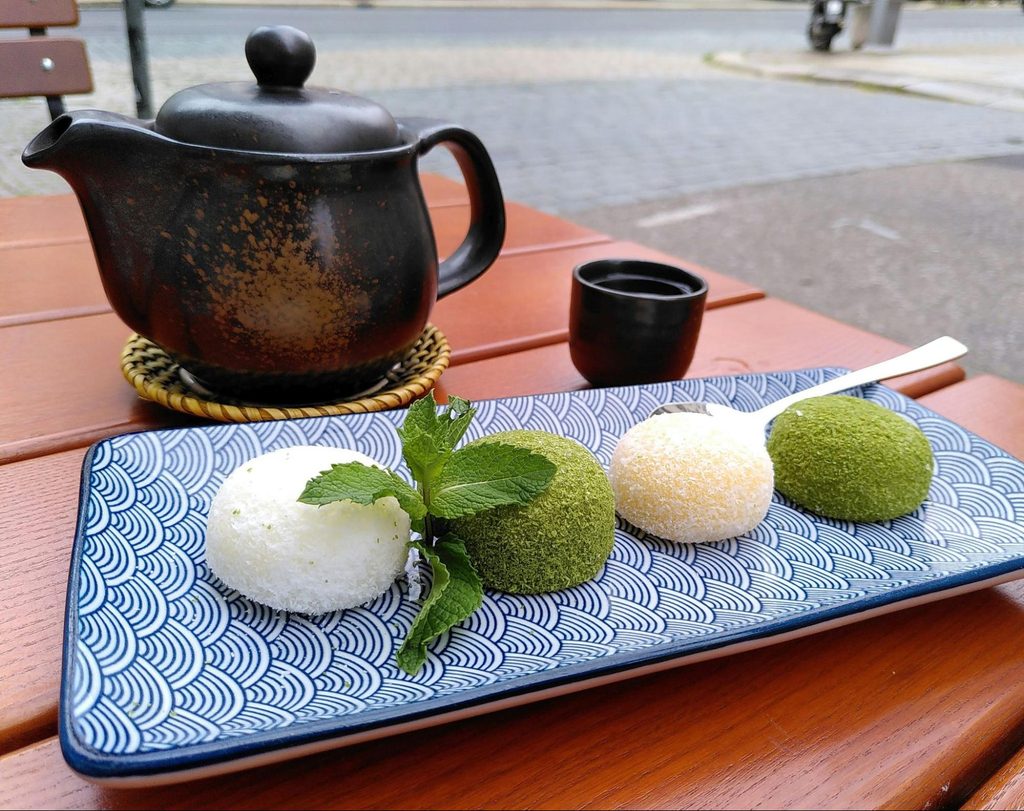

Traditional wagashi shops sell mochi sweets year-round, but January is when the seasonal selection becomes more specific.
Hanabira mochi, in particular, is usually available only at the start of the year.
These shops tend to be quieter than food markets and move at a slower pace. Vitrines are carefully filled and many shops near tourist areas have some English signage or picture menus.
Best for:
- Travelers interested in Japanese sweets and craftsmanship
- Food souvenir shopping
- Quiet breaks between sightseeing
Why it works:
- January-specific items unavailable during other months
- Good introduction to traditional confectionery
- Packaging often suitable for gifts
Time required: About 20 to 30 minutes
Best time: Morning, before popular seasonal items sell out
What to check: Smaller wagashi shops may close temporarily after January 1st. Confirm hours before visiting.
Getting around winter shrine areas and seasonal food markets is noticeably easier with reliable mobile data. Google Maps hours are not always updated accurately during the New Year holiday period, and smaller shops may post last-minute schedule changes only on their own websites or social media.
Common Mistakes to Avoid
Taking large bites of fresh mochi is the most common issue, and also the most serious. Cutting or tearing it into smaller pieces before eating is completely normal and what most Japanese people do as well.
Arriving at shrine food areas in the afternoon on January 1st often means the better stalls have already sold out. Morning visits work better both for food availability and for moving comfortably through crowds.
Trying only one type of mochi gives an incomplete picture. Savory grilled isobeyaki, sweet daifuku, and mochi floating in ozoni broth taste genuinely different from each other.
Treating them as the same food is like trying one type of bread and concluding you know what bread is.
Ignoring holiday closures costs more time than most travelers expect. Many smaller restaurants and independent shops close from December 31st through January 3rd. Checking before you travel across the city saves frustration.
Practical Tips
Arrive earlier than you think you need to at major shrines. Popular locations such as Meiji Jingu in Tokyo or Fushimi Inari in Kyoto become extremely crowded during hatsumode. Before around 9 AM usually feels significantly more manageable, both for walking and for food stalls still being stocked.
Station navigation becomes harder during holiday crowds. A restaurant may look close on the map, but in areas such as Shinjuku or around Kyoto Station, taking the wrong exit can easily add ten minutes of walking. Checking exit numbers before passing through the gate helps.
Keep some cash available. Smaller seasonal stalls and temporary food stands near shrines still prefer cash, particularly outside major shopping districts.
Translation apps are also useful during the New Year period. Mochi packaging and seasonal sweets sometimes contain ingredients unfamiliar to international visitors, making translation tools helpful for allergy checks and dietary restrictions.
Summary
For many visitors, mochi becomes part of how they remember New Year in Japan.
It might be a bowl of ozoni after a cold shrine visit, freshly pounded mochi at a local event, or a seasonal sweet picked up from a department store before it disappears for another year.
Trying more than one type helps you understand how different mochi can be, from savory isobeyaki to sweet daifuku and regional ozoni.
New Year schedules often change at short notice, especially around shrines, seasonal events, and smaller restaurants. Reliable mobile data makes it much easier to adjust plans while traveling. Stay connected in Japan with an eSIM.