Photo: Unsplash
Getting a haircut in a foreign country sounds simple until you’re sitting in the chair, trying to describe “soft layers around the face” through a phone translation app while someone holds scissors near your head.
That experience has become less common in Tokyo. Over the past decade, a cluster of salons — concentrated mainly in Omotesando, Minami-Aoyama, Azabu-Juban, Ginza, and Shibuya — have built real infrastructure for international clients: English-speaking staff, stylists experienced with non-Japanese hair textures, and booking systems in English. What once required local contacts and some luck now has a clearer path.
In this article you will learn:
- Which Tokyo neighborhoods have the strongest concentration of foreigner-friendly salons
- What services foreign visitors actually book most, and what to expect
- How to research and confirm a salon before your trip
- The booking-to-appointment sequence that removes most of the guesswork
- Practical tips for getting around and getting exactly what you want
One thing before you leave: Salon websites, Google Maps listings, and booking platforms all require a working internet connection. A Japan eSIM activated before landing means you can confirm your appointment, check maps in real time, and translate anything on the way. Get a Japan eSIM
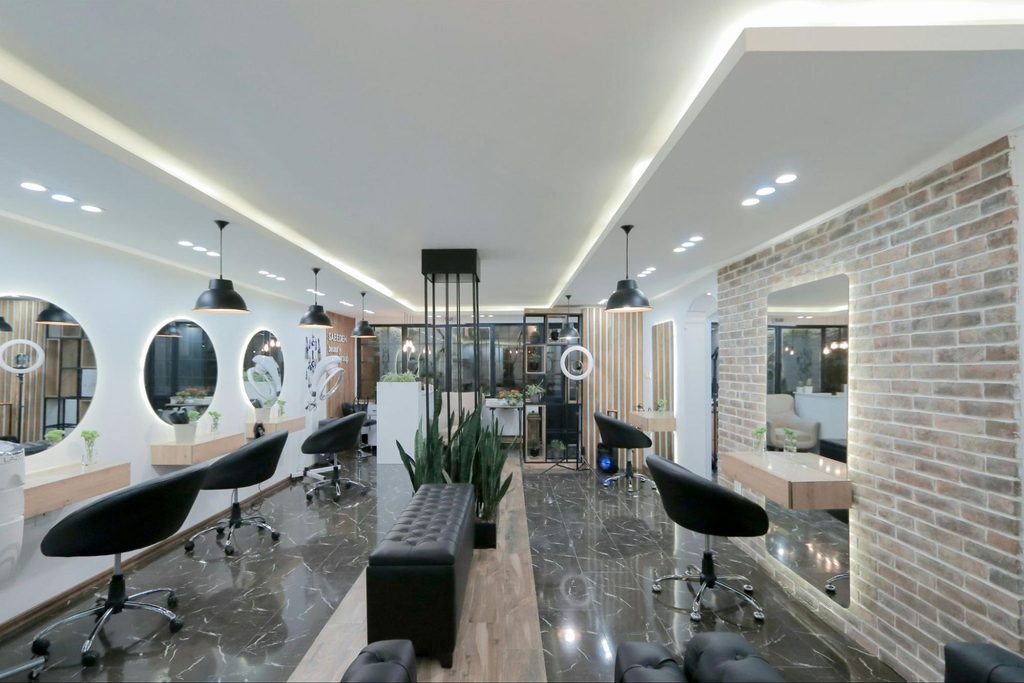
Photo: Unsplash
What to Know Before Booking a Tokyo Salon
Not all Tokyo salons are set up for foreign hair
Most Japanese salons are excellent at what their regular clients need: straight, fine-textured hair that holds color predictably. That expertise doesn’t automatically transfer to thick, curly, bleach-resistant, or chemically treated hair of the kind many foreign visitors have.
Salons that actively serve international clients have made a deliberate investment — stylists experienced with a wider range of textures, products suited for coarser or curlier hair, and the vocabulary to understand what a client actually wants. These are the salons worth finding, and they aren’t hard to identify once you know what to look for.
What to look for when researching:
- Instagram portfolios showing a range of hair types, not only straight Japanese hair
- English booking available via website, DM, or platforms like Minimo
- “Foreign hair welcome” or “international clients” noted on their profile or site
- Reviews written in English on Google Maps or TripAdvisor
Book before you arrive — and book early
Salons popular with foreign visitors fill up fast, particularly on weekends. For anything technical — balayage, keratin treatment, straightening — two to three weeks lead time is realistic. Color consultations sometimes happen over Instagram DM before the appointment itself, which is worth starting early if your request is complex.
Walk-ins are not accepted at most higher-end salons. Don’t leave this to chance.
Best Neighborhoods for Beauty Salons in Tokyo
Omotesando and Minami-Aoyama
Omotesando and Minami-Aoyama have the highest concentration of salons actively serving foreign clients in Tokyo. The area draws an international crowd — fashion boutiques, design studios, expat-heavy apartment buildings — and the salons here have adapted accordingly. Instagram portfolios from salons in this area often show a wider range of textures and color work than you’d find in a more domestic-facing neighborhood.
Expect higher prices than the city average. A cut and color session at a premium Omotesando salon can run significantly above what you’d pay elsewhere. For balayage, bleach work, and foreign hair texture management, the technical level tends to be strong — but verify by checking the specific stylist’s account before booking, rather than assuming the salon name alone is a guarantee.
Getting there: Omotesando Station on Google Maps
(Tokyo Metro Ginza, Chiyoda, and Hanzomon lines). Exit B2 puts you directly on Omotesando-dori, where most salons cluster. The walk from exit to most addresses is under ten minutes.
Best time to book: Weekday mornings. Saturday afternoons fill weeks in advance.
Time required: 3–5 hours if combined with shopping and cafés.
Nearby areas: Harajuku, Minami-Aoyama, Shibuya.
Best for: Balayage, bleach work, trend-focused color, fashion-oriented styling.
Azabu-Juban
Azabu-Juban has served as a residential base for Tokyo’s international community — diplomats, long-term expats, multinational employees — for decades, and its commercial street reflects that history. The salons here tend to be quieter than Omotesando, with a neighborhood feel and stylists accustomed to working with foreign clients as a matter of course rather than as an occasional exception.
If English communication matters more than anything else in your consultation, Azabu-Juban tends to have more salons where staff use it as a working language rather than a backup. For anything involving detailed discussion of hair condition or color history, that difference is real.
Getting there: Azabu-Juban Station on Google Maps. The station sits on the Namboku and Oedo lines. Exit 4 is closest to the main shopping street. It requires one connection from Roppongi, two from Shinjuku — not the most central location, but worth the detour if English communication is the priority.
Time required: 2–3 hours for a relaxed visit.
Nearby areas: Roppongi, Hiroo, Tokyo Tower.
Best for: Detailed consultations, English-priority visits, quieter travel days.
Photo: Unsplash
Ginza
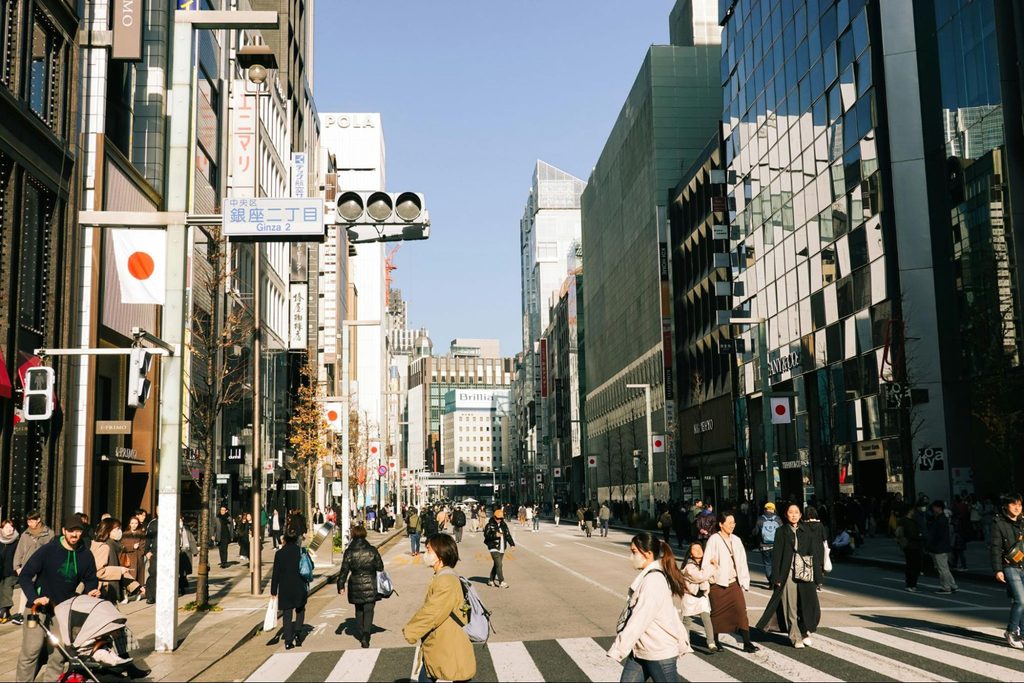
Photo: Unsplash
Ginza salons skew toward a premium, service-oriented experience: longer consultation times, meticulous finishing, formal hospitality throughout. For visitors who want a full session — color, cut, head spa, styling — handled with high attention to detail in a calm environment, Ginza is well suited.
English ability varies more here than in Omotesando. Some salons use translation tablets; others have dedicated English-speaking staff. Worth confirming when you book an appointment.
Ginza Station sits at the intersection of three lines — Ginza, Marunouchi, and Hibiya. Exits A1 through A13 put you directly into the main area with no long underground corridors to navigate.
Time required: 2–4 hours.
Nearby areas: Tokyo Station, Marunouchi, Nihonbashi.
Best for: Full treatment sessions, hair repair, visitors who prefer a calmer environment over fashion-district energy.
Shibuya
Shibuya has the widest range of options — affordable chains, independent stylists with strong followings, and everything in between. For foreign visitors, it requires more research to separate the international-facing salons from the standard domestic ones. Worth searching specifically if you’re already spending time in the area or staying nearby. Less worth a dedicated trip based on neighborhood name alone.
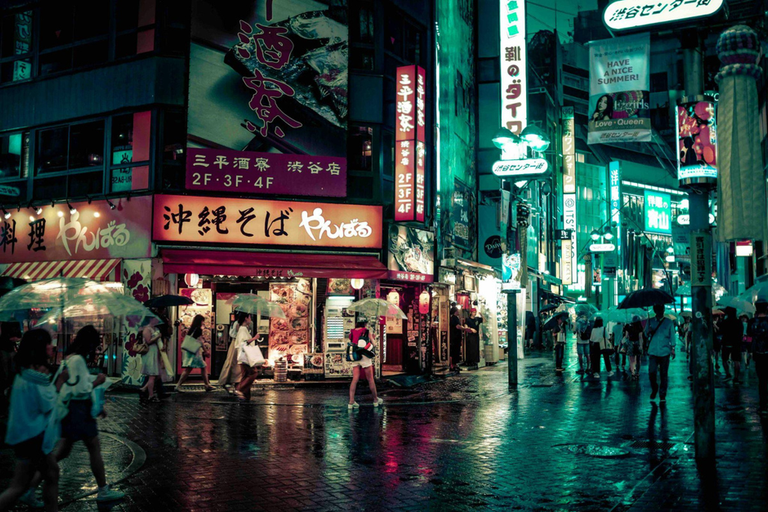
One practical note: Shibuya Station is much larger than it looks on Google Maps. A route that appears short can involve long underground corridors, multiple escalators, and crowded exits. If you’re combining a salon visit with Shibuya Sky or shopping in the area, plan the exit before you arrive — not after you surface.
Time required: Half day if combined with sightseeing.
Nearby areas: Harajuku, Ebisu, Daikanyama.
Best for: Flexible scheduling, evening appointments, younger travelers, spontaneous bookings.
Services Worth Knowing About
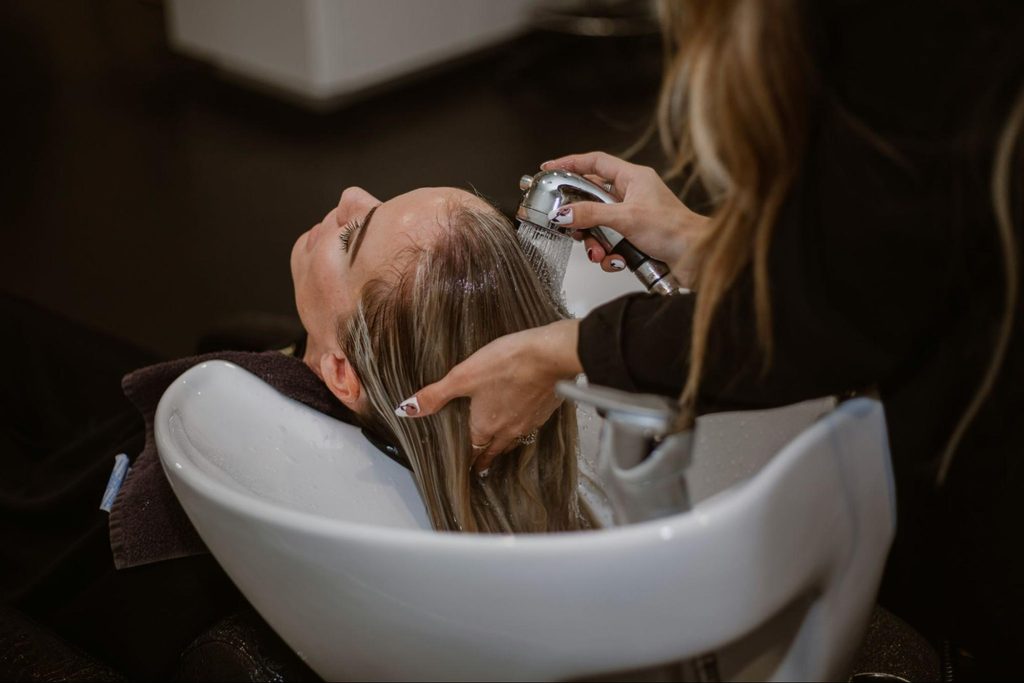
Photo: Unsplash
Balayage and color work
Tokyo has developed real depth in balayage — the freehand color technique that became globally popular — and salons in Omotesando and Minami-Aoyama tend to show stronger portfolios in this area than most. Quality varies significantly by individual stylist, so checking a colorist’s own Instagram account (not just the salon’s general feed) before booking is worth the extra step.
For visitors with bleach-processed or previously colored hair, the consultation matters most. A stylist who assesses your hair’s current condition before agreeing to a service is doing the right thing — not stalling.
Keratin treatment and smoothing (髪質改善)
What Japanese salons call 髪質改善 — hair quality improvement — has become a consistent request from foreign visitors. It’s a family of soothing treatments that differ from traditional Brazilian keratin in formulation, often gentler and more focused on moisture retention than outright straightening. For visitors with frizz-prone or humidity-sensitive hair, Tokyo’s summer weather makes this worth considering.
Sessions typically take two to three hours. Check whether the specific formulation is compatible with previously bleached hair before booking.
Straightening (縮毛矯正)
Japanese straightening has a strong reputation internationally. For visitors with curly or coily hair looking for long-lasting straightening results, this is worth considering — but it requires a longer session and a condition assessment before the stylist will commit. That’s appropriate practice, not reluctance.
Cut-only sessions
Entirely viable. Many foreign visitors simply want a clean cut from a skilled stylist in a comfortable environment. Budget-range options exist in every neighborhood mentioned above. The higher-end salons are better suited for color and chemical services; for cuts alone, the price-to-quality curve flattens considerably.
Which service fits your hair
This comes up often enough to spell out directly.
If your hair is straight or slightly wavy with no previous chemical treatment almost any salon in these neighborhoods will work. The technical gap narrows considerably for this hair type.
If your hair is curly, coily, or has significant texture, salon selection matters more. Not every salon that says “English OK” has stylists experienced with high-porosity or tightly textured hair. Meticulously check their portfolio — not just color results, but cut and finish photos on hair similar to yours.
If your hair has had previous bleaching or overlapping color treatment done, communicate this upfront in detail. Send photos of your current state alongside the result you want. A reliable salon will ask about your last treatment date before confirming the service. One that skips this step is a risk worth noting.
If you want a significant change — dark to light, or reversing previous color — recognise the possibility of needing two sessions. Some stylists are conservative about single-session dramatic changes on foreign hair they’re seeing for the first time. That’s responsible practice, not a limitation.
Mid-trip note: Many salons use Line (Japan’s primary messaging app) or Instagram DM for appointment confirmations and day-of updates. Staying connected means you won’t miss a message that changes your plan. Get a Japan eSIM
How to Find, Vet, and Book a Salon

Photo: Unsplash
Instagram is your best research tool. Search hashtags like #tokyosalon, #tokyohair, #tokyobalayage, or #tokyosalonforeigner. Portfolios tell you more than reviews do — you can see directly whether the stylist has worked on hair like yours or not.
Google Maps reviews in English can confirm whether a salon has served foreign clients and how that went.
Booking platforms: Hot Pepper Beauty (ホットペッパービューティー) is the dominant domestic platform — Japanese interface, but some listings note English support or foreign-client experience. Minimo is useful for finding individual stylists. For English-first booking, going directly through a salon’s Instagram or website tends to be more reliable than aggregators, which can lag on language information.
For technical services, DM before you book. For anything involving bleach or chemical treatment, message the salon directly via Instagram. Describe your current hair condition and what you want. A response that includes specific questions about your history is a good sign. An immediate booking link with no follow-up questions is a reason to pause.
From first search to appointment day
This is the part most travel articles skip entirely. Knowing the sequence in advance removes almost all the friction.
One to three weeks before: Find two or three candidate salons. Check the individual stylist’s own portfolio, not just the salon account. Read English reviews for specifics, not star ratings.
Initial contact: For color or chemical work, send a photo of your current hair alongside your request. Note any previous treatments. If the reply asks follow-up questions, proceed. If it skips straight to a booking link, ask those questions yourself before confirming.
Booking confirmation: Salons typically confirm via DM, email, or Line. Save the confirmation with the full address and note the specific station exit — not just the station name. This step alone prevents a surprising amount of day-of confusion.
Day before: Pull up the walking route from the correct exit on Google Maps. For Omotesando, exit B2 covers most salon addresses. For Azabu-Juban, exit 4 is for the main shopping street. Note the walking time from the exit, not just the total transit time.
Day of: Arrive five to ten minutes early. Have reference photos already open on your phone — not buried in a folder you’ll scroll through at the desk. Three to five images work better than one: overall style, texture close-up, and color range together give the stylist room to interpret rather than guess. Most salons offer tea or water on arrival. The consultation starts before you sit in the chair.
Consultations at higher-end salons, particularly for color, often run longer than the booking estimate. The stylist may want to walk through the reference image carefully before touching your hair. This is worth the time. Don’t rush it.
Travel Tips for Your Salon Day
Know your exit before you surface. Stations in Tokyo can have dozens of exits, and the wrong one adds serious walking time. Shibuya in particular can mean ten minutes or more of unnecessary walking if you leave from the wrong side. Check Google Maps for the specific exit number while still on the platform.
IC cards make the day smoother. A Suica or PASMO card removes the need to buy individual tickets at every station. Both work across JR, Tokyo Metro, and most private lines — and serve as payment at convenience stores near the salon as well. Available at major station vending machines and at the airport.
Build in more time than you think you need. First visits run longer than the booking estimate. Consultation and hair condition assessment add to the clock. Avoid scheduling anything tight immediately afterward.
Payment varies. Many higher-end salons in Omotesando and Ginza accept Visa and Mastercard. Some smaller independents remain cash-only. Confirm at booking rather than at the counter.
Rainy days make good salon days. Tokyo is humid from June through September, and outdoor sightseeing on wet days loses most of its appeal. A longer salon session — cut, color, and treatment — on a rainy afternoon turns a day that might otherwise feel wasted into one of the better decisions of the trip. Trains run normally. Salons are entirely indoors.
Tipping does not exist in Japanese salon culture. A direct thank you is the appropriate response to good service. Nothing more is expected or appropriate.
Getting to the Main Salon Areas
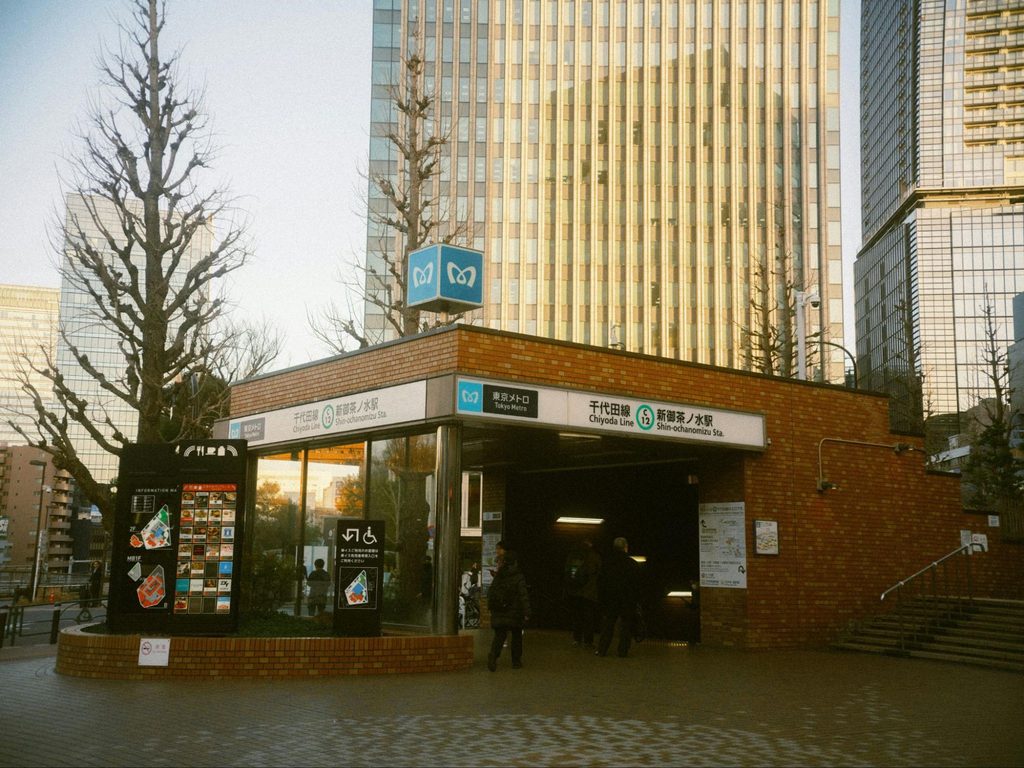
Photo: Pexels
From Shinjuku:
Omotesando — Tokyo Metro Marunouchi Line to Akasaka-Mitsuke, transfer to the Ginza Line, one stop to Omotesando. Under 25 minutes.
Azabu-Juban — Oedo Line from Shinjuku, direction Daimon, to Azabu-Juban. About 20 minutes direct.
From Tokyo Station:
Ginza — Marunouchi Line to Ginza, or via the underground concourse. Eight to ten minutes.
Omotesando — Marunouchi Line toward Ogikubo, transfer at Akasaka-Mitsuke to the Ginza Line. Around 20 minutes total. Travelers with heavy luggage may prefer a taxi to Ginza rather than navigating Tokyo Station’s long internal corridors.
From Narita Airport:
The Narita Express (N’EX) connects directly to Shinjuku and Shibuya — a practical option if your salon is in Omotesando or that side of the city. Travel time is approximately 60–90 minutes depending on destination. Book your salon appointment for day two or later. Navigating a large station with bags after a long international flight adds more stress than most visitors expect.
From Haneda Airport:
Considerably closer to central Tokyo. The Keikyu Line reaches Shinagawa in about 13 minutes, with straightforward onward connections to Ginza and Azabu-Juban. For Azabu-Juban specifically, the Oedo Line from Daimon is the most direct route.
One neighborhood is enough for a day. Omotesando and Shibuya combine comfortably. Adding Ginza or Azabu-Juban to the same itinerary usually creates more fatigue than the extra stop is worth. A slower afternoon in one area — salon, coffee, a walk — tends to leave a better impression of the city than three neighborhoods rushed.
*Please check current timetables at the relevant railway operator’s website before travel.
Photo: Pexels
Final Thoughts
The salons that cater to foreign visitors aren’t difficult to find once you know where to look. The work is in the research before you arrive: checking portfolios, reading English-language reviews, messaging ahead for chemical services, and keeping appointment lead times in mind. Done properly, that sequence takes under an hour and removes most of the uncertainty.
For most visitors, Omotesando is the practical starting point — the concentration of internationally-oriented salons is highest there, and the neighborhood is easy to navigate on foot. Azabu-Juban is worth the extra travel time when fluid English communication matters more than anything else.
Tokyo salons reward preparation. Visitors who arrive with reference photos, a confirmed booking, and a clear station exit in mind tend to leave with exactly what they came for.
Before your appointment: A reliable data connection means you can confirm the address, check the route, and translate anything on the consultation form — without hunting for Wi-Fi first. Get a Japan eSIM