Photo: Unsplash
Introduction
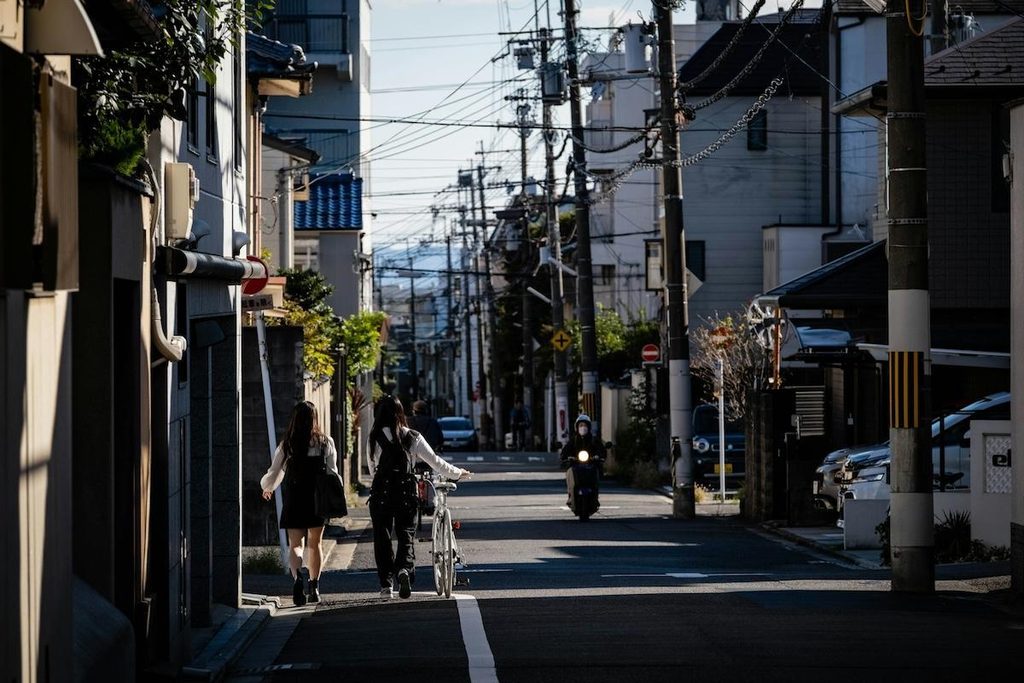
Shibuya and Shinjuku are very popular spots for sightseeing in Tokyo. However, if you have already spent time there, you might already know that feeling — too crowded, too noisy, and not quite the Tokyo you imagined.
Good news for you. You can find out about different areas of Tokyo by train or bus. This guide covers five neighborhoods where local residents live and spend time.
In this article you will learn:
- 5 local neighborhoods loved by Tokyo residents
- Recommended spots and things to do in each area
- How to get there by train or bus
Overview
Well, what is the worth of visiting those neighborhoods? A few things stand out.
Firstly, those neighborhoods are not like sightseeing spots. The shops, restaurants, and streets were built for residents, which means everything here feels genuine.
Secondly, each area brings something new to the table. Peaceful areas where the locals hang around without stress, colourful areas that are more artsy and eye-catching, while others will bring families and traditions.
Each neighborhood that we cover here is easy to reach by train or bus from central Tokyo, and none of them require a full day to enjoy.
Best things to do
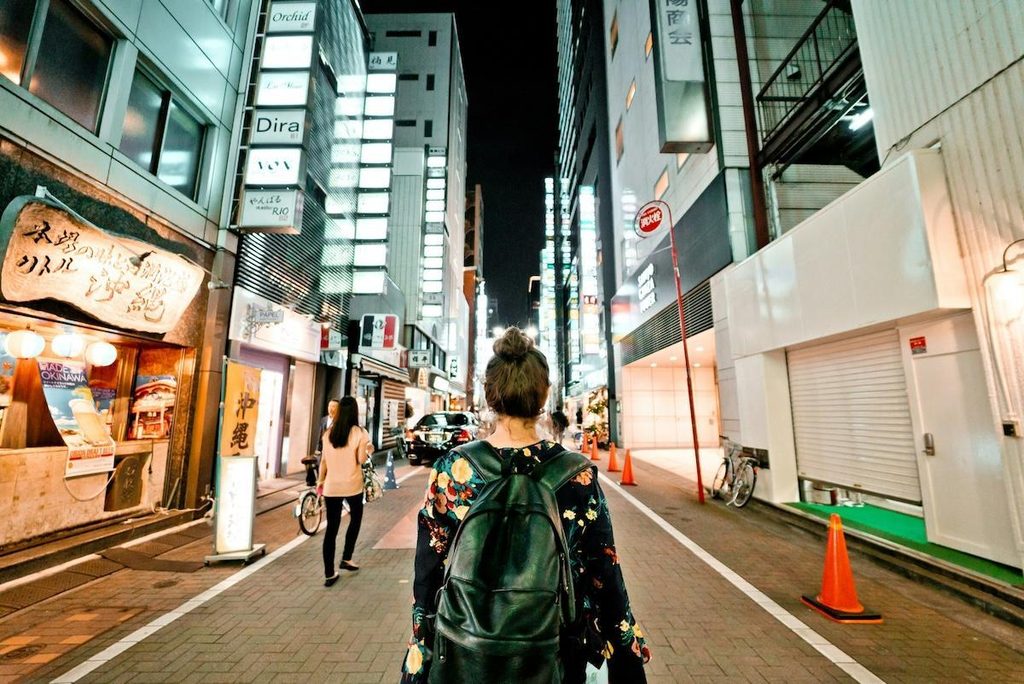
Photo: Unsplash
- Walk the local streets without a plan
Just pick a direction and go for it. You will find small shrines tucked between buildings, covered shopping streets full of everyday shops, and temple grounds where locals come to clear their heads. It is the kind of exploration that does not work in Shibuya or Shinjuku.
- Relax at a cafe or kissaten
Coffee culture is one of the things that makes Tokyo special. Some cafes are modern and draw a younger crowd, while others are classic kissaten that have not changed in 50 years — and that is exactly what makes them worth visiting. “Kissaten” means old style Japanese cafe which is calm, and most of the places are particular. Order a coffee, take a seat, and watch the neighborhood go about its day.
- Eat where locals eat
Those areas each have their own local specialty tucked away in small restaurants. You will be able to enjoy unaltered local foods, made for the locals.
- Browse the shops
Shopping in those areas is a little different from other areas in Tokyo. There are great vintage and second-hand stores, books and designer brands. You are sure to find what you want.
Recommended spots
Kichijoji Area
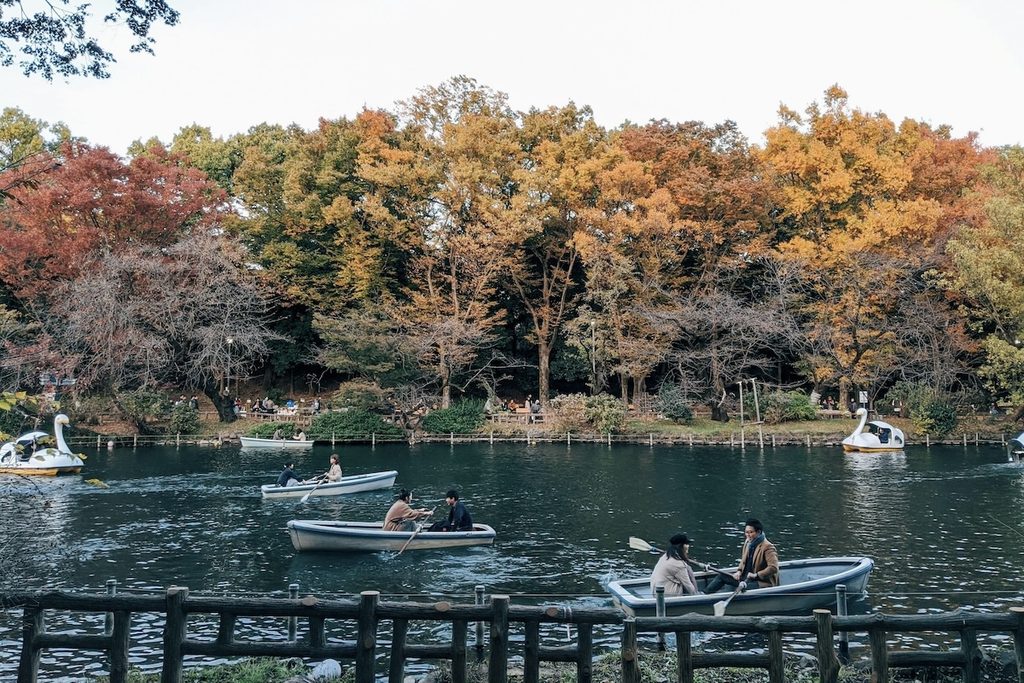
Photo: Unsplash
1. Inokashira Park
A five minute walk from Kichijoji station. The noise fades away, while nature appears. Inokashira Park sits around a large pond where you can rent rowboats. People enjoy cherry blossom trees in the spring here. There is also a small zoo on the grounds, and if you keep walking, you will eventually reach the Ghibli Museum.
Time required: 1-2 hours
Access: About 5 minutes from Kichijoji Station (JR / Keio Inokashira Line)
Official website: Inokashira Park
Location: Google Maps
2. Harmonica Yokocho
“Harmonica” Yokocho, an interestingly named tiny street, is packed with around 100 small bars and restaurants. The “Harmonica” name comes from the shape: storefronts lined up like the holes of a harmonica. In the evening, many people enjoy spending their time there. It is perfectly fine to simply wander in and pick somewhere that looks good.
Time required: 1-2 hours
Access: About 1 minute from Kichijoji Station
Official website: hamoyoko
Location: Google Maps
3. Sun Road and Taisho-dori
These two different streets exist in the same area but feel completely different.
Sun Road is a covered shopping arcade where locals come for everyday errands.
This giant street has drugstores, clothing stores, and food stalls. Taisho-dori is slower and more considered. Independent shops selling furniture, clothing, and things you did not know you needed.
Time required: 1-2 hours
Access: Each street is about 3 minutes from Kichijoji Station
Location: Google Maps(Sun Road) / Google Maps(Taisho-dori)
Shimokitazawa
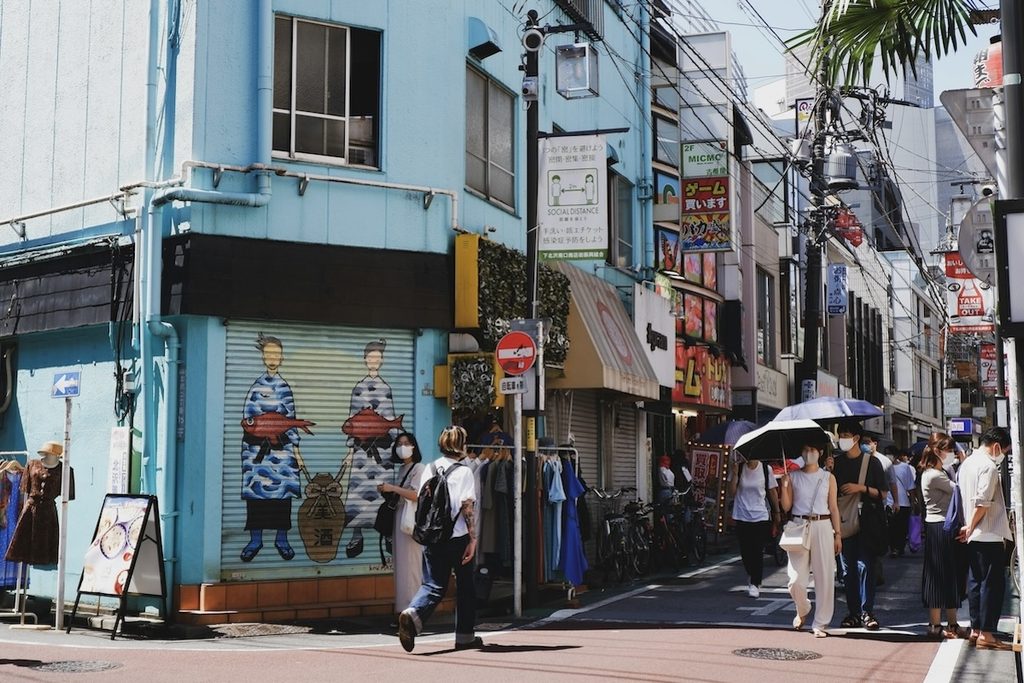
Photo: Unsplash
1. Vintage and Second-Hand Shopping Streets
Shimokitazawa is a place that has a bunch of vintage shops in a small area. Some are curated with higher price tags, and others are the kind of place where you find something great for 500 yen. Either way, it is worth spending a few hours walking in this area. Most of the shops are small and have a wide selection to choose from.
Time required: 1-3 hours
Access: Within walking distance from Shimokitazawa Station (Odakyu Line / Keio Inokashira Line)
Location: Google Maps
2. Local Curry Restaurants
This area is actually serious about curry. It started with a “Shimokitazawa curry festival” in the 2010s. The restaurants compete with their own original recipes, and the culture just stuck. Now there is a real concentration of spice curry spots, each with its own style. If you are not sure where to start, just walk around and see which one smells best.
Time required: 1 hour
Access: Within walking distance from Shimokitazawa Station (Odakyu Line / Keio Inokashira Line)
Location: Google Maps
3. Honda Theater
Honda Theater has been running since 1982. It is one of the most respected small theater venues in Japan. Even if you do not understand Japanese, you can enjoy and feel the energetic performance and passion here. Check the schedule before you visit. Even if nothing is on for you, the building and the streets around it give you a good sense of why Shimokitazawa has always attracted creative people.
Time required: 2-3 hours (depending on performance)
Access: About 3 minutes from Shimokitazawa Station
Official website: https://www.honda-geki.com/
Location: Google Maps
Setagaya Line Area
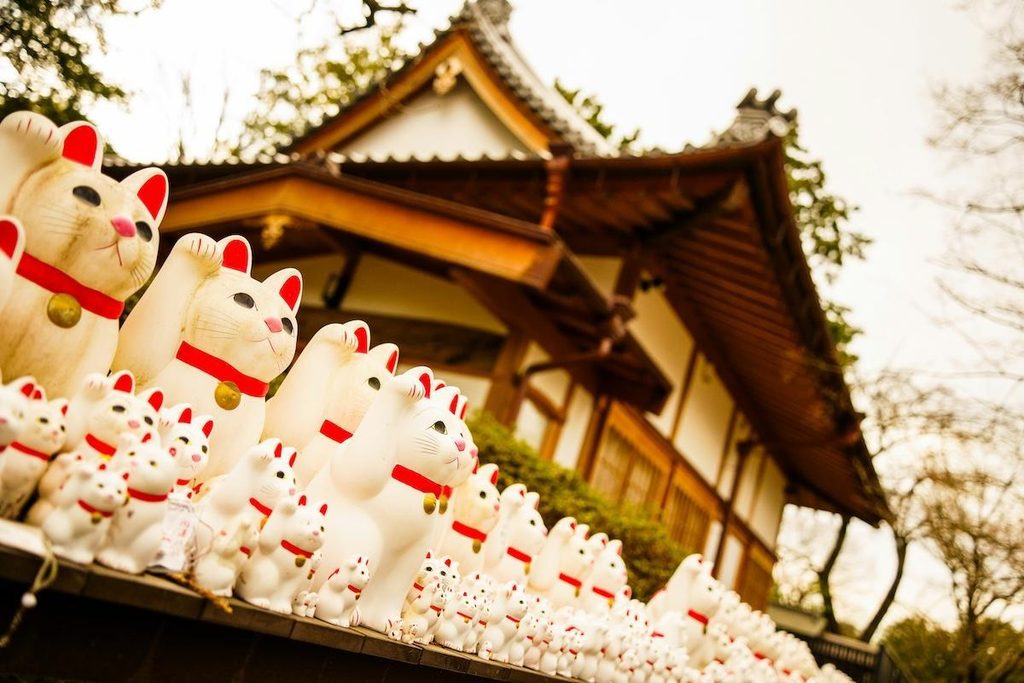
Photo: Unsplash
1. Gotokuji Temple
When you take the setagaya-line, you can find some white cats everywhere. According to local legend, this is where the maneki-neko (lucky cat), the beckoning cat figure you see across Japan, originated. Visitors who feel their wishes have been granted return to donate a ceramic cat; the collection has grown into something genuinely wonderful. Hundreds of white cats, all different sizes, lined up across the temple.
Opening hours: 6:00-17:00
Time required: About 30-60 minutes
Access: About 5 minutes from Miyanosaka Station (Setagaya Line)
Official website: https://gotokuji.jp/
Location: Google Maps
2. Shoin Shrine and Shoin-jinja Mae Shopping Street
Get off at Shoin-jinja Mae Station, walk through the quiet and peaceful shopping street, and the modest Shoin Shrine will appear. On the shopping street, you can find a small bakery shop, a small cafe, and a few lifestyle shops. The shrine is dedicated to Yoshida Shoin, an influential thinker from the late Edo period, and it draws a steady stream of local visitors throughout the week.
Time required: About 30-60 minutes
Access: About 5 minutes from Shoin-jinja Mae Station (Setagaya Line)
Official website: https://www.shoinjinja.org/
Location: Google Maps(Shoin Shrine) / Google Maps(Shoin-jinja Mae Station)
3. Sangenjaya
Local people who have just finished their day pop in here and enjoy tasty foods or a drink after work. Sangenjaya is the most lively area on the setagaya-line. A dense mix of izakayas(Japanese bistros), small restaurants, and bars tucked into narrow streets. It is just one stop from Shibuya on the Den-en-toshi Line. You can feel more local, more relaxed, and a less performative behavior here.
Time required: 1-2 hours
Access: Sangenjaya Station (Tokyu Den-en-toshi Line / Setagaya Line)
Location: Google Maps
Chofu / Jindaiji
1. Jindaiji Temple
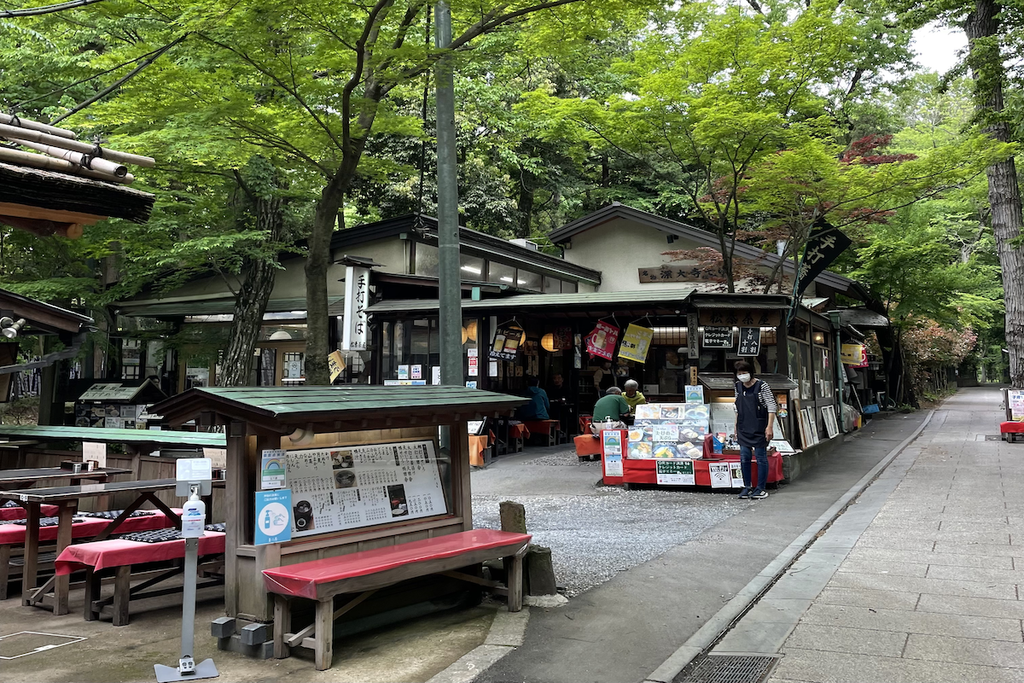
Founded in 733 CE, Jindaiji is one of the oldest temples in the greater Tokyo area. The grounds are large and tree-lined. The whole area around the temple has a pace that is hard to find this close to the city center. Right next to the temple, there is the Jindai Botanical Garden, which is worth a visit any time of year.
Opening hours: 6:00-17:00 (temple office: 9:30-16:00)
Time required: 1-2 hours
Access: Take a bus from Chofu Station, Kichijoji Station, or Mitaka Station to the Jindaiji bus stop (about 15-20 minutes)
Official website: https://www.jindaiji.or.jp/
Location: Google Maps
2. Jindaiji Soba Restaurants
Jindaiji temple and soba have been linked since the Edo period. The story goes that the soba here was made using local spring water, and the result was good enough that even the third Tokugawa shogun took notice. Today, over 20 soba restaurants line the streets around the temple. They are all slightly different. Find your favorite soba restaurant.
Time required: About 1 hour
Access: Within walking distance of the Jindaiji bus stop
Location: Google Maps
3. Kitaro Chaya
If you notice a one-eyed ghost boy character appearing around Chofu, his name is Kitaro. Kitaro is from the famous manga”Gegege no Kitaro”. The manga series was created by Shigeru Mizuki, who lived in Chofu for most of his life.
Kitaro Chaya is a cafe and shop dedicated to the series, with themed food and drinks.
One important note: the cafe moved from its original location near Jindaiji Temple to the Tenjin-dori shopping street near Chofu Station from November 2024, so make sure to check the current address before you go.
Opening hours: 10:00-18:00 (closed Tuesdays)
Access: About 5 minutes from Chofu Station (Keio Line)
Official website: https://kitaro-chaya.jp/
Location: Google Maps
Daikanyama
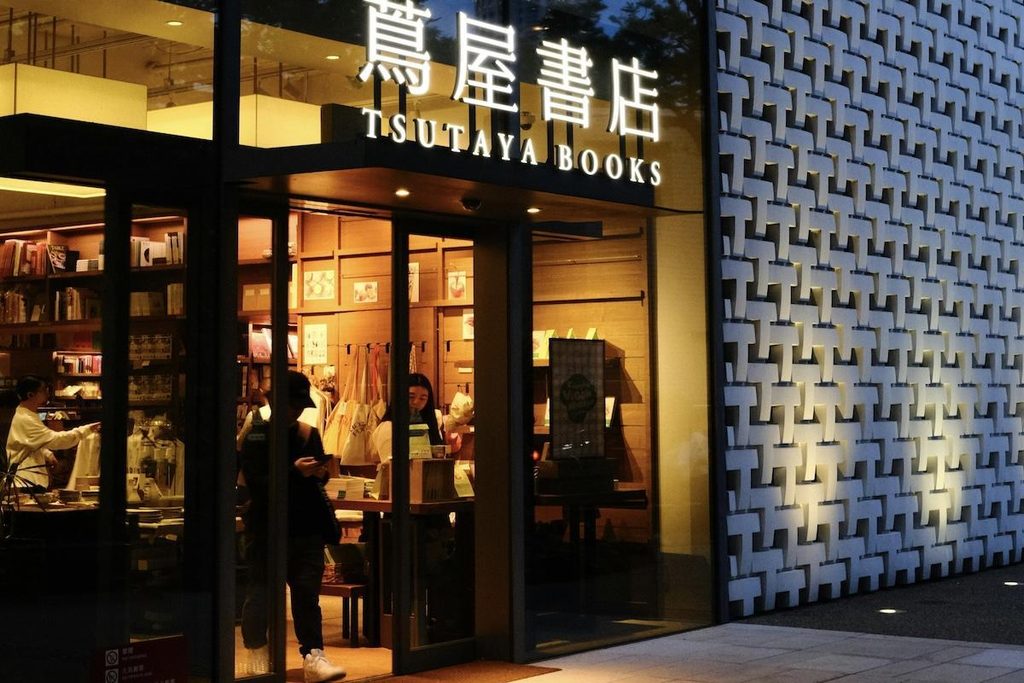
Photo: pexels
1. Daikanyama T-SITE and Tsutaya Books
Even if you are not a big fan of books, there is a reason why you should visit this book shop. This big book shop is spread across three connected buildings, with sections covering art, travel, cooking, architecture, and more. The books are beautifully displayed, and the overall atmosphere is relaxed. There is a cafe inside if you need a break, and the outdoor seating area is a good spot to sit and watch the neighborhood.
Opening hours: 9:00-22:00
Time required: 1-2 hours
Access: About 5 minutes from Daikanyama Station (Tokyu Toyoko Line)
Official website: daikanyama
Location: Google Maps
2. Daikanyama Shopping Streets
Daikanyama does not try very hard to impress you, and that is part of what makes it work. It has its own quiet atmosphere. The streets are quiet and tree-lined, the shops are small and carefully chosen. The general feeling here is that everything exists because someone thought carefully about whether it should or not. It is a good neighborhood for walking slowly while looking at things.
Time required: 1-2 hours
Access: About 5 minutes from Daikanyama Station (Tokyu Toyoko Line)
Location: Google Maps
Travel tips
1. Get a Suica or PASMO Card
If you do not already have one, get an IC card at the airport or any major station. It works for trains and buses across Tokyo. And you can use it at convenience stores and vending machines. It saves a lot of time at ticket machines.
2. Carry Some Cash
Card payments are becoming more common in Tokyo, but small shops, older cafes, and places like Harmonica Yokocho in Kichijoji still prefer cash. A few thousand yen in your pocket will cover most situations.
3. Visit on a Weekday or Early in the Day
Kichijoji and Daikanyama can get crowded on weekends. Arriving before noon on a weekday is a noticeably different experience. Quieter streets, shorter waits, and it is easier to get seated at a cafe.
4. Get an eSIM Before You Arrive
Walking around neighborhoods like these without internet access is quite frustrating. Signs are mostly in Japanese, Google Maps is essential for finding side streets, and a translation app will save you more than once.
An eSIM means you have data from the moment you land.
Find the best eSIM for your trip to Japan here.
5. Be Considerate When Taking Photos
These are working neighborhoods. People live here, walk to work here, and shop here. A little awareness goes a long way, especially around shrines, quiet streets, and anywhere that feels more private than public.
Access
Getting to any of these neighborhoods is not difficult. All five are connected to central Tokyo by train, and none require more than one or two transfers from Shinjuku, Shibuya, or Tokyo Station.
Kichijoji
- From Shinjuku: JR Chuo Line (rapid), about 15 minutes
- From Shibuya: Keio Inokashira Line (express), about 30 minutes
- From Tokyo Station: JR Chuo Line (rapid), about 25 minutes
Shimokitazawa
- From Shibuya: Keio Inokashira Line, about 5 minutes
- From Shinjuku: Odakyu Line, about 10 minutes
- From Tokyo Station: Transfer at Shibuya, about 25 minutes total
Setagaya Line Area
Start at Sangenjaya, which is one stop from Shibuya on the Tokyu Den-en-toshi Line. From there, board the Setagaya Line, which is a small, slow, local train that connects Sangenjaya to Shoin-jinja Mae and Miyanosaka.
- From Shinjuku: Transfer at Shibuya, about 15 minutes to Sangenjaya
- From Tokyo Station: Transfer at Shibuya, about 25 minutes to Sangenjaya
Chofu / Jindaiji
Jindaiji is the only area in this guide that requires a bus. Take the Keio Line express from Shinjuku to Chofu Station (about 15 minutes), then a bus to the Jindaiji stop (about 20 minutes). It is a little more effort, but the area feels removed from the city, which is the point.
- From Shibuya: Transfer at Chofu, about 40 minutes total
- From Tokyo Station: Transfer at Shinjuku, about 50 minutes total
Daikanyama
- From Shibuya: Tokyu Toyoko Line, about 2 minutes — it is almost walking distance
- From Shinjuku: Transfer at Shibuya, about 15 minutes total
- From Tokyo Station: Transfer at Shibuya, about 25 minutes total
For real-time routes and platform information, use Google Maps. Train schedules can vary, and Google Maps is usually the quickest way to check connections on the day. For a reliable internet connection, it’s recommended to use an eSIM here.
Summary
Major famous tourist spots in Tokyo, such as Shibuya, Shinjuku, and Asakusa, are worth visiting, but those are not the whole story of Tokyo.
Those five neighborhoods in this guide are not too popular, and most tourists will not notice or plan to visit them. If you want to experience the more local side of Tokyo, you should definitely go and have a look. Each spot is easy to access and genuinely different from the others.
- If you love shopping, Shimokitazawa is for vintage finds, or Daikanyama for high-end and designer goods.
- If you want nature and a slower pace, visit Jindaiji and Inokashira Park in Kichijoji.
- If food is your priority, Sangenjaya is for izakayas and Shimokitazawa is for currys.
- If you are interested in history and culture, Jindaiji Temple and Shoin Shrine are worth the trip.
- If you just want to feel what daily life in Tokyo is like, the Setagaya Line area is perfect for you.
If you do not have enough time to visit those five neighborhoods, just pick one that feels right for you. If you have a few days to visit those, combine 2 or 3 spots each day. Kichijoji and Shimokitazawa are easy to access for a day.
Navigating neighborhoods like these is much easier with reliable data on your phone. Signs are in Japanese, side streets are not always on maps, and a translation app will come in handy.
An eSIM is the simplest way to make sure you are connected from the moment you arrive. Check out our recommended eSIM options for Japan here