Introduction
Sendai makes an easy base for two of Tohoku’s most distinctive day trips: Yamadera, a mountain temple reached by climbing over a thousand stone steps, and Matsushima, a bay dotted with pine-covered islets ranked among Japan’s Three Views. One trades city streets for a forested cliffside pilgrimage route tied to a famous haiku poet, while the other trades mountains for a calm harbor shaped by centuries of Date clan patronage. Together, they cover a great deal of Tohoku’s history in a single, easily combined itinerary.
In this article, you will learn:
- Why climbing Yamadera’s 1,015 stone steps has become a pilgrimage of its own
- The story behind Matsuo Basho’s famous haiku at the Cicada Mound
- What makes Matsushima one of Japan’s Three Views
- The history connecting Zuigan-ji Temple to the Date clan
- How to get to Yamadera and Matsushima from Sendai
Since both destinations involve outdoor walking routes that shift considerably with the weather and season, an eSIM is worth having ready to check train schedules and conditions before setting out.
Overview of the Sendai Area

Yamadera and Matsushima sit on opposite sides of Sendai, one inland among the mountains of Yamagata Prefecture, the other on the coast of Miyagi Bay, yet both are close enough to the city to visit as a single day trip apiece. Despite their different settings, both places owe much of their character to two recurring figures in Tohoku history: the Buddhist monk Jikaku Daishi Ennin, who founded temples at both sites in the 9th century. And Date Masamune, the powerful Sendai domain lord whose rebuilding projects shaped much of what visitors see today.
Yamadera, formally known as Risshaku-ji, was founded in 860 and built into a forested mountainside dotted with roughly thirty halls, shrines, and monuments. Matsushima, meanwhile, developed around a sheltered bay whose scattering of small pine-covered islands has made it one of Japan’s most celebrated coastal landscapes for centuries.
Sendai itself, the largest city in Tohoku, grew up under Date Masamune’s rule as the seat of his domain, and much of the region’s cultural infrastructure. Temple reconstructions and local craft traditions trace back to decisions made during his time in power. Visitors splitting their stay between the city and these two day trips often find that Sendai’s own castle ruins and museums add useful historical context before or after seeing what Masamune’s patronage produced at Matsushima specifically.
Key Features
- Yamadera’s 1,015 stone steps leading through a forested mountain temple complex
- The Cicada Mound, marking the spot linked to Matsuo Basho’s most famous haiku
- Matsushima Bay, ranked among Japan’s Three Views
- Zuigan-ji, a National Treasure temple rebuilt by Date Masamune
- Local food traditions at both sites, from mountain-grown konjac to hand-grilled kamaboko
Both destinations also drew the attention of Matsuo Basho, the Edo-period haiku poet whose travel journal “Oku no Hosomichi” (The Narrow Road to the Deep North) remains one of Japan’s most celebrated works of travel literature. Basho’s brief stop at Yamadera produced one of his best-known verses, while his visit to Matsushima left him reportedly too moved by the scenery to compose a haiku at all, a detail often repeated by local guides today.
Best Things to Do Near Sendai
Yamadera and Matsushima offer very different rhythms, one built around a physical climb through the mountains, the other around a calmer walk along the water, making them a natural pair for travelers with a few days based in Sendai.
Climb Yamadera’s 1,015 Stone Steps
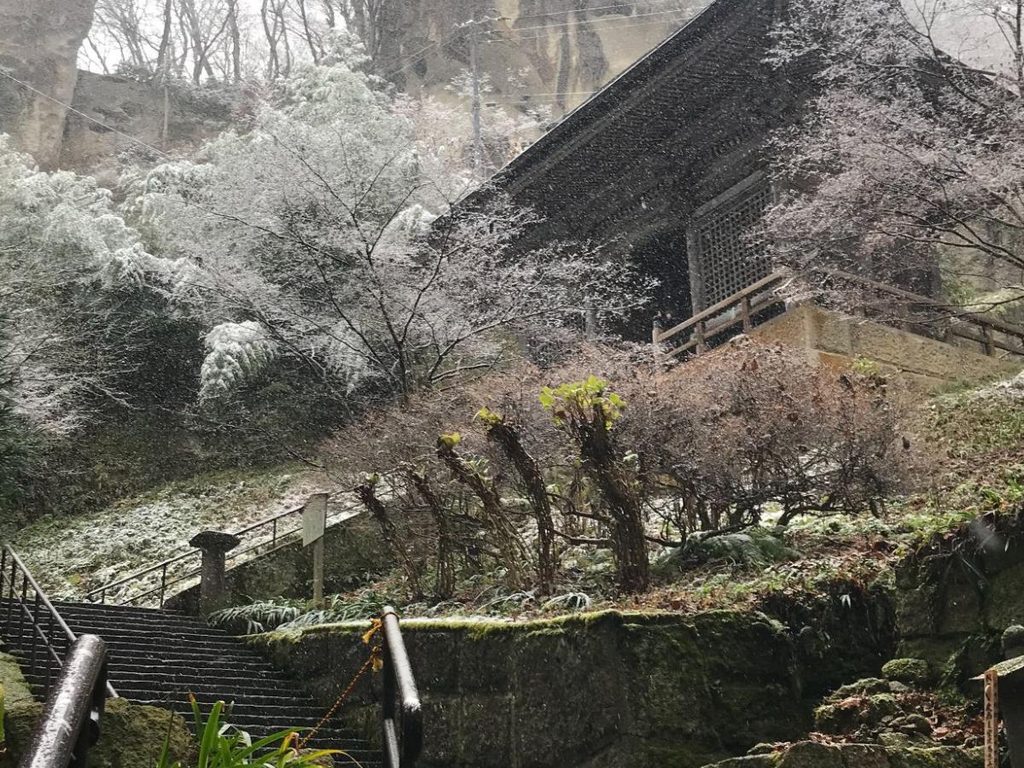
Reaching Yamadera’s upper halls means climbing a stone stairway of 1,015 steps, winding through cedar forests, past stone monuments, small shrines, and carved Buddhist figures. Local tradition holds that each step climbed clears away one worldly attachment, giving the ascent a meditative quality that many visitors say changes how the climb feels partway up.
The route begins near Konpon-chudo, a hall built from beech wood and recognized as the oldest surviving beech-wood structure in Japan, housing a flame said to have burned continuously for more than a thousand years. From there, the stairway climbs past the Niomon Gate, guarded by statues attributed to disciples of the sculptor Unkei, before continuing toward the mountain’s upper halls.
Local food stalls near the base of the mountain add a practical reason to pause before or after the climb, with mountain-grown konjac and cherry-flavored soft serve counted among the area’s better-known snacks. Since the full round trip can take close to two hours for most visitors, timing a late-morning start leaves enough daylight to explore both the stairway and the surrounding temple town without rushing.
Highlights
- A 1,015-step stone stairway through cedar forest
- Konpon-chudo, Japan’s oldest surviving beech-wood building
- The Niomon Gate, guarded by statues linked to Unkei’s studio
- A flame said to have burned continuously for over a thousand years
Details
- Time required: 1.5–2 hours round trip at a comfortable pace
- Admission: a separate entry fee applies for the main climbing route
- Access: about a 6-minute walk from JR Yamadera Station to the trailhead
- Notes: steps can be slippery when wet or snow-covered, so sturdy footwear is recommended
Visit the Cicada Mound and Basho’s Haiku
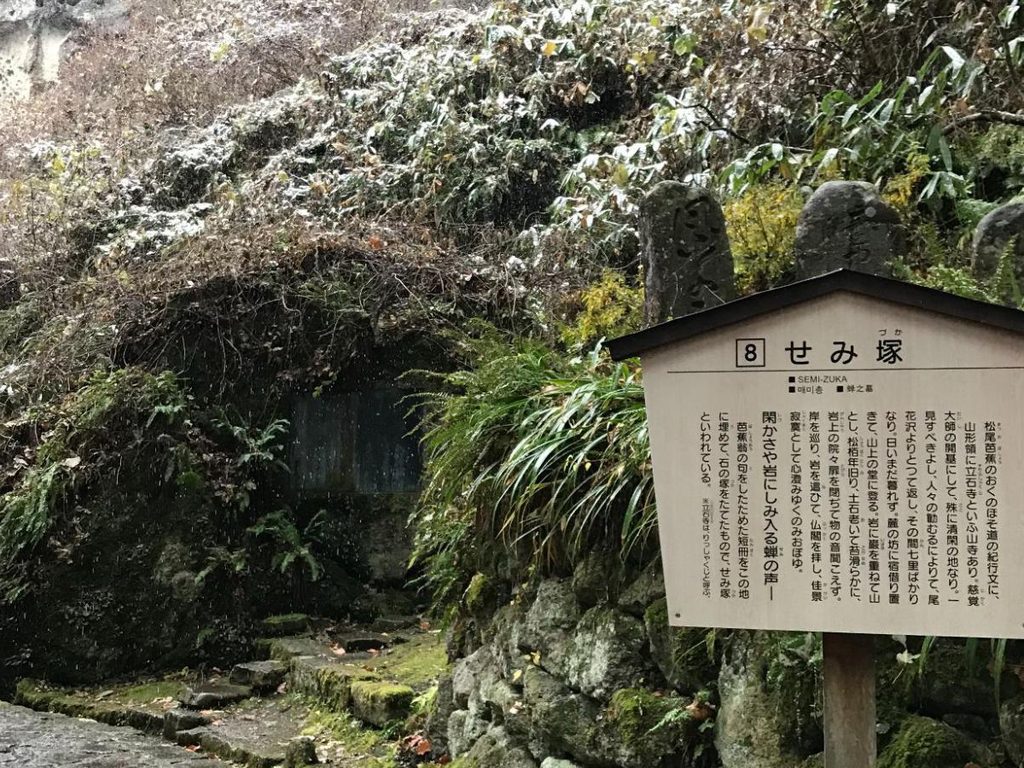
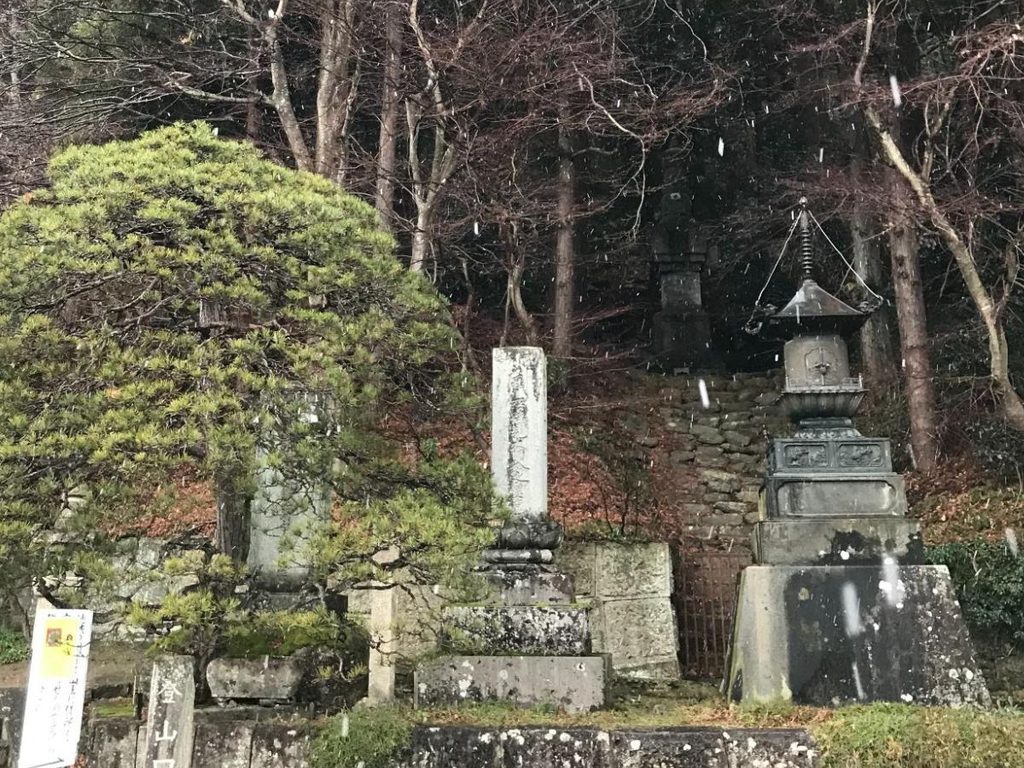
Partway up Yamadera’s stone stairway, a small monument known as the Cicada Mound marks the spot associated with one of Matsuo Basho’s best-known haiku, composed during his 1689 visit and later included in “Oku no Hosomichi.” The verse, describing the sound of a cicada seeming to sink into the surrounding rock, is said to have been written near a lodging at the mountain’s base, with the monument itself built afterward to hold a strip of paper bearing the poem.
The site draws a steady trickle of literature enthusiasts and casual visitors alike, and the surrounding rock formations, worn smooth in places and streaked with moss, give a tangible sense of the stillness the haiku describes. A signboard at the site explains the poem’s background in both Japanese and English for visitors unfamiliar with the reference.
Highlights
- A monument marking the inspiration for one of Basho’s most famous haiku
- Original rock formations described in the poem itself
- Bilingual signage explaining the haiku’s history
- A natural, contemplative stop partway through the climb
Details
- Time required: 5–10 minutes
- Access: located roughly a third of the way up Yamadera’s main stone stairway
- Notes: easy to combine with the wider climb rather than visiting separately
Take In the View from Yamadera’s Mountaintop Halls
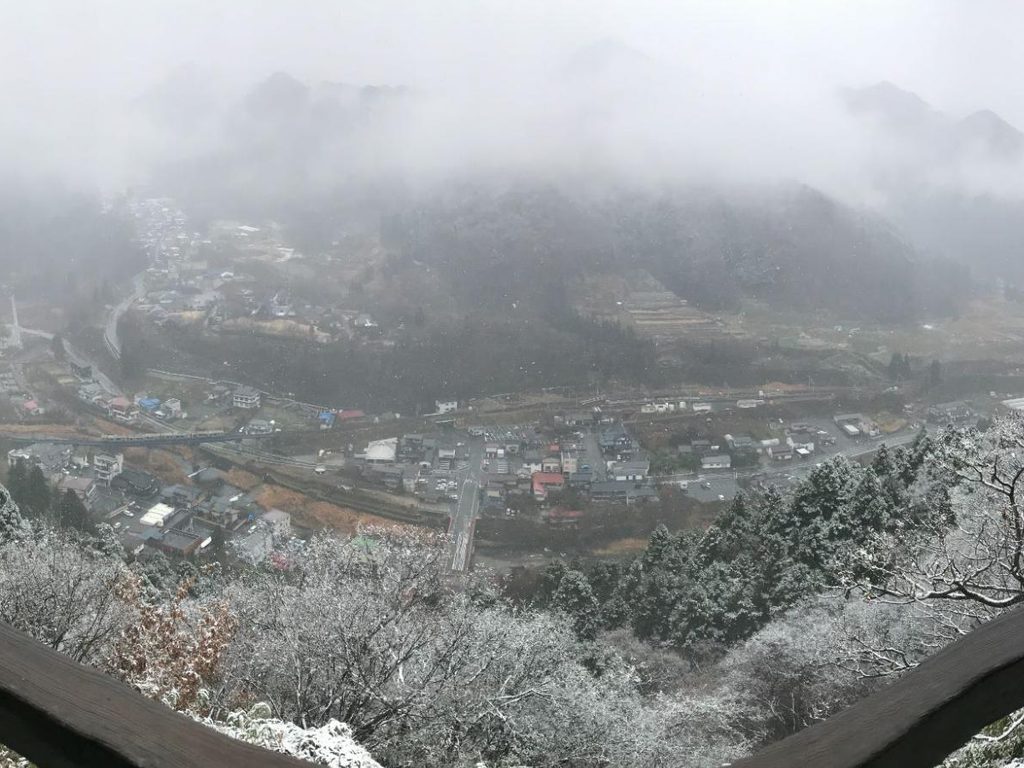
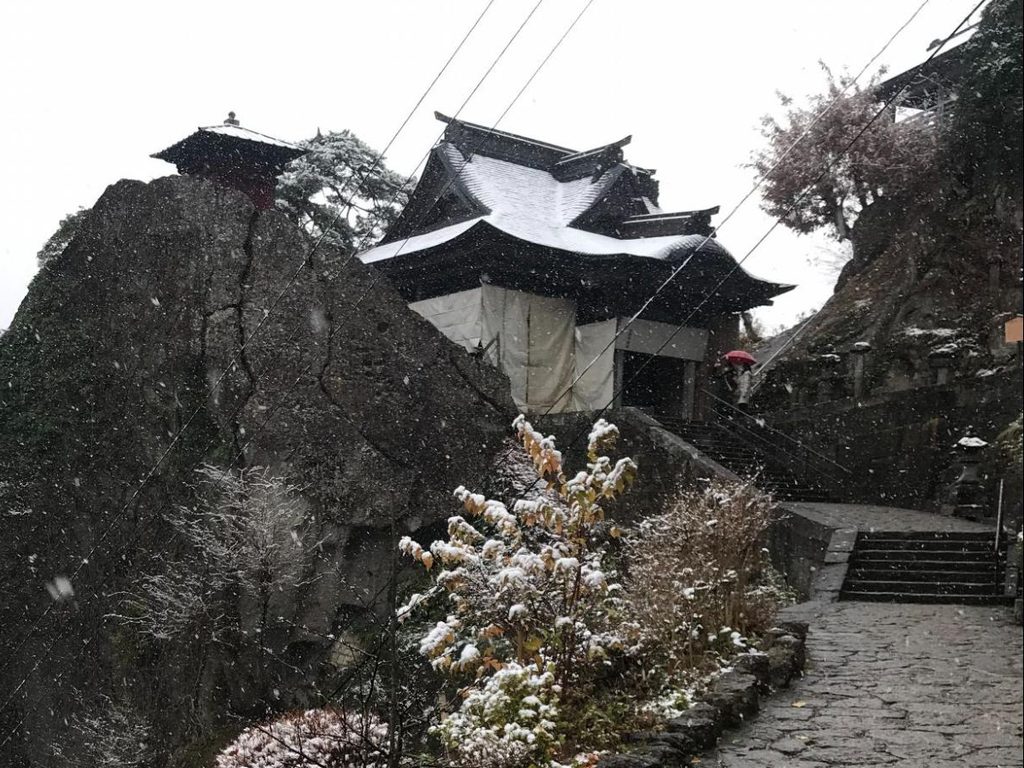
Near the top of Yamadera’s stairway, a cluster of halls perches dramatically on the mountainside, including a small red hall built directly atop a large rock outcropping. Continuing past these buildings leads to an open viewing area overlooking the town of Yamadera below, where the Senzan Line railway threads through the valley between forested hillsides.
The view changes considerably with the seasons, from fresh green in spring to fiery foliage in autumn and snow-dusted rooftops in winter, and the elevation gives a clear sense of just how far the climb has taken visitors above the valley floor. Photographers in particular tend to linger here longer than anywhere else on the mountain.
Highlights
- A red hall built directly atop a large rock outcropping
- Sweeping views over Yamadera town and the valley railway
- Strong seasonal variation, from spring greenery to winter snow
- One of the most photographed viewpoints in the Yamagata region
Details
- Time required: 20–30 minutes at the viewing area
- Access: near the top of the main stone stairway, past the mountaintop halls
- Notes: conditions can be windy and cold at elevation, even when the base of the mountain feels mild
Cruise and Explore Matsushima Bay
Matsushima’s reputation as one of Japan’s Three Views comes from the roughly 260 small pine-covered islands scattered across its sheltered bay, a landscape that has drawn poets and travelers for centuries. Sightseeing boats depart regularly from the pier near Matsushima Kaigan Station, circling a rotating selection of the bay’s most recognizable islands over the course of about 40 minutes.
Walking along the waterfront alone offers a reasonable sense of the scenery, but the boat cruise gives a clearer view of how the islands are arranged across the bay, along with a closer look at rock formations and small shrines built on some of the more accessible islets. Evening light in particular tends to soften the scene, making a late-afternoon cruise a popular choice among repeat visitors.
Several operators run boats from the same general pier area, with options ranging from standard sightseeing courses to smaller, more personalized routes that circle fewer islands at a slower pace. Seasonal variations also affect the experience, since winter cruises tend to run with fewer passengers and calmer water, while summer sailings can draw considerably larger crowds around midday.
Highlights
- Roughly 260 small pine-covered islands across a sheltered bay
- Regular sightseeing cruises lasting about 40 minutes
- Close-up views of island rock formations and small shrines
- A landscape recognized as one of Japan’s Three Views
Details
- Time required: 40–60 minutes for a standard cruise, longer with waterfront walking
- Access: cruise pier located a short walk from JR Matsushima Kaigan Station
- Notes: schedules can shift with tides and weather, so checking departure times on arrival is worthwhile
Visit Zuigan-ji, Date Masamune’s Rebuilt Temple
Zuigan-ji traces its origins to 828, when Jikaku Daishi Ennin founded it as a Tendai temple. Though the buildings visitors see today largely date from a five-year reconstruction completed under Date Masamune in the early 1600s, following his rise to power after the Battle of Sekigahara. Masamune brought around 130 skilled craftsmen from across Japan for the project, and the resulting main hall and kitchen building are now designated National Treasures.
Just outside the main hall, a pair of plum trees known as Garyubai, said to have been planted by Masamune himself, draw visitors during their bloom in late March and early April, while a light dusting of snow in winter gives the temple grounds an entirely different, quieter character. The nearby Godaido hall, built by Masamune in 1604 on a small island connected by a red bridge, ranks as the oldest surviving Momoyama-period building in the Tohoku region and features detailed carvings of the twelve zodiac animals hidden beneath its roofline.
Highlights
- National Treasure main hall and kitchen building rebuilt under Date Masamune
- Garyubai plum trees said to have been planted by Masamune himself
- Godaido, the oldest surviving Momoyama-period building in Tohoku
- Hidden zodiac animal carvings beneath Godaido’s roof
Details
- Time required: 45–60 minutes
- Admission: adult ¥1,000, child ¥500 (current as of April 2026)
- Hours: 8:30 to 16:00, with seasonal variation in closing time
- Access: about a 6–10 minute walk from JR Matsushima Kaigan Station
Grill Your Own Kamaboko in Matsushima

Among Matsushima’s food traditions, hand-formed kamaboko, a type of steamed fish cake shaped and grilled fresh, stands out as a genuinely interactive local specialty. At shops near the waterfront, visitors can press seasoned fish paste onto a skewer themselves before grilling it over charcoal, watching the pale surface slowly brown as it cooks.
The activity draws a mix of families and food-focused travelers, and the finished skewer, eaten hot off the grill, offers a noticeably different texture and flavor from the pre-packaged kamaboko sold as souvenirs elsewhere in the region. Combined with Matsushima’s other well-known specialty, freshly grilled oysters, the waterfront area gives visitors a reasonably complete taste of local coastal food within a short walk of the main sightseeing sites.
Highlights
- Hand-formed kamaboko pressed and grilled by visitors themselves
- A noticeably fresher texture than packaged kamaboko sold as souvenirs
- Charcoal grilling stations set up directly at waterfront shops
- Easy to pair with Matsushima’s other specialty, freshly grilled oysters
Details
- Time required: 15–20 minutes per grilling experience
- Access: multiple shops along the main waterfront street near Matsushima Kaigan Station
- Notes: busier shops may involve a short wait around midday
Travel Tips for Visiting Yamadera and Matsushima
Wear Sturdy Shoes for Yamadera
The stone stairway can be uneven, and conditions become genuinely slippery in rain or snow, so proper walking shoes make a meaningful difference on the climb.
Check the Weather Before Choosing a Day
Since both destinations are largely outdoors, checking the forecast and favoring a clearer day improves visibility at Yamadera’s viewpoints and comfort during a Matsushima Bay cruise.
Visit Zuigan-ji in Late March or Winter for Extra Atmosphere
The temple’s plum blossoms peak in late March and early April, while a snow-covered visit in winter offers a quieter, more contemplative atmosphere than the busier warmer months.
Confirm Boat Cruise Times on Arrival
Matsushima’s sightseeing cruises can shift with tides and weather, so checking the current schedule at the pier rather than relying on a fixed timetable helps avoid a missed departure.
Pace the Yamadera Climb
Since the full stairway takes most visitors well over an hour, pausing at landmarks like the Cicada Mound and the mountaintop halls helps break up the climb rather than treating it as a race to the top.
Carry Cash for Smaller Vendors
Some food stalls and smaller shops at both destinations still prefer cash, particularly for smaller purchases like a single grilled kamaboko skewer.
How to Get to Yamadera and Matsushima from Sendai
To Yamadera
- By train: JR Senzan Line directly to Yamadera Station, about 50 minutes from Sendai Station
- By car: approximately 1.5 hours via the Yamagata Expressway
To Matsushima
- By train: JR Senseki Line to Matsushima Kaigan Station, about 40 minutes from Sendai Station
- By car: approximately 40 minutes via the Sanriku Expressway
Combining Both in One Trip
- Since Yamadera and Matsushima sit on opposite sides of Sendai, visiting both generally works best as two separate day trips rather than a single combined outing
*Travel times, fares, and admission details are subject to change. Please check official transport and temple websites for up-to-date information.
Summary
Yamadera and Matsushima offer two very different sides of a Sendai-based itinerary: a physically demanding, spiritually framed climb through a mountain temple complex tied to one of Japan’s most famous haiku poets, and a calmer coastal landscape shaped by centuries of Date clan patronage and ranked highly among the country’s finest views. Between the 1,015 steps of Yamadera’s stairway and the pine-covered islands of Matsushima Bay, the two destinations together capture a broad slice of Tohoku’s natural scenery, religious history, and local food culture.
As with many destinations built around outdoor routes and shifting schedules, having a reliable eSIM on hand makes it easier to track train times, weather conditions, and cruise departures while moving between Sendai and these two very different day trips. Whether visited separately or paired across a longer stay in the region, both places reward travelers willing to spend a full day exploring beyond the city itself.